

Posted in:
On: October 14, 2026
Five Ways to Build a Home You Love Without Burning Out
This post may contain affiliate links, which means I make a small commission (at no extra cost to you) on any purchases you make through clicking a link on this site. See my full disclosure here.
A home you love should help you become a happier mother, not leave you too burned out to enjoy the life happening inside it.
Today, I am sharing five ways we are building a home we genuinely love through rhythms of work and rest, seasonal living, a life-giving family culture, simple hospitality, and easier household systems.

Let’s begin with the rhythm that protects everything else.
1. Build Rhythms of Work and Rest
The quickest way to grow resentful of your home is to make yourself permanently available inside it.
A happy mother cannot run at full speed from the moment everyone wakes until the moment everyone goes to bed, and for many mothers, the work does not even end there. We remain on call through bad dreams, sickness. We weren’t designed for nearly twenty-four uninterrupted hours of work.
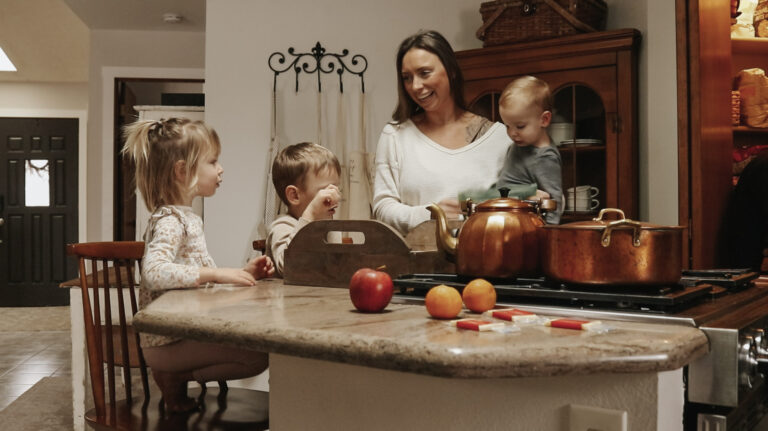
Our home moves in cycles. We work. We reset. We rest. Then we reconnect.
There are times when everyone contributes and the house is full of hustle and bustle. We clean up breakfast, get dressed, complete our lessons, work around the house, run errands, prepare food. Then the pace slows down and we rest. Then we pick it up again, then we rest again.
One of the most protective rhythms in our home is a mandatory two-hour quiet time each afternoon. Some of us sleep. Some read, draw, look through books, or entertain themselves in their rooms. The exact activity matters less than the fact that the entire house just slows down.
For those two hours, I am largely unavailable for constant requests, as unavailable as a mother can be while remaining legally and morally responsible for everyone in the home. I might read, rest, or work on something that requires concentration.
That quiet time gives the children a chance to regulate after the activity in the morning. It also gives me a place in the day where I know relief is coming, a time to look forward to refreshment and peace and quiet. A dependable period of rest makes it much easier to be present and patient during the hours surrounding it.
We also protect bedtime. Our children wake up at approximately the same time regardless of when they fall asleep. They could stay awake until midnight, and they would still appear beside my bed at sunrise asking for breakfast. A firm bedtime protects their mood the following day. It gives my husband and me time alone and it gives us time to recharge before bed.
But here’s the catch. A family rhythm should serve you, not the other way around. We don’t become a slave to the rhythm, particularly in summertime. We tend to really let things slide because summer just has its own kind of magic. There are evenings for watching the sky turn pink over the trees, or letting the children keep playing outside, eating popsicles and taking sprinkler baths.
Rhythm means knowing what normally sustains your family but wisdom tells you when it is worth joyfully breaking the pattern.
This is one of the secrets to building a home you love without burning yourself out: you decide in advance when the house will work, when it will rest, and when everyone, including Mom, will be allowed to stop.
But even a wonderful rhythm becomes exhausting when we demand the same pace from ourselves in every month of the year. The calendar itself is trying to help us. God designed the year with seasons for a reason. Creation itself moves through growth, abundance, release, and rest, and our homes are allowed to follow that same gracious pattern.
2. Let the Home Change With the Seasons
A home becomes rather dreadful when we expect ourselves to maintain the same pace, meals, routines, standards, and productivity in every season.
The year was created with movement built into it. The light changes. The weather changes. The atmosphere changes and our energy levels often change with it. Our homes and the rhythms and traditions we keep should change too.
One thing I absolutely love and that brings me so much joy is creating intentional seasonal rhythms and traditions.
Summer
Summer is pure magic. We all become fanciful and free. We rarely wear shoes. Meals move outside. Children spend endless hours outside building forts, riding bikes, digging holes, and using their imaginations.
The meals I make become very simple. I tend to stick to meals that take 15 minutes or less. Bedtime stretches, allowing more room for spontaneous bike rides, day trips to the woods escaping the heat, picnics, and trips to the water. Summer invites more time and freedom, so we allow it.
The magic of motherhood in summer is that I don’t need to create an elaborate childhood experience every day. Summer already brought warm air, long light, water, dirt, and bugs. My primary responsibility is often to open the door and let the children discover it.
Autumn
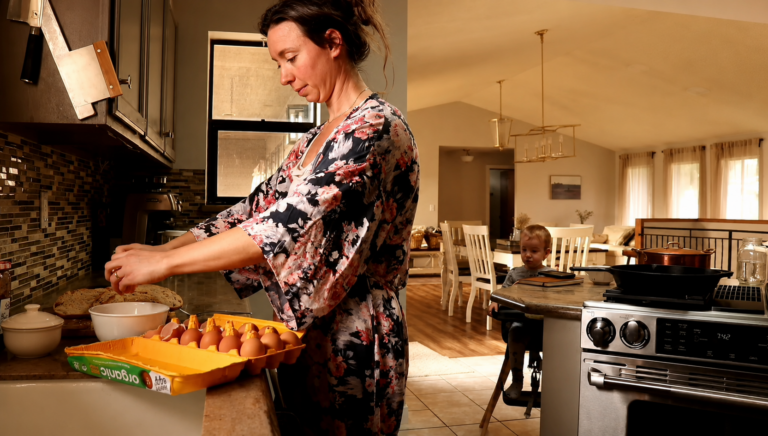
Then autumn arrives, and the air turns crisp. The evenings come earlier and I have an intense desire to bake again. I spend more time in the kitchen making warmer meals and baking all kinds of goodies. We return to school rhythms, structure that by this time in the year, we tend to crave, and earlier bedtimes. We pull out warmer blankets, and begin preparing the home for the colder months.
There’s something about autumn that just feels like a fresh start. As the mother of the home in autumn, my work is simply to warm the kitchen and restore the rhythms we have missed.
Winter
Then winter comes around and asks so much less of us, though accepting that invitation does not always come naturally. We are accustomed to measuring a good day by how much we accomplished, while winter reminds us that rest is also part of a fruitful life.
I used to really dread the winter. The dark, grey days felt daunting to me. Late summer came and I’d feel whatever the equivalent of the Sunday scaries is but for winter. What should we call that? Maybe the seasonal scaries? Winter scaries? Anyway, it was the growing realization that soon it would be dark before quiet time ended and everyone would be trapped indoors for far too long. As much as I wholeheartedly believe in the whole concept of there’s no such thing as bad weather, I am decidedly very bad at living up to that in real life in late winter.
But when I learned to embrace winter as a mother, I began to recognize the gift the Lord has placed inside it. The darkness draws us closer to home. The cold gives us permission to cozy up, make heartier and warmer meals. The slower pace makes room for conversations, books, music, candles and just ordinary things like that. What once felt like confinement began to feel like shelter.
We rest more and decline unnecessary commitments more freely. Warm food, familiar music, a stack of books, and people gathered in the same room can carry a great deal of beauty.
There’s something about winter that just feels like permission to slow down. My work is simply to make peace with the slowness and receive what the season is offering.
Spring
Then, just as the walls begin to feel a little too familiar and we start feeling slightly feral from being indoors, spring arrives like someone has thrown open a door.
Spring feels like a lifeline. Every year, it makes me marvel at the kindness of God’s design. He allows each season to stay long enough for us to receive its gifts, and then begin longing for what comes next. By the time the first warm day arrives, an ordinary patch of green grass feels extravagant. We notice the birds chirping, and tiny signs of life because winter taught us how much we missed them.
Each season carries its own work, rest, pleasures, and expectations. This gives motherhood variety. It also gives us relief.
You do not have to do all the things all year long. A wise mother learns which kinds of work and pleasure belong to this particular chapter of the year and lets the rest wait without guilt.
There is a season for longer evenings and a season for earlier bedtimes. A season for complicated baking and a season for handing everyone a sandwich. We let the home move with the seasons.
When your home is allowed to change with the seasons, it begins to develop something far more memorable than a perfect routine: it develops a culture.
3. Cultivate a Life-Giving Family Culture
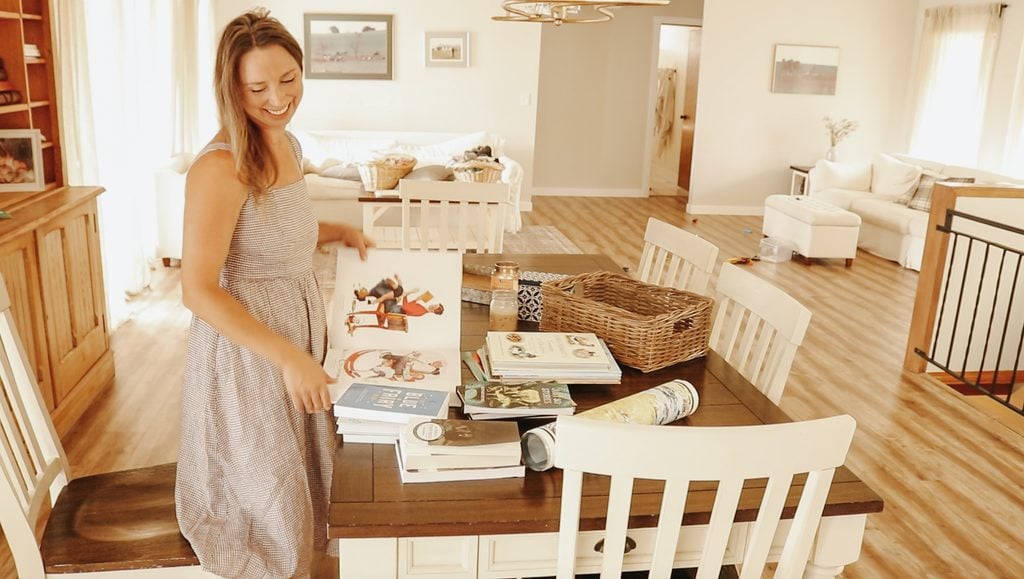
Family culture gives everyone a reason to love belonging to this particular family. It is the collection of shared loves, familiar sounds, recurring jokes, skills, traditions, and ordinary pleasures that gives your home a pulse and makes it feel unmistakably like yours.
A home should contain things that make the people inside it feel alive. The beauty of this is that you get to choose what those things are.
You get to decide what sounds fill your home, what your family celebrates, what everyone learns together, what appears regularly around your table, and which pleasures become so familiar that your children someday carry them into homes of their own.
It may be sports, music, gardening, reading aloud, baking, painting, singing, hiking, or learning practical skills together.
Your family might become the family that always plays ultimate frisbee in the yard after dinner. You might read one chapter aloud each night and slowly build a shared world of stories. You might sing hymns together at the piano, grow tomatoes every summer, make the same cake for every birthday.
Choose a few things you genuinely love and make that your thing you do in your home.
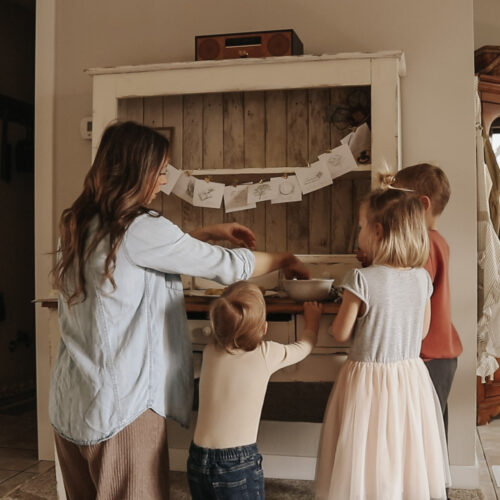
One of the easiest ways to make a home feel alive is to fill it with things your family can create together, new skills, music that becomes the soundtrack of your home, and traditions that become part of your shared family language.
Which is why I’m so grateful to Voetberg Music Academy for sponsoring. It’s back to school, and as you’re settling into the new season, what better way to bring joy into cozy evenings than with rollicking music your children can play together! Instead of driving your children to music lessons, the whole family can learn from the comfort of your home for less than one private lesson. Choose from either guitar, piano, violin, ukulele or mandolin, and get back valuable time in your day. Your children will be self-motivated to practice by quarterly challenges, contests, cash prizes, and The Voetberg Method’s proven Success path where students work to learn new skills and songs on their instrument for badges mailed to your doorstep.
Students no longer have to wait a week to have their teacher correct improper form, or get help. Expert Voetberg Music Academy instructors are accessible 24/7 for your student’s questions, and LIVE coaching calls and Student Showcases ensure your student will have all the support they need from first unboxing their instrument, to tuning it, to playing their first song, their first week! If you’re looking to make your child’s experience with music fun, affordable and effective and efficient, check out VoetbergMusicAcademy.com and use my code THS20 for 20% off your first month!
Join thousands of other families learning music in a like-minded community your children will love to be a part of!
Once a home is full of life, some of that life should naturally welcome others into it.
4. Create a Home That Welcomes People
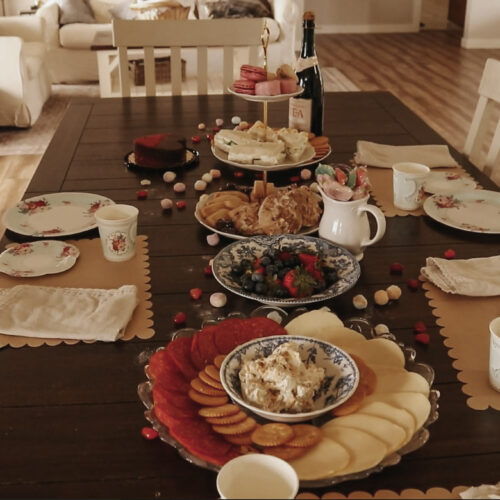
Hospitality becomes exhausting when we treat it like a performance. Real hospitality lets people enter real life.
This should feel like a tremendous relief to the mother. You do not have to create a separate, polished version of your home before people are allowed to enter it. You can welcome others into the dinner you were already making, the children who were already playing, and the house you were already living in. Hospitality becomes sustainable when it is woven into family life rather than staged on top of it.
I want hospitality to be part of the ordinary life of our home without becoming another production I have to exhaust myself creating. Welcoming people can be as simple as pulling out another chair, stretching the dinner a little further, and making room for whoever happens to be standing at the door.
We often have neighbor children come over and stay for dinner. They tend to arrive as a small herd. One child comes through the door, then another appears behind him, and before long I am looking around the kitchen wondering when I agreed to operate a neighborhood dining hall.
But there is something so very sweet about it. There are bicycles dropped in the yard, shoes scattered by the door, children running in and out, and several extra voices around the table. We pull out another plate. I add something easy to stretch the meal, and we make room.
This is the kind of hospitality I can keep offering because it does not require me to transform our house or myself before anyone comes inside. If the house is small, we squeeze in. If the meal is simple, we serve it gladly.
I want opening our home to add life to our family without draining all the life out of me. The children do not need a mother frantically scrubbing baseboards, snapping at everyone, and warning them not to touch anything so that other people can feel welcomed.
Open doors do create extra work. Simplification is what makes that possible. Next, I want to show you some very ordinary ways we reduce the friction in our home, because the fewer unnecessary tasks and stress mom carries, the more energy she has left to enjoy the people who live there.
5. Reduce the Friction in Your Home
Whenever something in our home continually creates more work than value, I ask whether it can be simplified, reduced, automated, shared, or removed entirely.
Use paper plates. During particularly full seasons, we unapologetically use paper plates.
Create family uniforms. Everyone in our family has some version of a basic uniform. I repeat the same handful of outfits constantly and call it my mothering uniform. The children have their play uniforms and their nice uniforms. This allows me to appear intentional while wearing essentially the same thing every day. I’m so much in this rhythm that I don’t even realize it until I show up to the same weekly play group and realize that I have worn the same thing every week for the entire season. Fewer clothing decisions mean easier mornings, simpler shopping, more manageable laundry, and less mental clutter.
We have very few toys. When children have access to too many toys at once, they often play less and dump more. Keeping fewer toys available makes it easier for them to see what they have, play more intentionally, and clean up faster. Some toys can be stored and rotated. Broken toys can leave. Toys no one uses get donated ruthlessly.
Use mercy meals. I have default mercy meals I turn to, a little collection of meals that take 15 minutes or less. But one of my favorite mercy meals lately is actually so fun. I call it discount dinner night. On a night where I have no plan for dinner and no meat defrosted, we go to the store around 4pm, and they always have a ton of food in the deli on discount at Kroger, and we can get an entire meal for the family just shopping the closeout sections for like 10 bucks.
Everyone contributes to the making of the home. A mother burns out very quickly when everyone else experiences home as a service they receive. A peaceful home cannot depend on one woman. Everyone who lives in the home should gradually learn how to help it operate.
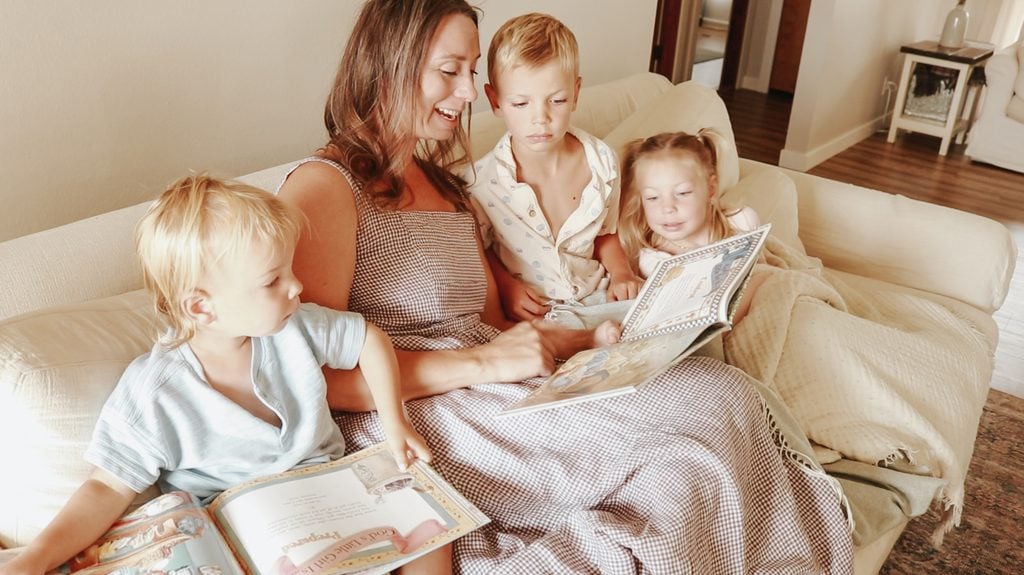
Contribution creates belonging. When children help care for the home, they learn, “I am needed here. My work affects other people. I am capable of serving my family.”
Homemaking is a tremendous amount of work, and the burden should not fall onto one person. Children are not inconveniences living inside Mom’s workplace. They are valuable members of the family who can contribute according to their age and ability.
Young children can clear dishes, carry laundry, put books on a shelf, wipe small spills, place shoes by the door, or help gather toys. As they grow, they can fold towels, sweep, reset shared spaces, put away their belongings, help younger siblings, prepare simple foods, empty parts of the dishwasher, or assist with outdoor work.
The job will not always be completed exactly as I would complete it. This is one of the grave risks we accept when allowing other people to participate in family life. A towel folded imperfectly by a child is still a folded towel. More importantly, it’s teaching the child responsibility.
We are not raising children who merely consume the work of the household. Home is something we build together.
This one is super simple and practical, but so powerful in changing the tone of the home. We do not shout for one another from across the house unless there is danger or an actual emergency. We walk to the person and speak to them. This applies to the children, and it applies to me. I cannot demand a peaceful tone from them while shouting instructions from three rooms away.
Walking to the person lowers the volume of the home. It also encourages eye contact, clearer communication, and fewer conversations conducted through walls. It is difficult to create a home you enjoy when everyone is constantly calling your name from opposite ends of it.
Unless someone is bleeding or reporting that the bathtub is overflowing, we can walk ten steps and speak like people who live in the same house. Although I have been known to text my husband from another room, so apparently my convictions do have some exceptions.
These small changes may sound ordinary because they are ordinary. But repeated household friction drains a mother’s patience and it’s like death by a thousand cuts.
Building a Home You Love
You build a home you love by deciding what brings life to your family, removing what repeatedly drains you, and creating rhythms where everyone can work, rest, contribute, connect, and belong.
If you are reading this thinking, “I know what I want our home to feel like, but my body is still reacting to the noise, mess, interruptions, and needs of motherhood as though everything is an emergency,” that is exactly the gap I help mothers bridge in my free workshop.
Because household systems can reduce unnecessary stress, but they cannot heal a brain and nervous system that have learned to live in chronic fight-or-flight.
In the workshop, I walk you through the biblical brain-rewiring process I used to calm that chronic fight-or-flight, renew my mind, and begin responding like the peaceful, present, self-controlled mother I wanted to be.
That workshop is completely free, and the link is below.

Kyrie Luke




Leave a Reply