


Posted in:
On: September 10, 2026
The Family Rules We Keep to Disciple Our Children Well
This post may contain affiliate links, which means I make a small commission (at no extra cost to you) on any purchases you make through clicking a link on this site. See my full disclosure here.
These are some of the more controversial hard no’s in our home, and I know a few of them will sound extreme, but the fact of the matter is that we are not raising children to blend in nicely with a world that does not love Christ. I think that’s really easy to do in this culture. We are raising children to know what is true, love what is good, obey what God has commanded, and learn how to live as set-apart people with joy.
Yes, we have hard lines in our home. Some people will call them too strict. Some people will say we are overthinking it. Some people will say, “Kids just need to be kids.” But I would rather be accused of guarding my children too carefully than look back and realize I let the culture train their loves because I was afraid of sounding extreme.

Before I get into the actual rules, the heart behind all of this is that we do not believe discipleship can be outsourced. We love the church. We may use the co-ops, curriculum, books, and other resources. But none of those things replace the responsibility God has given parents inside the home.
This is not coming from a home where we resent our children or are trying to manage them out of our way. By God’s grace, we really enjoy our children. We like being with them and I have genuinely fallen in love with this whole motherhood gig, and I think part of the reason is because we have been willing to take responsibility for the culture of our home in really practical ways.
These rules are not about being controlling for the sake of control. They are about guarding what gets regular access to our children’s hearts and taking seriously the responsibility God has given us as parents to disciple our children, guard what shapes them, train them in wisdom and obedience, protect the peace and order of our home, and teach them what is lovely, honorable, holy, and worth loving.
What we allow teaches them what is normal. What we laugh at teaches them what is acceptable. What we celebrate teaches them what is lovely. What we tolerate teaches them what they can get away with. We want to be intentional about the kind of people our home is shaping.
We Don’t Let Outside Influences Disciple Our Children Unchecked
We review books, friends, shows, songs, curriculum, devotionals, toys, podcasts, YouTube channels, media and anything that gets regular access to our children.
We don’t assume a “Christian” label on something automatically means it’s biblical, appropriate, or safe. In fact I saw somewhere this children’s Bible story book that was talking about Jesus’ baptism and it said “Jesus was getting baptised to wash away his sins.” We review everything and often I will rip pages out, scratch over certain pictures, or just get rid of the material entirely if it’s a bad fit.
Similarly, we’ve been researching homeschool curriculum a lot lately, and my husband and I have come across some resources that are genuinely beautiful, polished, wholesome-looking, and very appealing on the surface. But we ultimately decided against some of them because when we looked past the pretty pages and the language of “faith” and “values,” the theological background behind it was not something we could personally get behind.
There are some homeschool resources right now that are incredibly beautiful and very popular among Christian families, but after looking into the theology behind them, we decided we would rather choose something less polished if it means we can trust the foundation more fully.
Because education is not neutral. Every curriculum is teaching more than math, phonics, or history. It’s teaching our children about how they ought to see the world. For us, the question is not only, “Is this academically solid?” It is also, “What kind of worldview is this forming in my child?”
This is where it gets uncomfortable: your children are not only shaped by what you put in front of them. They are shaped by what you let them get away with.
We Don’t Allow Loud, Dramatic, Obnoxious, or Foolish Behavior
I remember when we were dealing with really obnoxious behavior from our children for a time. One child would act intentionally annoying and think it was funny. Another was going through a very dramatic phase. Another would make these heinous noises repeatedly.
My husband and I finally sat down and had a conversation about it. We realized we had been acting like we had to tolerate it because “kids will be kids.”
But then it hit us. We are the parents. Not only do we not have to allow those behaviors, it is actually our job to teach them what right behavior looks and sounds like.
Scripture does not treat foolishness as cute. Proverbs repeatedly warns against folly, foolishness, mockery, lack of self-control, and disorder. I do not want to call something personality when it is actually foolishness that needs training.
There is a difference between a joyful child and an obnoxious child. There is a difference between a playful home and a chaotic home. There is a difference between childlike laughter and foolish behavior that everyone else is forced to endure.
Honestly, this was so empowering for us as parents. We started realizing that we could shape the culture of our home. We could teach our children what is pleasant, what is respectful, what is funny, what has gone too far, what is foolish, and what needs to just stop. We have seen so much fruit from this.
It is not that our children’s childhood became stifled. Actually, their personalities became more enjoyable because we were no longer letting foolishness run wild in their hearts and minds. To be clear, this will look different for every family. What we consider appropriate or funny might be considered foolish in another home, but that’s the beauty of it all and one of the joys of parenting. We get to create the exact culture we want! We don’t just endure our children. We get to help shape them. Man, let me tell you, my children are just so cool and I genuinely love being around them. I feel like this whole motherhood thing is a total dream!
When Your Body Cannot Get There in the Moment
I’m about to get into maybe the most controversial rule, but first… I know some of this can sound really simple when we’re talking about it calmly. Like, yes, of course we want to train our children. Of course we want to respond with wisdom. Of course we want to be consistent, patient, and self-controlled.
But then real life happens.
The children are interrupting, someone is whining, the house is loud, dinner needs to be made, the baby is crying, and suddenly the issue is not that you don’t know what kind of mother you want to be. The issue is that your body feels like it cannot get there in the moment.
This is where I feel like so much content for mothers has really good advice. It tells them how to respond. How to train their children. How to glorify the Lord in their mothering.
But so little of it actually supports them in getting to a place where they’re able to live that out. Because when your nervous system is in chronic stress and your body feels constantly overstimulated, you can know the right thing to do and still feel like you cannot access it in the moment.
That is the gap I help mothers bridge. I have a very specific way of helping moms escape chronic stress and fight-or-flight, retrain their brains and their responses, and actually show up as the peaceful, present, self-controlled mother they want to be.
My free workshop walks you through the exact process I teach. The link is below.
We Don’t Let Social Discomfort Excuse Rudeness
In our home, shyness is something we shepherd, not something we let turn into a character flaw that makes others feel uncomfortable. I don’t expect my children to be loud or outgoing, but I do expect them to be kind, respectful, and considerate, even when they feel uncomfortable.
Because social discomfort can quickly become rude and make other people who are just trying to be nice to my children feel uncomfortable. My children are allowed to feel nervous and even to be on the quiet side. But they are not allowed to use shyness as an excuse to ignore people, refuse basic manners, or make others feel invisible.
It’s ok for our children to feel nervous in a social situation, but we also actively coach them through it. We don’t do the whole… “Oh, she’s just shy,” and then let them hide behind me every time an adult speaks to them because I want them to learn how to speak to adults and to train them in basic courtesy. I want them to feel comfortable looking people in the eye and not just answering when spoken to, but leaving a conversation knowing more about the other person than they know about them. Asking names, showing interest, speaking clearly, etc.
Because people are important. One way we show people honor is by learning how to set aside our own discomfort long enough to acknowledge them kindly.
Now, I know the pushback on this. Some people will hear this and say, “You’re forcing your children to perform.” Or, “You’re making introversion sinful.” Or, “You’re ignoring social anxiety.”
That is not what I am saying. I am talking about training.
Philippians tells us to look not only to our own interests, but also to the interests of others. Romans tells us to show honor. Scripture repeatedly calls us to love our neighbor.
I want my children to understand that love does not always mean doing what feels most comfortable. Sometimes love looks like looking someone in the eye, answering kindly, saying thank you, greeting an adult, or learning how to make another person feel seen.
Obviously, as our children grow up, we will allow for varying levels of introversion and extroversion. But we will also train them, as best as each child is able, to have an approachable presence. Each child has a different degree of skill in this area right now, obviously, as it should be. What this looks like is that our 5-year-old is incredibly skilled in this area. He is naturally very extroverted, but he would slip into the shyness thing around adults and we taught him and coached him through those situations. Right now he’s great at keeping a conversation going and asking questions about the other person, but we are working on looking in the eyes, etc. Whereas my youngest, who is almost 2, is very much in the “only mommy can look at me” phase, and that’s something we actually do not allow. I teach him that it’s not ok to cry when someone says hi and that he must say hi back.
I think this is a skill that will serve them very well as they grow into adulthood. It can be such a disadvantage to have social anxiety and to be ill-equipped to be in complex social scenarios and be able to handle them confidently and with ease.
If they are in the corporate world one day, I want them to have an executive presence. If they are in ministry, I want them to have a servant-hearted presence. If they are homemakers, I want them to have a warm, hospitable presence. If they are leaders, employees, friends, wives, husbands, fathers, mothers, or neighbors, I want them to have a confident presence.
That kind of presence is trained over time.
While we want our children to learn how to honor other people, we also want them to know exactly when something crosses the line, especially when another person asks for access or secrecy that should never belong to them.
We Don’t Allow Secretive Access to Our Children
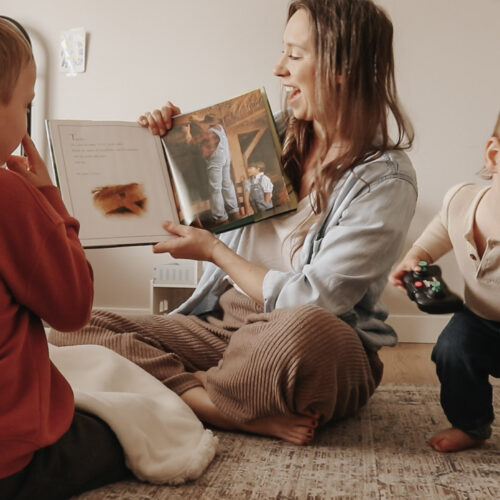
We teach the difference between secrets and surprises. We have a book for this literally called Secrets vs. Surprises. A surprise has an ending and is meant to be revealed. A secret asks a child to carry something hidden.
We don’t let adults tell our children, “Don’t tell your mom,” even when the thing itself seems harmless. For example, if someone gives them a treat at a family gathering and frames it like, “Don’t tell your mom,” that may seem cute to an adult, but it trains a child that keeping things from their parents can be funny, normal, or safe.
We want the opposite.
We want our children’s conscience to feel immediately uncomfortable when someone asks them to hide something from us, however small it may be. We want secrecy to feel wrong to them so we want to train their discernment in this area. We want them to know that if something confusing, uncomfortable, exciting, scary, or questionable happens, Mom and Dad are the first people they come to.
We Don’t Allow Corrupt Speech in Our Home
We don’t allow cussing, crude humor, vulgar jokes, trashy lyrics, sexualized humor, mockery, irreverence, or entertainment that makes sin sound funny, normal, or harmless. My husband and I have worked really hard over the years to cut cussing out of our vocabulary because we felt so convicted of this and when our first child was born we dreaded the day that he would repeat a cuss word. We don’t think it’s cute or funny in our home. We really did have to totally retrain our brain on this matter and increase our vocabulary so the stories we would tell and things we would say would pack the same punch.
Biblically, our words hold power. Scripture tells us to let no corrupting talk come out of our mouths, but only what is good for building up. It also warns against filthiness, foolish talk, and crude joking.
We are modeling to our children that words reveal the heart.
I don’t want my children to learn that something sinful becomes acceptable just because it’s funny. Crude humor dulls conviction. There are things I used to laugh at that now make me feel grieved because I can see how much they shaped me. In our home, we want humor that is joyful, not humor that makes light of sin.
Not only do we teach what words are ok and not ok, but we teach when speaking is ok and not ok.
We Don’t Allow Children to Interrupt
We don’t let our children interrupt us like our conversation doesn’t matter. We don’t let children speak over adults or do the whole mama mama mama thing. We don’t let children demand immediate attention every time they want something. We teach them to wait, say excuse me, and respect when someone else is speaking.
Can I just say, as a spouse myself who has been on the receiving end of this, it is so honoring when my husband stops to tell my child to wait their turn because I’m speaking. Just the other day, one of the kids was interrupting my story and my husband goes… “Whoa, your mother is speaking. Please wait until she’s done.” I just felt so honored and respected in that moment.
This same principle shows up in obedience, because if children are trained to believe they can overtake a conversation, they will often believe they can overtake an instruction too. We don’t allow negotiations with obedience.
We Don’t Let Gentle Parenting Turn Obedience Into a Negotiation
We don’t bribe obedience. We don’t count to three. We don’t let whining be effective. We have family rules, and if they are broken, we discipline.
Scripture tells children to obey their parents in the Lord. It tells them to honor their father and mother. It does not say, “Obey after your mother has asked five times.” It does not say, “Obey if the reward is good enough.” It does not say, “Obey once you understand all the reasons.”
We want our children to learn that immediate and complete obedience is the expectation.
If I count to three, I am training my child delayed obedience. If I bribe my children, I am training my child that doing what is right requires a reward. If I allow whining to be effective, I am training my child that manipulation is effective.
While I do agree that parenting should always be gentle, and not harsh, and I’ve failed in this area more times than I’d like… I also don’t agree with a lot of the gentle parenting approaches, and to be honest I actually think they lead to more harsh, reactive parenting than consistent, peaceful parenting because no real habits or obedience are actually being taught.
A lot of the modern gentle parenting movement puts the child’s emotions at the center of the home and then asks the parent to orbit around them. It can make parents afraid to correct, discipline, or even require obedience for fear of ruining them.
I think that is harmful for children and parents. It is harmful for children because it trains them to believe their feelings are the highest authority in the room. It’s harmful for parents because it leaves them exhausted, confused, and constantly trying to manage emotions that they were actually called to shepherd.
That is not biblical gentleness. Biblical gentleness is authority under control, guided by the Holy Spirit. It can correct without cruelty, discipline without rage, and unapologetically require obedience.
The worldview underneath much of the gentle parenting movement is simply not Christian. It assumes a child is basically good and mainly needs validation and self-expression, when Scripture teaches that our children, like us, are sinners who need shepherding, correction, repentance, forgiveness, and the gospel.
Yes, we want to be gentle. But we do not want to be child-led.
That is why we are intentional about keeping the right order in our home, where parents lead and children are lovingly guided, not the other way around.
We Don’t Make the Home Child-Centered
Children are a blessing, but they make terrible household gods.
We deeply love our children. We enjoy them. We care about their interests. We want our home to be a place where childhood is beautiful.
But our children are not the center of the home.
We do not build our whole life around kids’ activities. We do not run the schedule according to every preference. We do not cook an entirely separate meal every night because someone does not like what was served. We do not let childhood preferences rule the family.
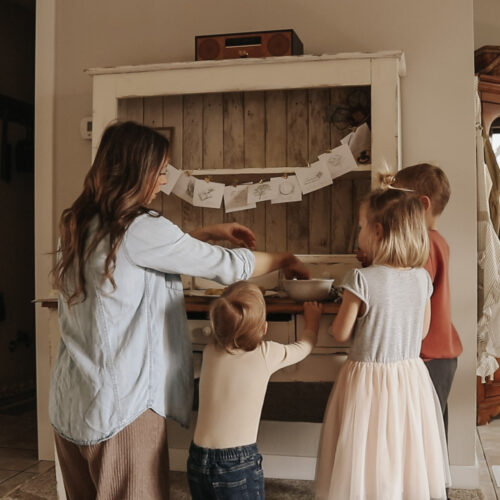
They are part of the family, which means they learn to participate in family life.
I think this is actually one of the kindest things we can do for our children because a child-centered home can train children to become self-centered adults.
This applies not only to the daily structure of the home, but also to the cultural traditions we bring into it, because some of the strongest childhood memories are formed around celebration and what we are celebrating matters.
We Don’t Teach Our Children to Celebrate Darkness
First, we don’t do Halloween and will never have this as part of our home. In fact, this has always been a hard no for us.
This is an area where I think parents have to be willing to make a bold decision instead of just going along with whatever the culture is doing and calling it harmless childhood fun, or in the name of nostalgia we just let our children dress up, or just for the candy, or in order to “be a light in the darkness.” The fact of the matter is that this holiday glorifies death and destruction and those are not things Christians are called to associate with in any way, shape, or form. I feel strongly that this is one of those cultural norms that Christians are actually called to be set apart from and it might sting and that’s ok. I think it’s important to teach our children that there are certain things we abstain from in the world and that builds that muscle of being set apart from the world.
Think about it. Spirits, fear, death, witches, ghosts, demons, darkness, those are not things we want to make playful, exciting, or memorable for our children. We don’t want them associating those things with fun. Because regardless of how light and fun you make it, the whole holiday is centered around those things.
I want to be careful with what I make magical for my children. I want to be careful with what I attach joy to. I want to be careful with what becomes nostalgic in their minds.
Because childhood memories are powerful. I do not want my children’s warmest memories connected to things Scripture teaches us to reject.
No, we do not participate in Halloween. We do not try to make it Christian enough to feel comfortable. We do not use candy and costumes to ignore what the holiday is built around.
We can love our neighbors, be kind, be generous, and be joyful without joining in with darkness.
We Don’t Do Santa in Our Home
We don’t pretend Santa is real.
That does not mean we are against imagination. We read fictional stories about Santa as they come up around the holidays and we can enjoy made-up worlds, fairy tales, and pretend play. But there is a difference between saying, “This is a story,” and intentionally leading your child to believe something is true when it is not.
The issue is not only that Santa is not real or just that we don’t want to lie to our children. The bigger issue is that Santa competes with the greatest story ever told.
Christmas is about the Son of God taking on flesh. It is about Christ coming into the world to save sinners. I have no desire to take that story and place a mythical man at the center instead. I do not want my children’s wonder attached to Santa when it could be attached to Christ.
I also take issue with the moral system Santa teaches. The whole naughty-or-nice idea turns Christmas into behavior management. Be good and you get gifts. Be bad and you might not.
That is not the gospel.
Christ does not come to us because we were good enough. He came because we were not. He saves by grace. He comes near to sinners, not children who performed well enough to earn presents.
Santa offers temporary excitement. Christ offers forgiveness, eternal life, comfort, presence, hope, and joy that does not disappear when the wrapping paper is thrown away.
Santa shows up once a year. Christ is with His people always.
Santa cannot forgive sin. Santa cannot comfort a suffering child. Santa cannot be with them in the dark. Santa cannot save. Santa cannot satisfy the deepest need of the soul.
No, I do not want to make him central to Christmas.
A Jesus-centered Christmas should not feel like the lesser version. If we think Christmas needs Santa in order to feel exciting, then we have missed how glorious Christ actually is.
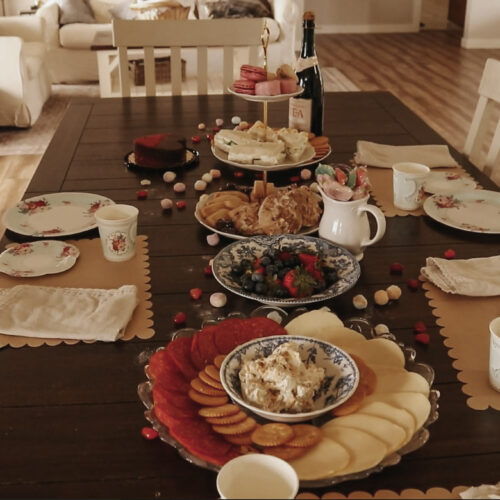
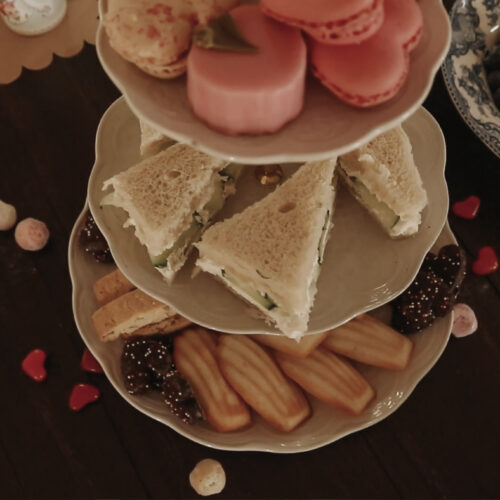
We can still have gifts. We can still have surprises. We can still have cozy traditions, special food, music, decorations, candles, books, family memories, and joyful celebration.
But we want those things to point our children toward Christ, not away from Him.
This is also where I see a difference between Christmas and Halloween because it’s not lost on me that Christmas may have pagan roots as well. This is something my husband and I have discussed at length and continue to do so every single year. But what it’s come down to for us is this…
Halloween, in our home, is something we abstain from because its themes are tied to darkness, death, fear, witches, ghosts, demons, and the spirit world. I do not want to make those things fun, cute, or memorable for my children.
Christmas is different because the center of Christmas is Christ.
Our goal is not to throw Christmas away. Our goal is to remove what competes with Christ and make the celebration more clearly about Him.
Every No in Our Home Protects a Better Yes
I want to be clear, because I know this has a lot of “we don’t allow this” and “we don’t allow that,” but our home is not sterile or joyless.
Every no in our home is meant to protect a better yes.
Yes, we do allow imagination. We allow pretend play, costumes, forts, backyard adventures, made-up worlds, fairy tales, beautiful stories, and children who know how to wonder.
We allow loud laughter. We allow silly voices, silly dancing, wrestling, and children who feel free to enjoy their home.
We allow our children to ask why (endlessly I might add), to be curious, and to have real conversations with us. We want thoughtful children who think critically about things.
We allow impromptu gatherings, neighbor kids randomly coming over for dinner unannounced, children running in and out, and the kind of home where people know they are welcome. I want my children to grow up in a home that feels open, hospitable, and alive, where we can be a light to those around us by opening up our home to them.
We allow celebration, gifts, candles, special meals, cozy traditions, music, memory-making, and beauty. We just want those things ordered around what is true, lovely, honorable, and holy.
Our home is built around love for Christ, love for our children, and love for the kind of childhood we want to give them.
That is what we are protecting.
Every Home Is Making Disciples
At the end of the day, every home is making disciples.
Our children are learning what is normal by what we allow. They are learning what is funny by what we laugh at. They are learning what is lovely by what we celebrate. They are learning what is worth protecting by what we refuse to compromise on.
I know not every family will draw every line in the exact same place. But I do think Christian parents need to recover the courage to draw lines at all.
Because we are responsible for the culture being formed inside our homes.
Those are some of the rules we have in our home that may sound controversial to the world, but to us, they are simply part of taking discipleship seriously.

Kyrie Luke


Leave a Reply