

Posted in:
On: August 21, 2026
The Things I Removed From Our Home to Get Our Peace Back
This post may contain affiliate links, which means I make a small commission (at no extra cost to you) on any purchases you make through clicking a link on this site. See my full disclosure here.
I’ve said this for years. I just want to be a 90s mom.
Now I see this phrase everywhere, so I’m not going to claim it, because to be honest, I think there is a genuine desire for nostalgia and a slower, freer, more carefree life as a mother. To be a mom who is just present with her children and when she’s pushing them on the swing, she’s fully there, not also scheduling an appointment, checking a text, or trying to optimize every second of the day.
But the problem is that this phrase just didn’t sit right with me because when you actually look at the 90s, I don’t think the thing we’re longing for was really the norm.

The 90s were not exactly the era of from-scratch, peaceful, home-centered motherhood. They were more along the lines of both parents out of the home, TVs in bedrooms, seed oils, Little Debbies, Froot Loops, ultra-processed dinners, and a lot of fend-for-yourself meals. They were the era where children had TVs in their bedrooms and no one was really monitoring what they watched. They were the era where a lot of mothers were not home cooking from scratch and creating slow, intentional family rhythms. Many were working, exhausted, and doing what they had been told was normal, or just what they needed to do to make ends meet. They were the era of small families, divorce, broken homes, and a lot of children raising themselves.
I don’t say that to dishonor those moms. I think many of them were doing the best they could with what they had been taught. But I do think it matters that we don’t romanticize the wrong thing.
Even though the 90s had some really good qualities, many of which are better than today, I don’t think we are actually craving the 90s. We’re craving the parts of childhood and motherhood that were less anxious, less managed, less curated, less scheduled, less technology.
We’re craving children who play outside until dusk and who are allowed to be bored. Children who are expected to help around the house. Children who are not treated like fragile little projects who need a curated activity for every hour of the day and the perfect little environment otherwise they will turn out damaged. We’re craving homes that feel warm and alive, not sterile and curated. We’re craving mothers who are aware of health and toxins and food and the things that matter, but who are not living in chronic fear of every new threat.
Maybe the goal is not to become a 90s mom. Maybe the goal is to create the kind of motherhood that keeps the freedom, presence, and simplicity we miss from the 90s while holding onto the wisdom we’ve gained today about health, screen use, ultra-processed food, and intentional living.
Mothers in the home living carefree and letting her children be children. A mother who lets her children get dirty without spiraling over the mess. A mother who lets boredom do its work. A mother who teaches her children to be useful instead of entertained.
That’s really what this is about. Not trying to recreate some idealized version of the past that didn’t actually exist, but being intentional about what shapes the atmosphere of our homes and the hearts of our children. Here are some things I’ve chosen to remove from my home because they pull us away from the kind of peaceful, grounded family culture I’m trying to build.
1. I No Longer Allow Screens to Become the Default Culture of Our Home
I no longer allow entertainment that makes foolishness look funny or where the kids are disrespectful, the parents are idiots, and rebellion is funny. Because children imitate what they repeatedly see.
I think a lot of modern children’s shows train kids to think sarcasm is humor, disrespect is confidence, and parents are just obstacles to get around. Proverbs says that folly is bound up in the heart of a child. Why would I hand my child entertainment that makes folly look funny?
I ask, “What is this teaching my children to admire?”
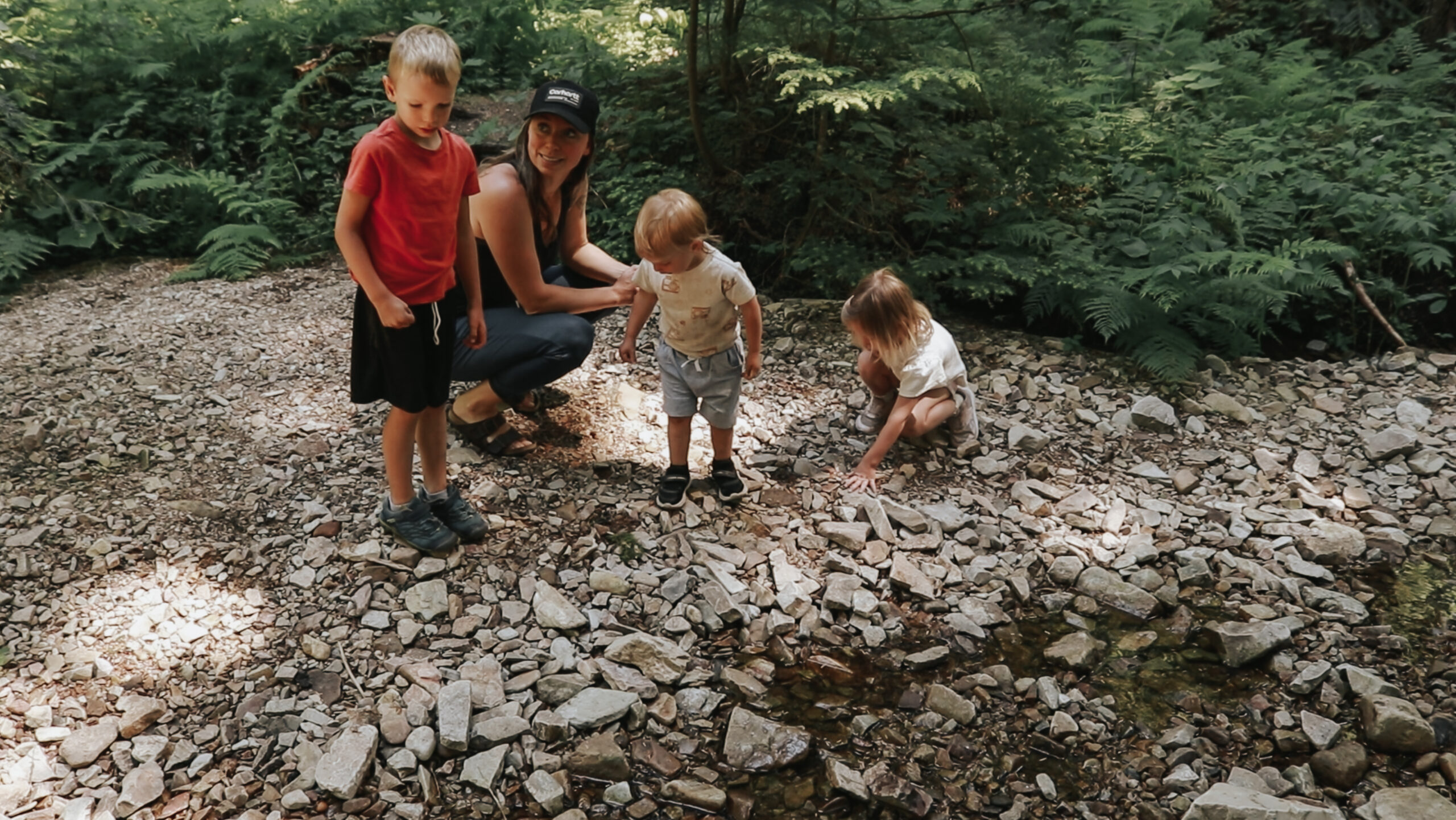
I do allow screens occasionally, but I want them to be intentional. When I do allow screens, I want it to be something that is slow, beautiful, skill-building, or genuinely good. I don’t hand my children a device every time they are bored. If they are bored, they can help me with what I’m doing. They can go outside. They can build something. They can look at books, be creative. They can play with sticks, mud, rocks, bugs, blankets, boxes, etc.
A couple practical things we do allow screens for.
Family movie nights. We have our TV in the basement, which is so nice because it’s not the focal point of our home. Naturally we only go down in the basement in the darker, colder months, so we never watch TV when it’s nice out.
Educational teachings used at a specific time and for a specific purpose. For example, if I’m teaching them about a specific topic and they want to visually see it, I think screens can be really useful for this. Or music lessons are another great example since we do online music lessons.
God made children as whole people with minds, bodies, imaginations, and souls. They are not little consumers who need constant input. Proverbs praises diligence. Genesis shows us that people were made to work, cultivate, create, and care for things.
I no longer treat boredom like something I need to rescue my children from. Sometimes boredom is the doorway to real childhood.
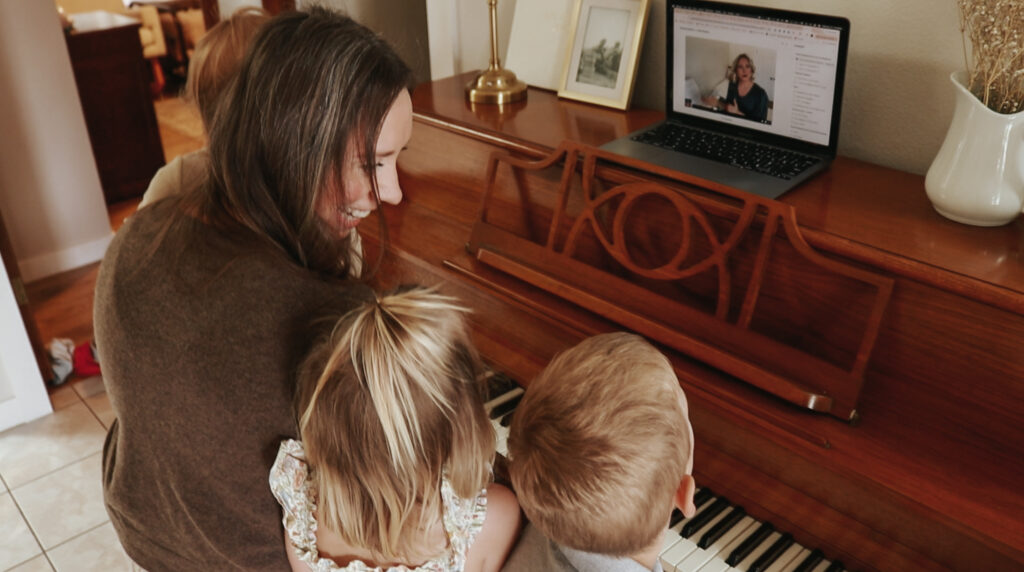
I also had to realize this applied to me too. I no longer allow myself to pull out a device when I’m bored. This can become such a gut reaction when there’s a spare moment is to just fill it with something on your phone. Instead, I’ve started playing the piano. You guys, I’ve always wanted to learn how to play the piano but I always just sort of brushed it off as something I didn’t learn as a child so I’ll never know how to play. But deep down I’ve had dreams of playing the piano as my husband gets home from work with my children all around me. Dreams of my children growing up saying they remember sitting with mama at the piano as she played.
Honestly, I used to be legitimately sad that I didn’t learn an instrument as a child and sort of felt behind in life, as silly as that sounds. But lately, as I’ve been learning the piano, I’m realizing the blessing of not having already known how to play an instrument and learning alongside my children and modeling to them the reward of doing something difficult, being really bad at it, and working hard to get better at it.
As a mom, there are usually a few sort of awkward times in the day where you don’t have enough time to do anything big, but just have a couple minutes to do something. Instead of pulling out my phone I now use this time to practice piano.
Which is why I’m so grateful to Voetberg Music Academy for sponsoring. It’s back to school, and as you’re settling in for autumn, what better way to bring joy into cozy evenings than with rollicking music your children can play together! Instead of driving your children to music lessons, the whole family can learn from the comfort of your home for less than one private lesson. Choose from either guitar, piano, violin, ukulele or mandolin, and get back valuable time in your day. Your children will be self-motivated to practice by quarterly challenges, contests, cash prizes, and The Voetberg Method’s proven Success path where students work to learn new skills and songs on their instrument for badges mailed to your doorstep.
Students no longer have to wait a week to have their teacher correct improper form, or get help. Expert Voetberg Music Academy instructors are accessible 24/7 for your student’s questions, and LIVE coaching calls and Student Showcases ensure your student will have all the support they need from first unboxing their instrument, to tuning it, to playing their first song, their first week! If you’re looking to make your child’s experience with music fun, affordable and effective and efficient, check out VoetbergMusicAcademy.com and use my code THS25 for 25% off your first month!
Join thousands of other families learning music in a like-minded community your children will love to be a part of!
If my children or I are going to use a screen, I love that they can use it to learn something beautiful, disciplined, and useful, like music. It’s not passive entertainment. It’s a skill. It requires attention. It creates something in the home instead of just consuming something.
2. I No Longer Allow My Children’s Help to Feel Like an Interruption
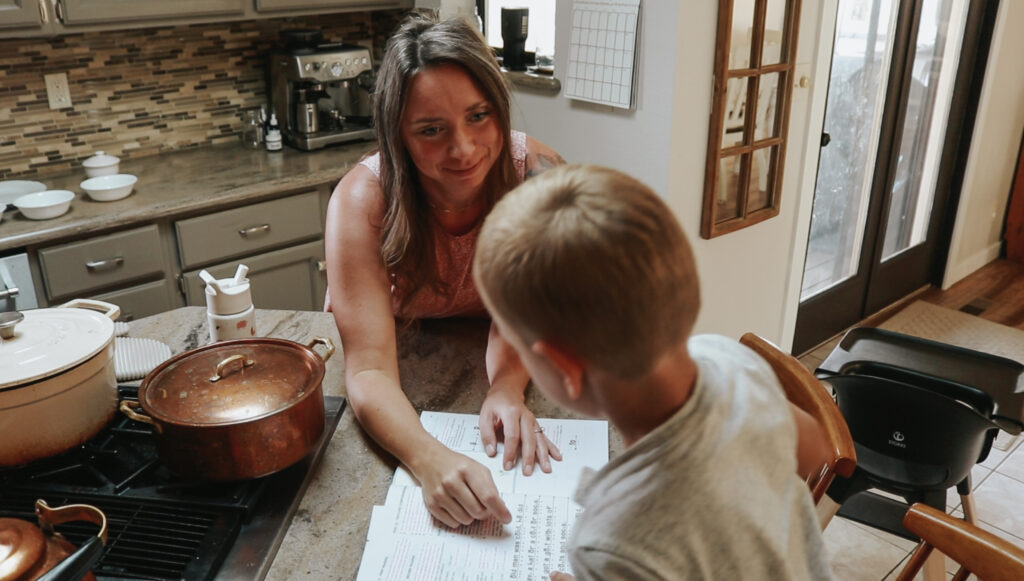
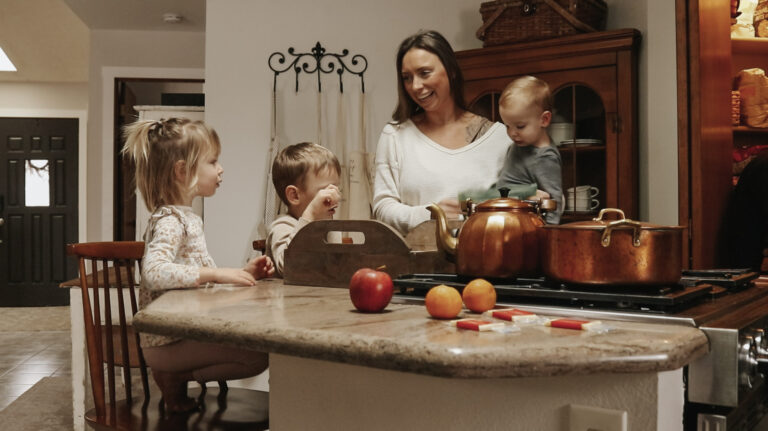
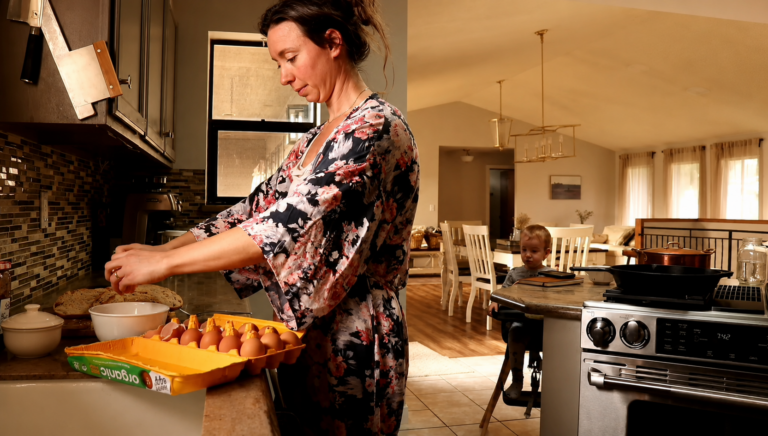
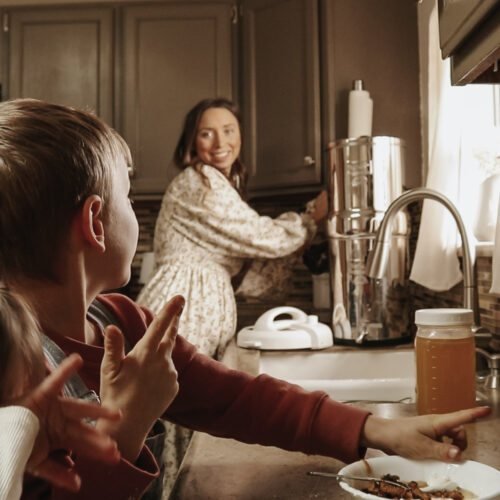
I no longer tell my children they can’t help me because it will slow me down. I used to brush them off or say, “No, not right now,” whenever I felt pressure to get something done. I don’t do that anymore. My children are always welcome in the kitchen.
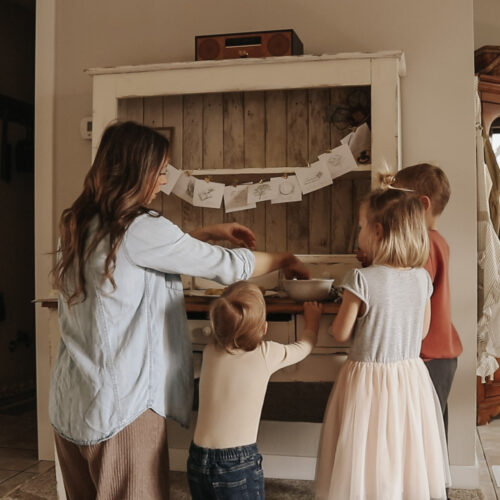
More than anything, I want my children to grow up remembering that there was always room for them beside me. I want them to remember that they were wanted, included, and trusted with real responsibility.
The goal isn’t that my three-year-old learns how to make sourdough bread from scratch. The goal is that she learns how to work as a team in the home. That she learns to follow instructions, contribute to the family, and see herself as someone who is genuinely helpful. Because I want to get back to the days where people cooked in the kitchen together.
It’s about building a family culture where we work together instead of a culture where mom does all the work while everyone else watches television. That might feel easier in the moment, but 5-10 years from now it will feel like a real handicap when the habits we avoided teaching are suddenly the habits we need them to have.
Deuteronomy 6 says we teach our children diligently as we sit in our house, walk by the way, lie down, and rise. That means discipleship is not only happening when we sit down for formal Bible time. It is happening while we cook, clean, fold laundry, answer questions, and let our children be part of real life.
The kitchen is not just a place to get dinner made. It is one of the places where children learn to listen, follow instructions, work with others, contribute to the family, and become useful.
This is so much harder! It’s messy, time-consuming, and wildly overstimulating. It requires patience and repetition before we see the fruit of it.
But then something starts to happen. Your children become capable. They start taking initiative and helping without being asked.
As hard as it can be sometimes, I try to always say yes to their help. I get to choose what that help looks like, but I always find something they can do. Once they stop listening or following instructions, they are done and can try again later. But the idea is that they remember the days where mama always made room for them.
But the problem is that so much of motherhood is not about not knowing what to do. It is having the capacity to actually do it in the moment. I feel like there’s tons of motherhood content out there that has really good advice for moms.
It tells them how to behave. How to respond. How to train their children. How to glorify the Lord in their mothering.
But so little of it actually supports them in getting them to a place where they’re actually able to live that out. Because when your nervous system is in chronic stress and your body feels constantly overstimulated, you can know the right thing to do and still feel like you cannot live it out in the moment.
I bridge that gap and I have a very specific way of helping moms escape chronic stress and fight or flight, and retrain their brains and their responses, so that they can actually show up how they want as a mother. My free workshop will walk you through the exact process I teach. The link is below.
One of the first places that chronic stress shows up in motherhood is in how much noise and mess we are able to tolerate. Because sometimes what looks like “high standards” is actually just fear and control. Which brings me to the next thing I no longer allow.
3. I No Longer Allow a Clean House to Matter More Than a Vibrant Childhood
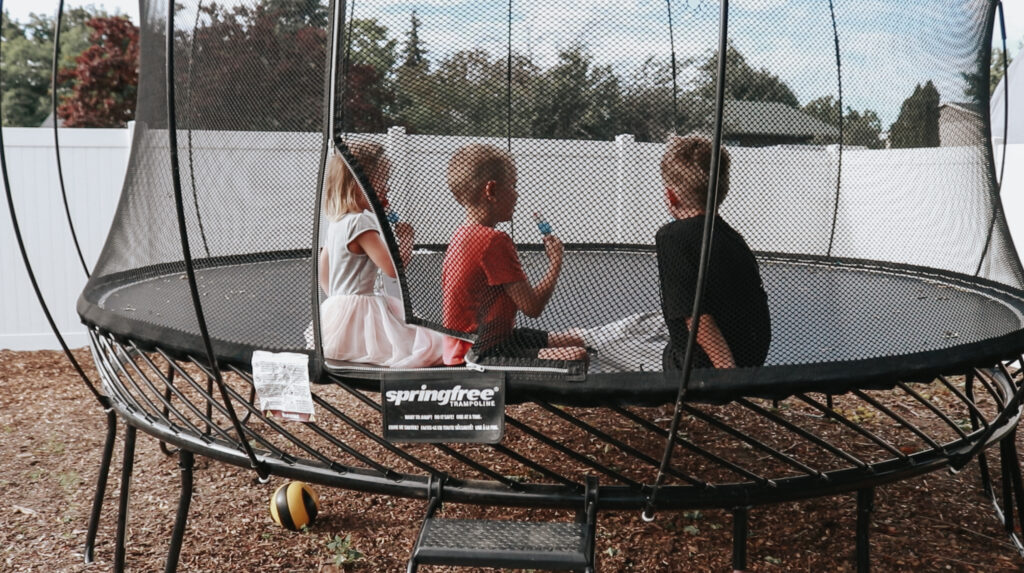
I no longer obsess over the cleanliness of my house in a way that dictates what I let my children do or when I let them do it. I let them run barefoot outside, popsicles dripping down their wrists, grass stuck to their legs, covered head to toe in dirt. When they track it inside, climb into the bath, and turn the bath water black, I don’t spiral. I see it for what it is: evidence that they made wonderful childhood memories that day.
Because I’m realizing that what I consider my “daily grind” is also their childhood and these are what my husband and I will look back on and refer to as “the good ol’ days,” and yes it was a grind. But that’s kind of the point.
Proverbs says, “Where there are no oxen, the manger is clean, but abundant crops come by the strength of the ox.”
In other words, fruitfulness is messy. A perfectly clean home with no life in it is not the goal.
Yes, I want to steward my home well. Yes, I want my children to learn responsibility and order. But I do not want a sterile house where the children feel like inconveniences.
I want a home that is warm and alive. I want a home where the evidence of children living there fills my heart with joy instead of panic about how long it’s going to take to clean.
But a home can be warm and alive, and I can still miss the life happening right in front of me if my body is there but my mind is somewhere else. Because the mess is not the only thing that can make children feel like inconveniences so…
4. I No Longer Allow My Children to Get the Leftovers of My Attention
I don’t allow myself to be elsewhere when my children are around. I don’t keep a podcast running every time we get in the car, and I don’t keep my phone attached to me while I’m with them. My phone goes in a drawer and stays there most of the day, which means I’m more present for the “boring” moments like waiting in lines, sitting in waiting rooms, walking through the grocery store, making lunch, folding laundry, or watching them play outside.
Those are the exact moments that give me time to actually talk to my children and disciple them.
If I’m outside while they ride bikes, I’m not also scheduling a doctor’s appointment, answering four different text threads, or checking emails. My children are the only ones I care about in that moment. I’m where I’m at and only there. I do one thing at a time. I want to be there for my children mentally, not just physically and that is such a gift to our children when we can actually do this.
Because doing one thing wholeheartedly beats doing all the things frantically.
But truthfully, that same frantic energy can show up even when my phone is away, because sometimes the thing pulling me out of the moment is not an app or a podcast. It’s my own need for everything to be planned, controlled, and perfectly in order. So…
5. I No Longer Allow Perfectionism to Control Our Lives
I no longer overplan outings with my children, vacations, big events, or even just the daily grind of motherhood. I’m learning to figure things out as we go and let life feel a little more carefree and whimsical.
Because the alternative is staying inside because the snacks weren’t packed perfectly, the timing wasn’t ideal, the house wasn’t clean enough, the weather was a little inconvenient, or I didn’t feel fully prepared. Then suddenly everyone is restless, overstimulated, staring at screens for far too long, and what a shame that would be.
Because when I soften up, everyone else does too. When my power move is to just relax and live a little foolishly instead of feeding that little type A gremlin inside of me, my children tend to be easier too and whatever wild thing we decided to do actually ends up going really well.
Proverbs says the heart of man plans his way, but the Lord establishes his steps. Planning is wise. Control is not the same thing as wisdom. James reminds us that we do not actually control tomorrow.
I am learning to stop letting the perfect version of the day keep us from enjoying the actual day.
The house eventually gets clean. The food eventually gets made. The laundry eventually gets folded. The outing eventually comes together.
But if I wait until every condition is perfect, we miss so much joy to be had!
I think one of the sneakiest ways perfectionism steals joy is by making us believe our real life is always one season away. One day when the house is quieter. One day when the children are older. One day when things are easier. But I think the real faithfulness is learning how to live fully in the life God has already given me.
6. I No Longer Allow My Life as It Stands to Come in the Way
I no longer allow my life as it stands to come in the way of something I really want to do in the name of “waiting until the children are older.”
Because the truth is, Lord willing, more children may come. Then what? Am I going to keep pushing everything off until there are no babies, no toddlers, no naps, no nursing, no diapers?
Even when the children are older, there will still be something. Different needs and likely busier schedules. Different limits and different responsibilities. Limiting factors will always be there, they will just look different.
I don’t want to build a habit of postponing my actual life until the “one day” that may never actually come. I’ve started bringing them into the work, and into the adventure.
But I’m not saying that living fully with our children means buying more, or turning every memory into an expense because I tend to think the opposite is true, actually.
7. I No Longer Allow Spending to Replace Resourcefulness
I no longer allow every whim, or desire, or inconvenience, to become a purchase.
One thing I feel like 90s moms were SO much better about than modern mothers was stretching a dollar and avoiding frivolous spending. Making meals out of what was already in the fridge. Buying secondhand. Accepting hand-me-downs. Not needing everything to be new, perfect, matching, upgraded, and aesthetic.
Stretching a dollar is a lost skill these days. Looking in the fridge before you order food. Saving before you buy. Mending before you replace. Reusing before you toss. Just making do with what you have.
Take coffee for example. There’s a whole culture around coffee now. And I say this as someone who fully partakes in that boujee coffee culture. But even that is just so different from the way a lot of us grew up in the 90s where there was just a coffee pot on the counter and that was coffee. Nobody needed a seven dollar drink every time they left the house.
Again, the point is not that coffee shops are the problem. The point is that modern life has trained us to outsource every tiny craving, inconvenience, and desire, when a lot of the time, the wiser thing is just to use what we have, wait a little longer, make it at home, or do without.
I think this shows up in a bigger way too. We live in a time where everyone’s lives seem to be documented through curated, elaborate experiences. Grand vacations, Disney trips, expensive outings, curated birthday parties, yearly family photos that cost thousands of dollars, and all kinds of super expensive things that just aren’t the reality most of us are living.
Honestly, they were not the reality for most families back then either. The norm back in the 90s was not this constant pressure to make every childhood memory expensive and impressive. It was coffee pots, grand vacations to the lake an hour away, camping and going on hikes because its cheap, road trips with a cooler packed with food from home, hand-me-down clothes, and figuring out how to make what you had work.
I do not want my children to grow up thinking every desire has to become a purchase. I do not want that whole pattern of, “I want something, so I get it. I want this thing, so I get it. I want that thing, so I get it.”
No. There needs to be a waiting season. A season where you gain clarity on whether that is even something you actually want.
There is something deeply satisfying about making meals out of what is already in the fridge. Buying secondhand. Accepting hand-me-downs. Learning to wait. Learning to do without. Learning to make do.
This used to be how people lived until convenience became the norm, and then all of a sudden ordinary resourcefulness started to feel like deprivation. Waiting felt like lack. Making do felt embarrassing. Secondhand felt beneath us. A simple life started to feel like a lesser life and I think that’s a big deception.
That deception is especially cruel when we are in the little years, because these are often the exact years when life naturally should be smaller, slower, tighter, and more ordinary. I think it’s designed that way for a reason.
8. I No Longer Allow My Children’s Little Years to Feel Like a Lesser Life
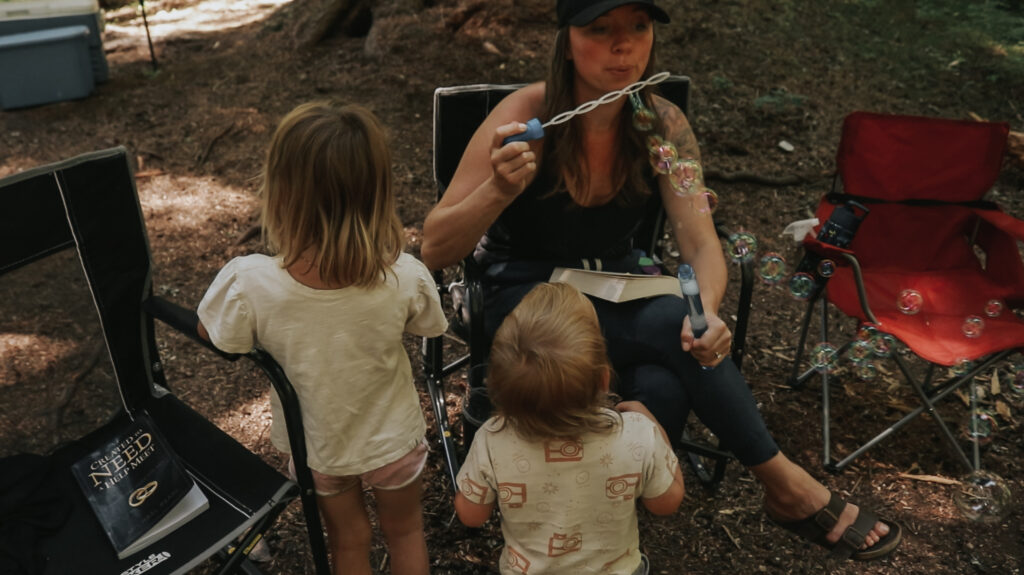
These are the little years, and it used to be normal that these were the years where money was tighter and life felt much smaller in scale.
If this is the season where money is tighter, where we are home more, where life feels less impressive from the outside, where there are fewer big trips and more ordinary days, then that’s exactly what I want.
It’s not my turn for frequent travel, or a life that looks impressive from the outside. But it IS my turn for learning how to make really good, home-cooked meals, clean up messes over and over again, snuggling children and the daily work of building a family culture. I’ve prayed to have this turn so I will embrace it.
Maybe the goal is not to become a 90s mom. But we can take what was good, reject what was not, and build something beautiful with life right in front of us.
Basking in the simplicity of an ordinary life. Letting the days be slow, the house be lived in, the children be more free, food at home, dirt in the bath, a mother who is actually present.
I think that’s what we are after.
Don’t forget to check out Voetberg Music Academy using my code THS25 for 25% off your first month, and for help becoming the kind of peaceful, present mother this is really about, my free workshop is linked below.

Kyrie Luke
Leave a Reply