Ingredients
Equipment
Method
Bagel dough
- Feed your starter and let sit at room temp for several hours until it is active and bubbly. Do the float test to see if it is mature.
- In the bowl of a stand mixer, mix together the sourdough starter, water, and coconut sugar with a wooden spoon until mostly combined.
- Now, attach the bowl to the stand mixer and fit with the dough hook attachment, add 2 cups of flour and mix on low speed until incorporated. Then slowly add the remaining two cups of flour while mixing on low speed until just incorporated and let sit for 15 minutes.
- After 15 minutes, add your salt and mix for another few minutes until salt is fully combined and you have a ball of dough.
- Once the dough has formed, remove and place in a greased glass or ceramic bowl covered with plastic wrap or a damp tea towel and allow to ferment at room temperature for about 10 hours.
- During the last few minutes of fermentation, prep a baking sheet with parchment paper, turn dough out onto an oiled work surface and divide into about 8 pieces.
- Shape your bagels by taking each piece and shaping into a ball by gathering up the sides and pinching them together in the center. Turn the dough over so that the seam side is down on the work surface and gently form a smooth ball. This helps to develop the gluten structure.
- Then, using your thumb to poke a hole in the middle rotate your dough around your thumb as you smooth and shape the ring. The hole will need to be bigger than you think since it will shrink as the dough performs its second rise.
- Place bagels on the parchment lined baking sheet, evenly spaced, cover with a tea towel and let rise again for about an hour (you can get away with longer if needed). They will have bulked up after this second rise.
- During the last few minutes of the second rise, boil a large pot of water and preheat your oven to 425 degrees F. Once your water has come to a boil add your baking soda and coconut sugar.
- Using a slotted spatula, scoop a bagel one at a time and gently place in the boiling water. Only boil 3 bagels at a time. Boil for about 1-2 minutes on each side then remove using a slotted spatula and place back on the parchment lined baking sheet.
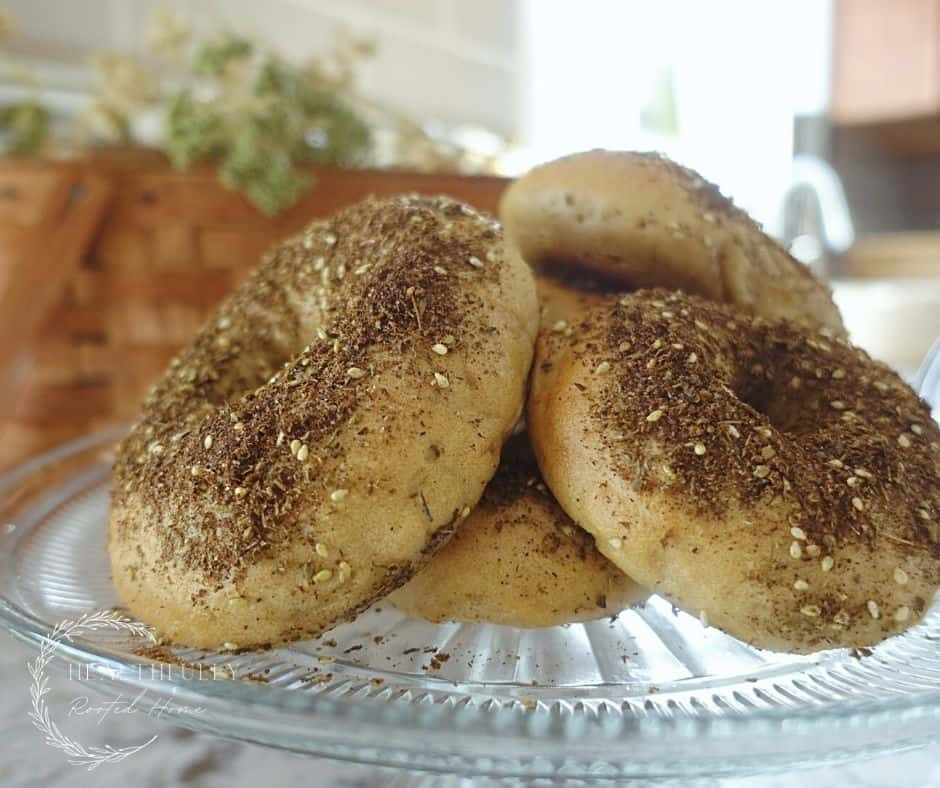
- As soon as your take the bagels out of the boiling water, sprinkle with your Zaatar seasining (while they're wet) and place your second batch in the water. Continue until all bagels have been boiled and seasoned.
- Bake the bagels for about 25 minutes until golden brown.
- Remove from oven, let cool (at least slightly) and serve with cream cheese, ghee, or whatever else sounds delicious to you!
Notes
How to Store Zaatar Sourdough Bagels
Store cooked bagels covered, at room temperature for up to 2 days. Storing in the fridge is not recommended as they will dry out.How to freeze homemade bagels
To freeze baked bagels, let cool completely. Wrap bagels individually in plastic wrap and place them in a freezer-safe container for up to 3 months. To reheat bagels, let thaw on the counter. Cut in half and heat in toaster, toaster oven, on broil in the oven, or heat in the microwave.Zaatar Sourdough Bagel Baking Tips
- Bigger holes - Make the holes bigger than you think you need to make them when you're shaping your bagel dough. The hole will shrink as they start to puff up and if it isn't big enough your hole will completely disappear.
- Don't skip the boiling step - The boiling step helps the outside of the bagels to cook quickly enough to help the bagels hold their shape during the baking step. Secondly, it helps the zaatar seasoning to stick better. Lastly, it gives the bagel a shiny and crisp coating making them absolutely delicious and gorgeous.
- Add sugar and baking soda - Don't skip out on adding the coconut sugar and baking soda to the pot of boiling water - this is used to caramelize the outside of the bagel, increase surface gelatinization by breaking down some starch in the bagel dough, and also gives the bagels a "pretzely" taste.
- Rest before salt - Be sure to let the dough rest for 15 minutes before adding the salt. If not, the salt will kill the yeast before it has a chance to activate.