

Posted in:
On: December 28, 2021
Fermenting Fruits – Lacto Fermented Method
This post may contain affiliate links, which means I make a small commission (at no extra cost to you) on any purchases you make through clicking a link on this site. See my full disclosure here.
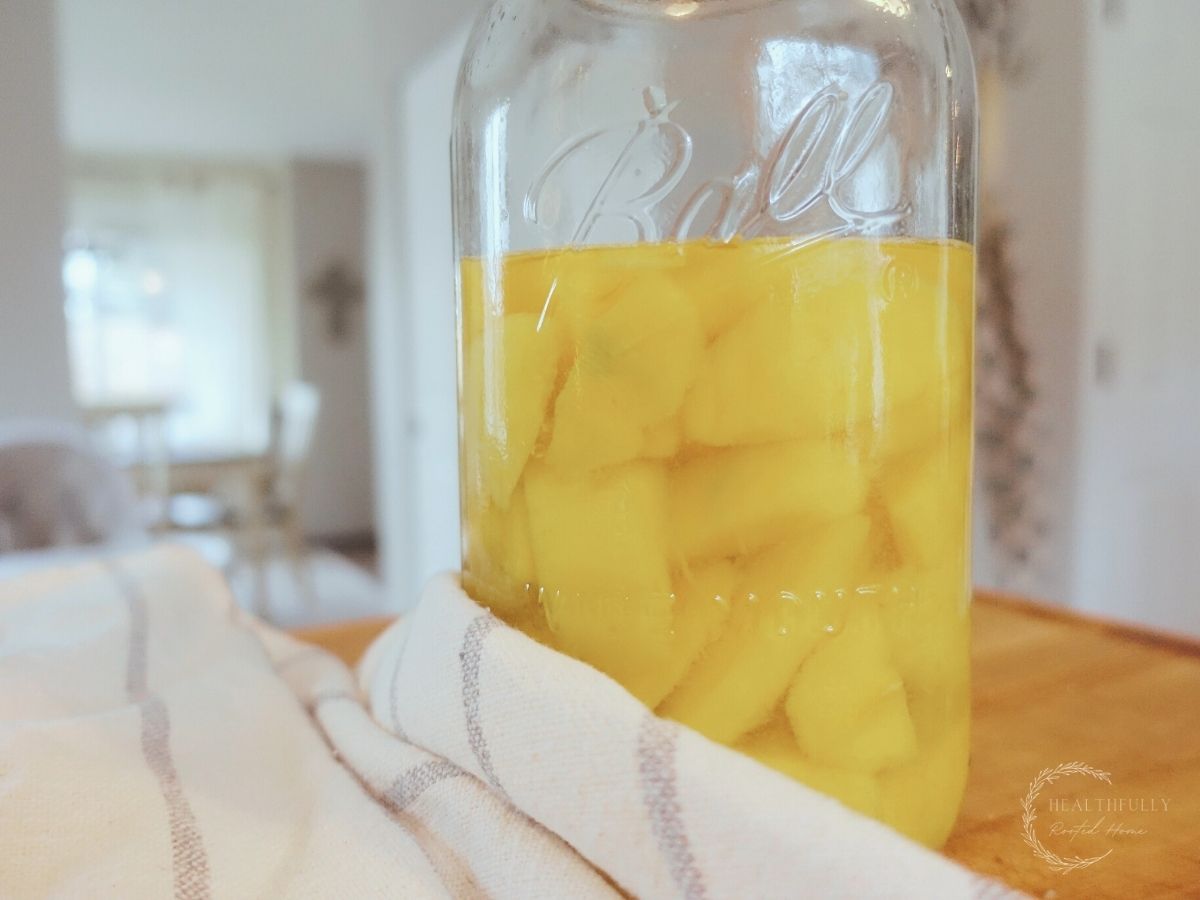
Fermenting fruits is simple using just salt and filtered water. Fermented fruit offers healthy, gut-healing probiotics. Use fermented fruit for smoothies, snacks, or make it into a chutney or sauce as I show you in this post.
Related: Homemade Raw Milk Kefir
Related: Fermented Apples
This post contains affiliate links, which means I make a small commission at no extra cost to you. See my full disclosure here.
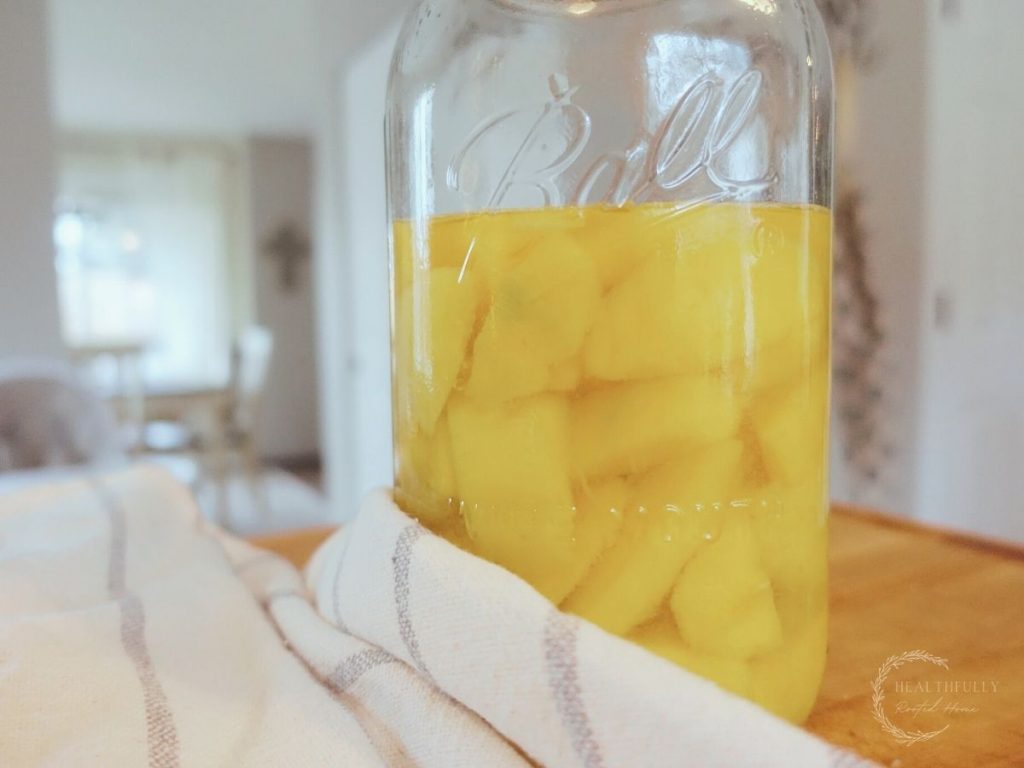
fermenting fruits tutorial
Fermenting fruits is a creative way to get your daily probiotics. Using the lacto-fermentation method for fermenting fruit makes the fruit taste slightly salty, and removes the sweetness, making it great for salsas and chutneys.
tools for fermenting fruits
- Kitchen scale
- Mason jar with lid (or fermentation kit)
- Fermenting weight (I just used a bag of mango cores)
- Knife (for some fruits)
- Peeler (for some fruits)
fermented mango Ingredients
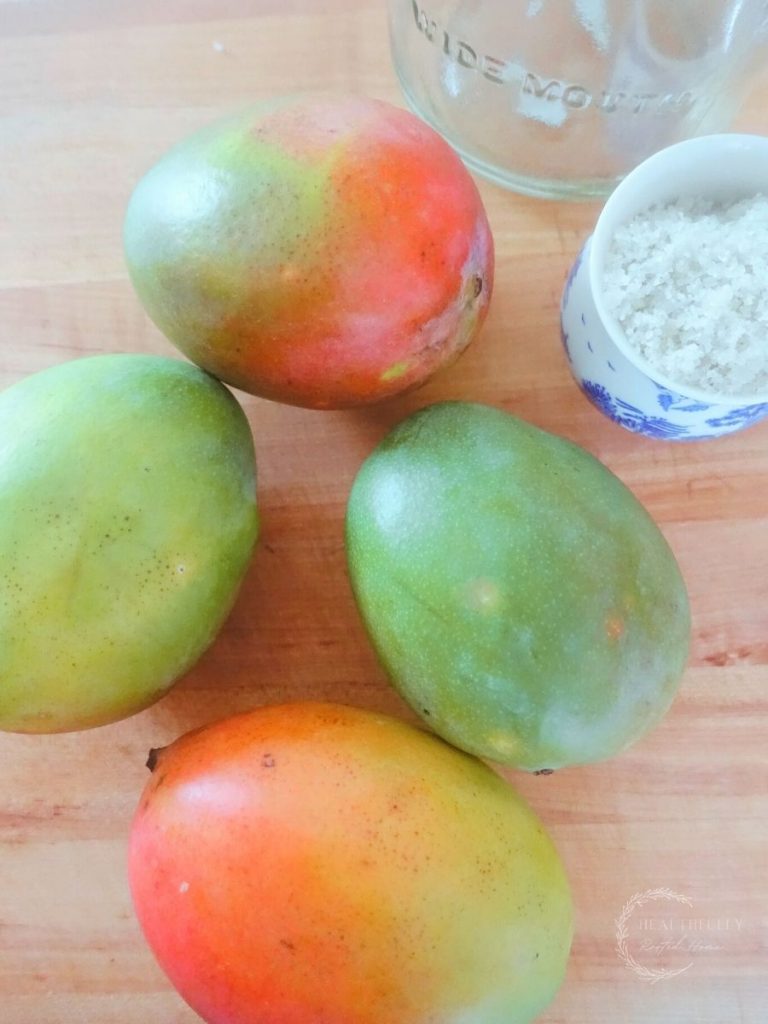
- 3-5 organic mangos
- Sea salt (2% of weight of mangos)
- Filtered water
fermented mango Instructions
- Clean your work surface thoroughly and gather your materials. You’ll need a mason jar with lid, kitchen scale, knife and peeler for this ferment.
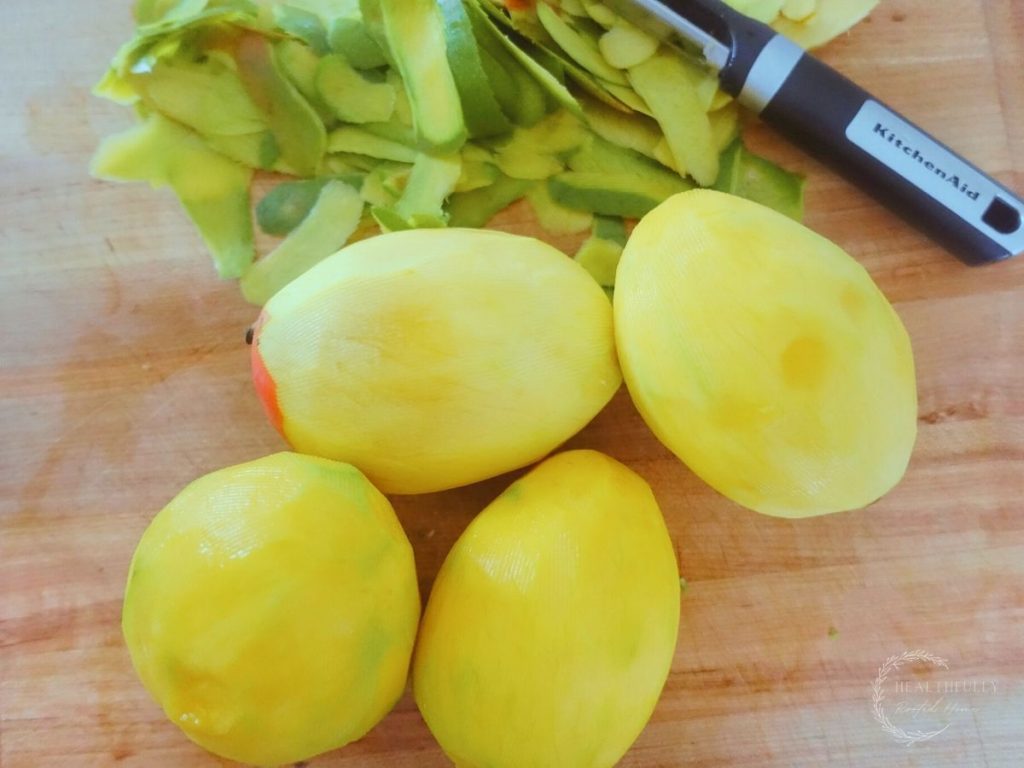
- Wash, peel and dice your mangos.

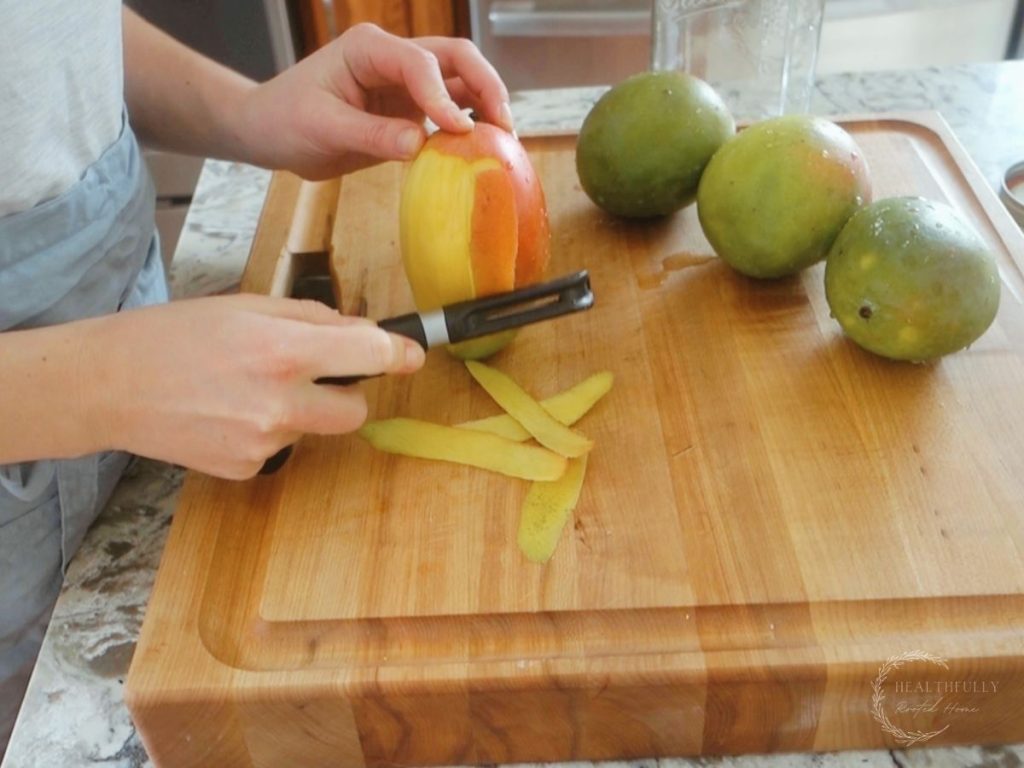
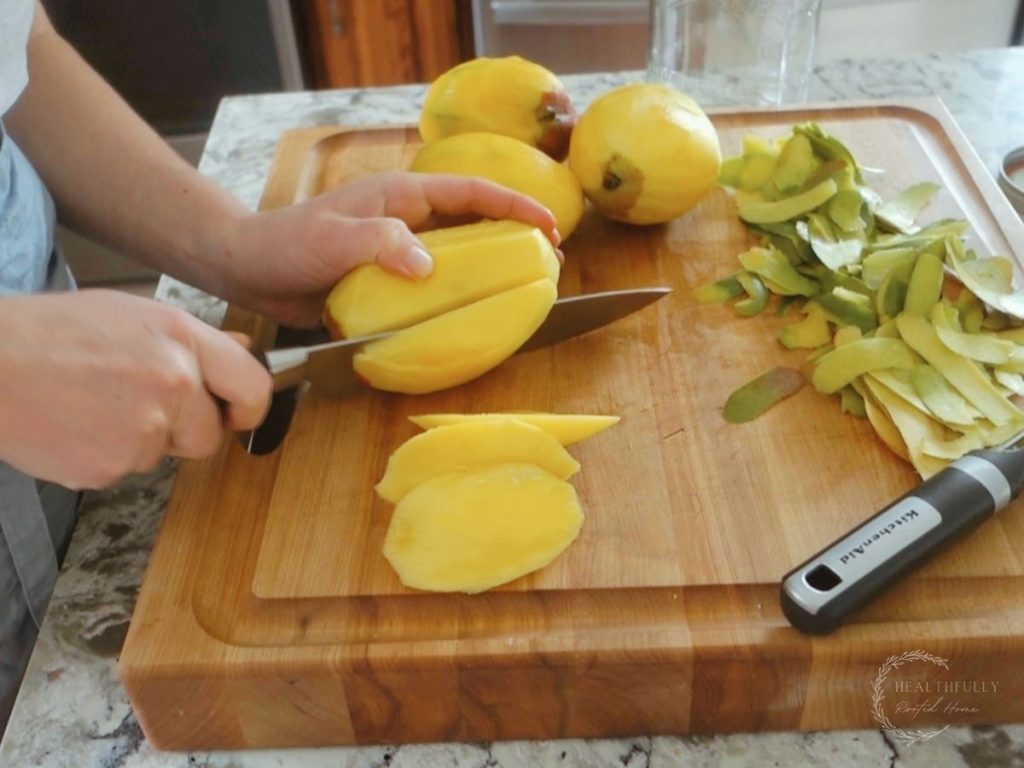
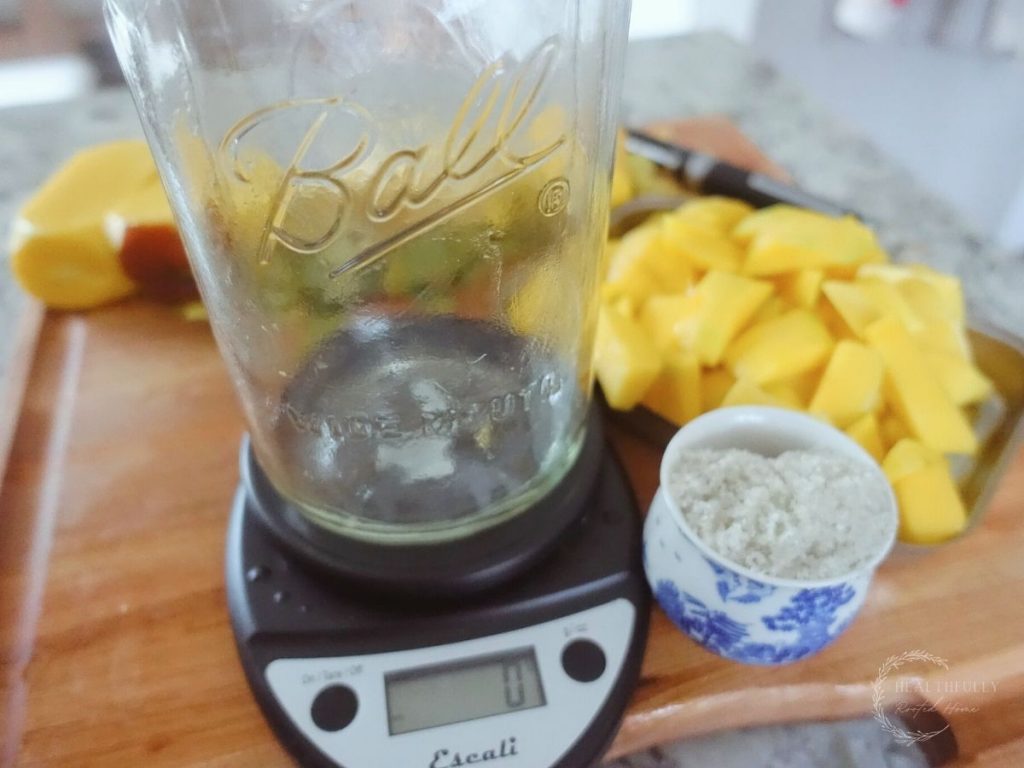
- Weigh your jar without anything in it, then zero out your scale with the jar still on it.
- Add your mangos to the jar and jot down weight.
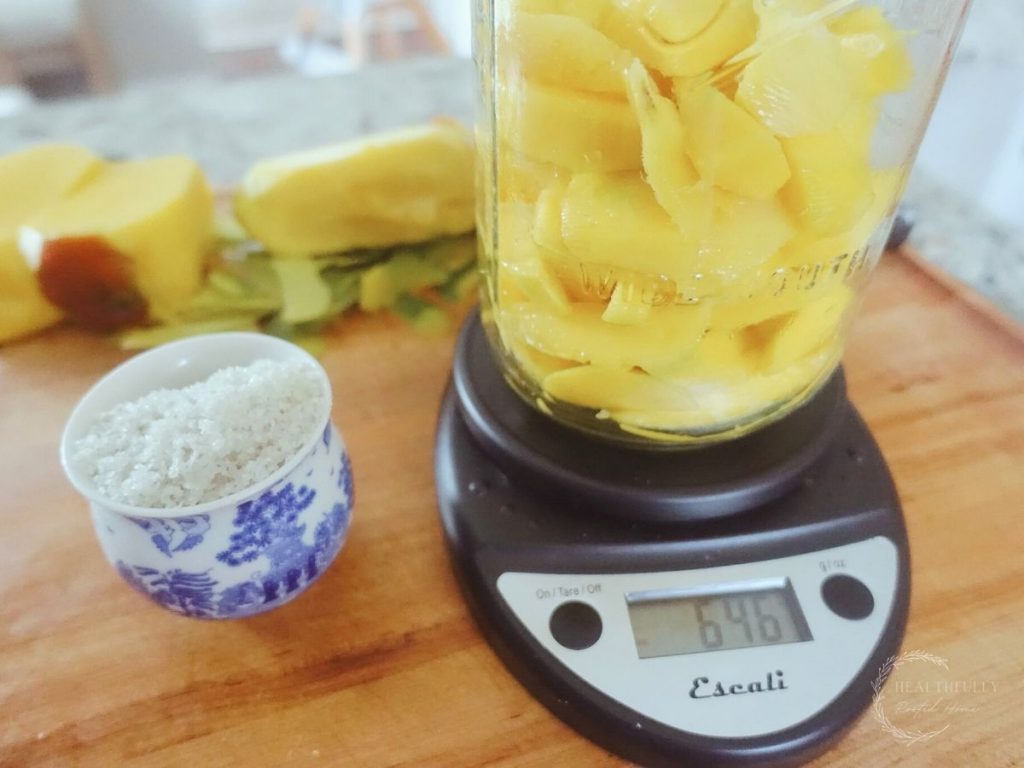
- Zero out the scale with the jar of mangos on it.
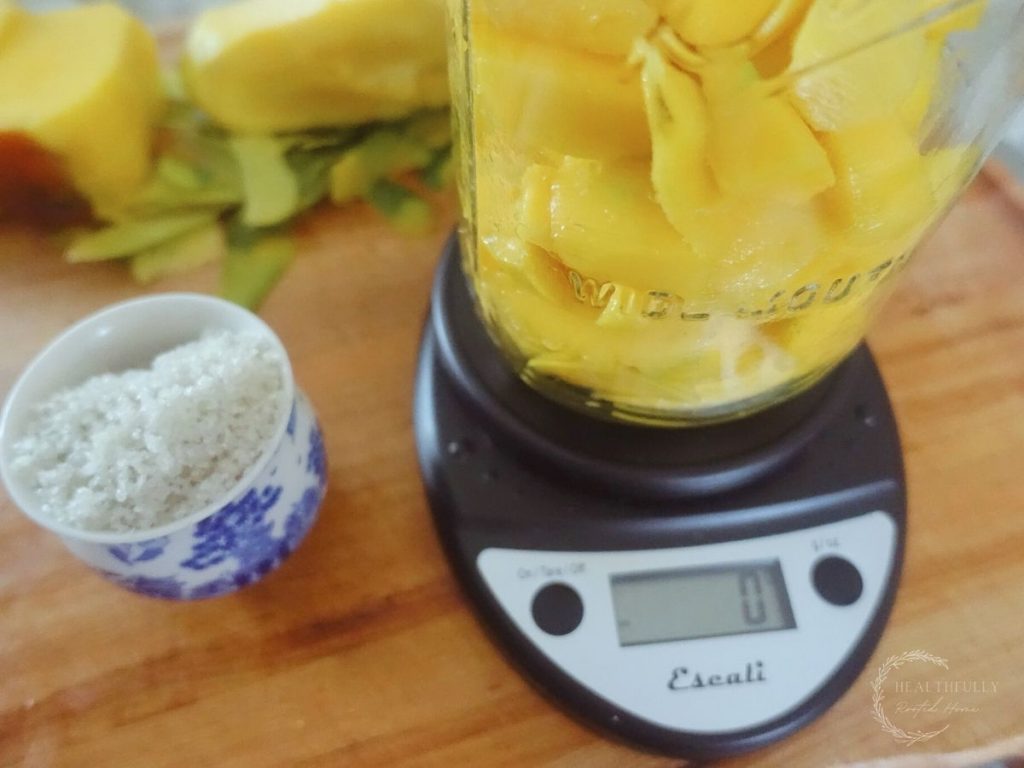
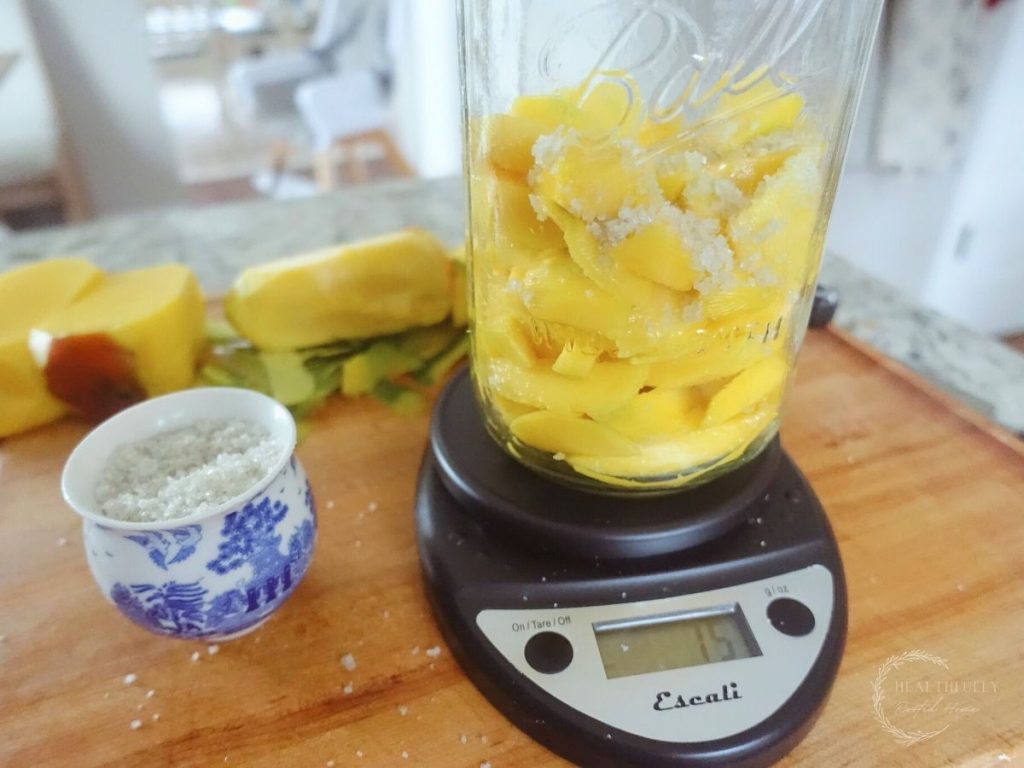
- Add 2% sea salt*
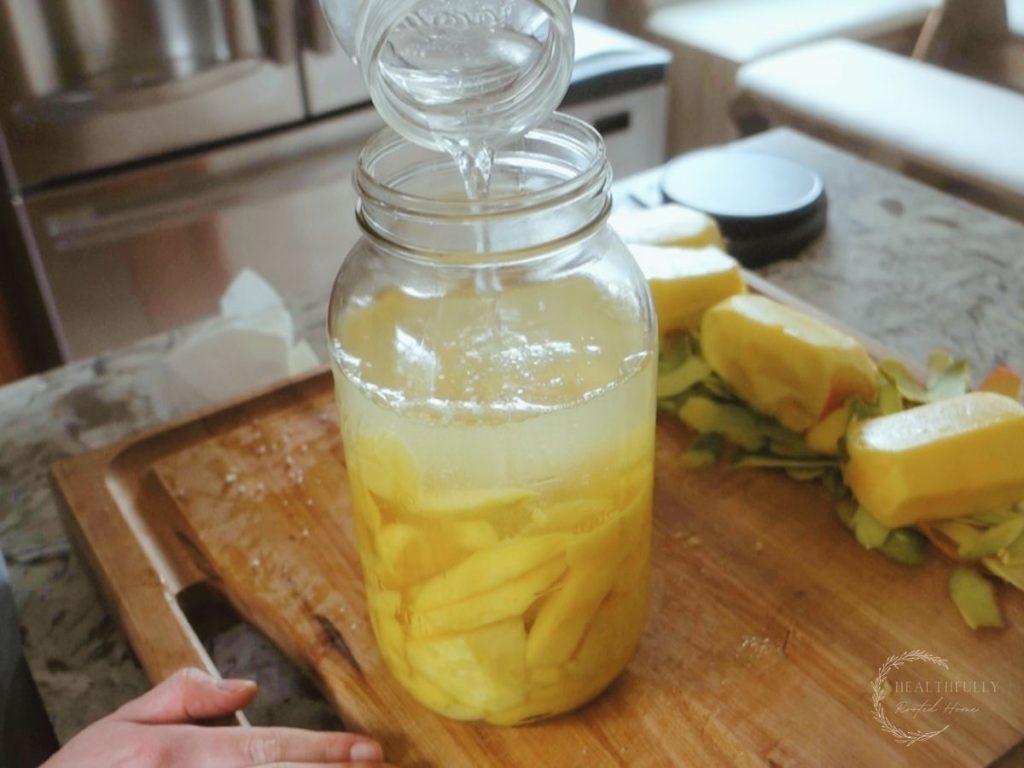
- Pour filtered water (just to top of fruit).
- Add your weight and make sure all the mangos are submerged. I just used a bag of mango cores as my weight.
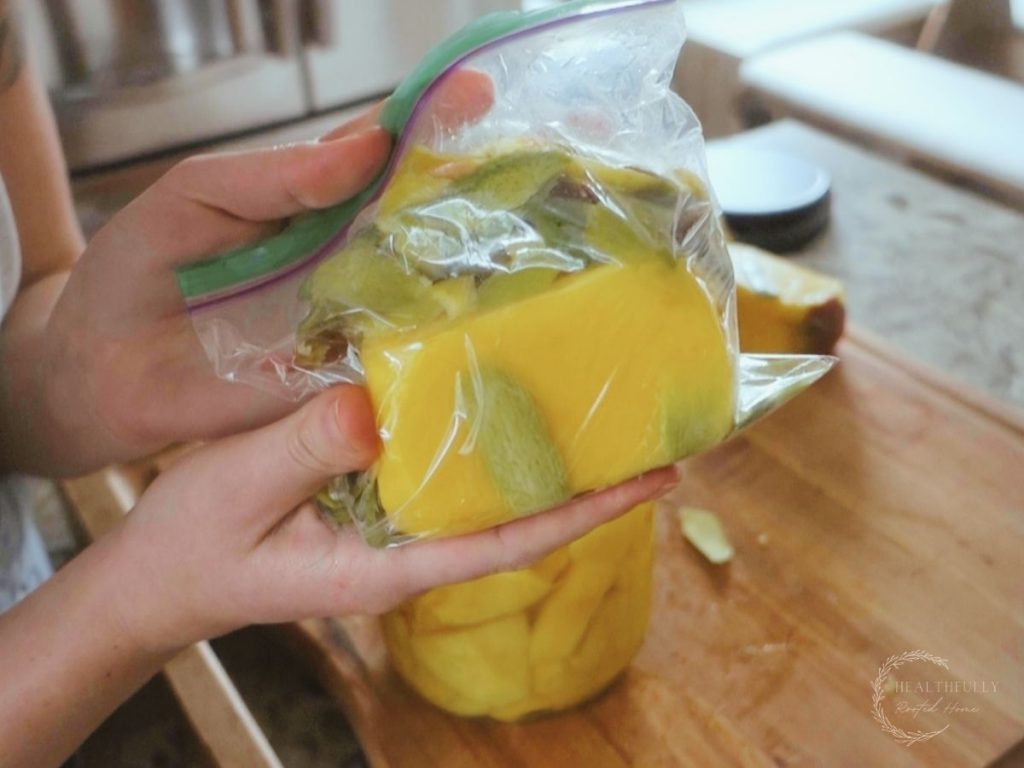
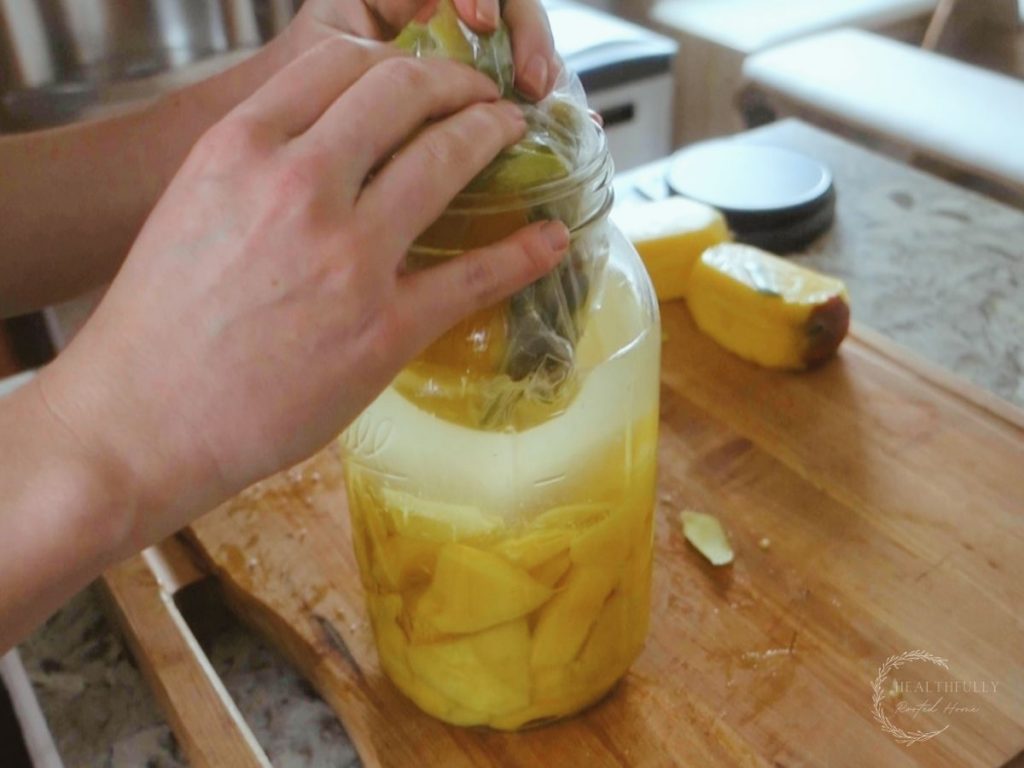
- lightly fit your lid on the jar.
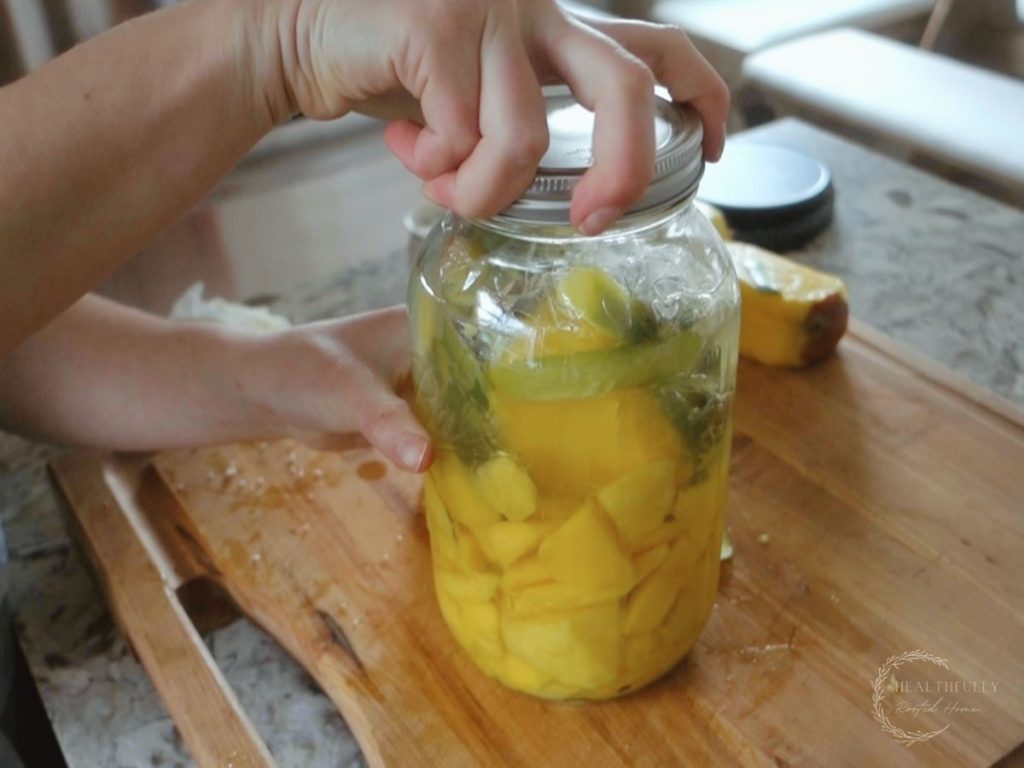
- Allow to sit at room temperature for about 48-72 hours checking every 24 hours.
- You’ll know your fermented mangos are done when they have a pleasently salty taste and may start to taste fizzy as a result of the lactic acid fermentation.
- Remove the weight, tightly fit your lid and store in the refrigerator.
* Example of 2% salt formula
If I had 600 grams of mangos I would use 12 grams of salt figured using the below formula:
Mangos in grams X .02 = Salt in grams
storing fermented fruits
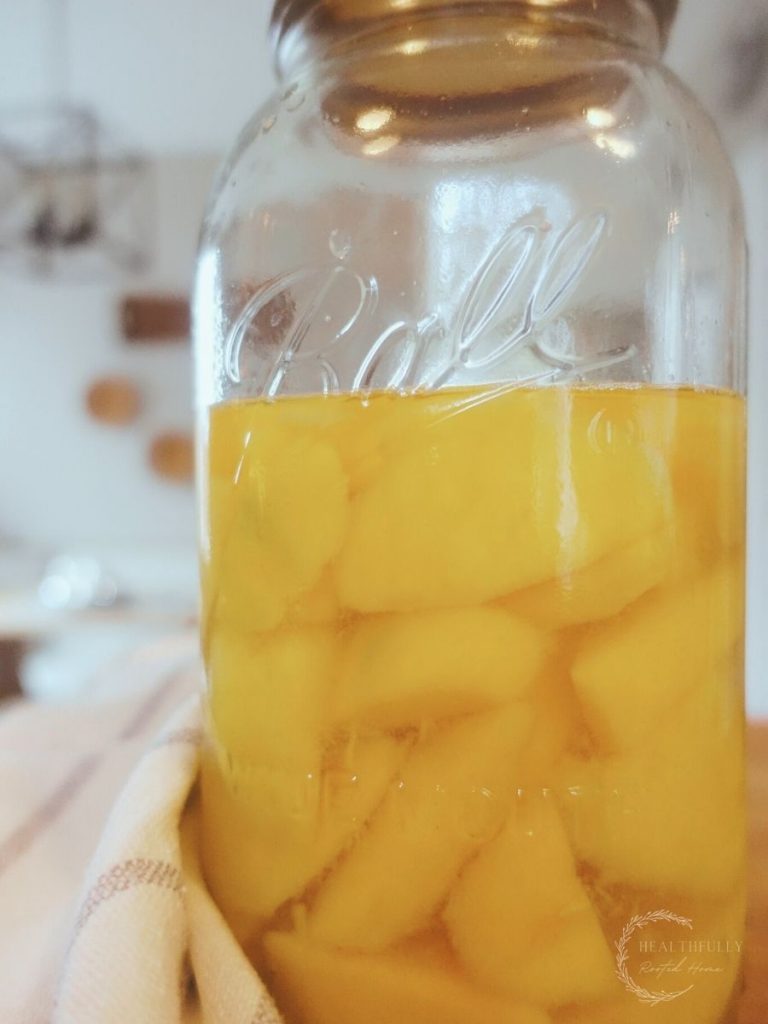
Refrigerator storage
You can store your fermented fruit in the refrigerator in an air-tight container for up to 3 weeks. Always check for signs of mold, though, and toss if they’ve gone bad.
Freezer storage
You can freeze your fermented fruit, however, this is not ideal as some of the probiotics will die off in the freezer.
fermenting fruits Tips
- Use a kitchen scale rather than try to measure out salt to fruit ratios. For a successful ferment you’re looking at 2% salt to fruit ratio. Measure this in grams using a kitchen scale.
- Make small batches and use your fermented fruit quickly. Unlike vegetable ferments, your fruit ferments only last a few weeks in the fridge after being fermented.
- You can use a starter culture like whey, kombucha or water kefir to kick your fermented fruit into high gear. This helps it to turn to lactic acid verses alcohol.
- Fermented fruit ferments very quickly. Check it after 24 hours, then every 24 hours after that to see when it’s ready.
- You can use fresh or frozen fruit, but you should always use organic fruit when fermenting to achieve optimal results.
- Ensure your work surface and storage containers are clean while fermenting fruits so no bad bacteria ruin the ferment.
- Make sure your water is filtered so any chlorine or contaminants in the water don’t ruin the ferment. We love our Berkey water filter!
benefits of Fermenting fruits
- Beneficial lactic acid bacteria which help aid in digestion.
- Predigested making the nutrients in the fruit more available to your body.
- May enhance mood due to the specific mood-booster bacteria called Lactobacillis helveticus and Bifidobacteria longum.
- Fermented foods have been shown to reduce blood pressure and bad cholesterol.
Methods for fermented fruits

- Lactic acid ferment – the method we’re using for mangos and fermented mango chutney.
- Alcohol ferment – think, wine and ciders.
- Vingar – such as apple cider vinegar.
fermented fruit Serving Suggestions
There are so many ways you can utilize your fermented fruits in order to get your daily probiotics in. Here are a few ways to use up your fermented fruit!
- Snack – the fruit by themselves are tasty. Although not very sweet, still delish!
- Smoothie – Fermented fruit is a super easy add-in to your morning smoothie. Plus it’s a great morning boost of probiotics!
- Chutney – my favorite way to use up my fruit ferments is to make a chutney out of them.
- Salsa – similar to chutney, but with a fresher taste, fermented fruit salsas are a great way to utilize your fermented fruits!
fermented fruit types
- Mangos
- Apples
- Blueberries
- Strawberries
- Raspberries
- Blackberries
- Peaches
Fermented Mango Chutney recipe
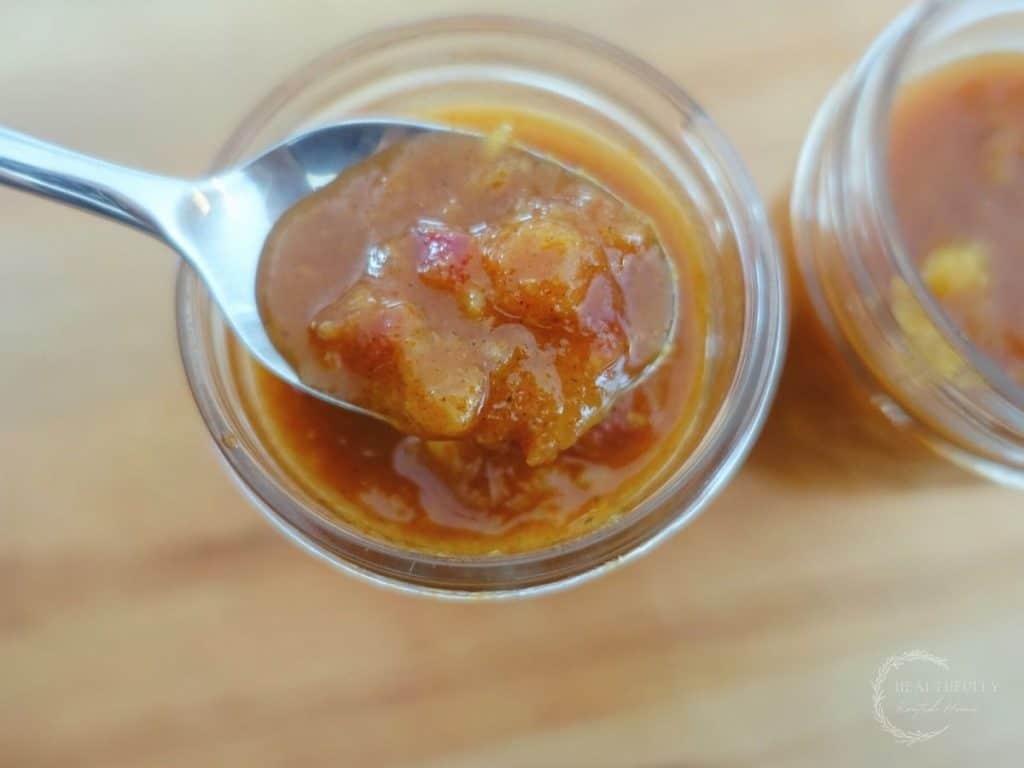
This recipe uses the fermented fruit method from above. I fermented the mangos apart from the rest of the chutney ingredients so I could use the mangos for other things. However, there is a way to ferment it all together which I’ll also show you.
mango chutney Ingredients
- 2 cups diced, fermented mangos – this is about 2-3 mangos (or peeled and diced fresh mangos if fermenting the chutney all together)
- 3/4 cup red onion
- 4 tsp grated fresh ginger
- 2 cloves garlic
- 1/2 cup honey
- 1/2 cup white wine vinegar
- salt and pepper to taste
- 1 tsp smoked paprika
- 1/4 tsp cardamom
- 1/4 tsp cayenne pepper (more or less depending on spice tolerance)
- 1/2 tsp cinnamon
- 1/2 tsp chili powder
- 1/4 cup raisins (optional)
fermented mango chutney Instructions
Method 1 – using pre-fermented mangos
- Begin with fermented mangos using the method above.
- In a pot or dutch oven, saute the red onion, honey and vinegar over medium-high heat for about 3-5 minutes until onions begin to soften.
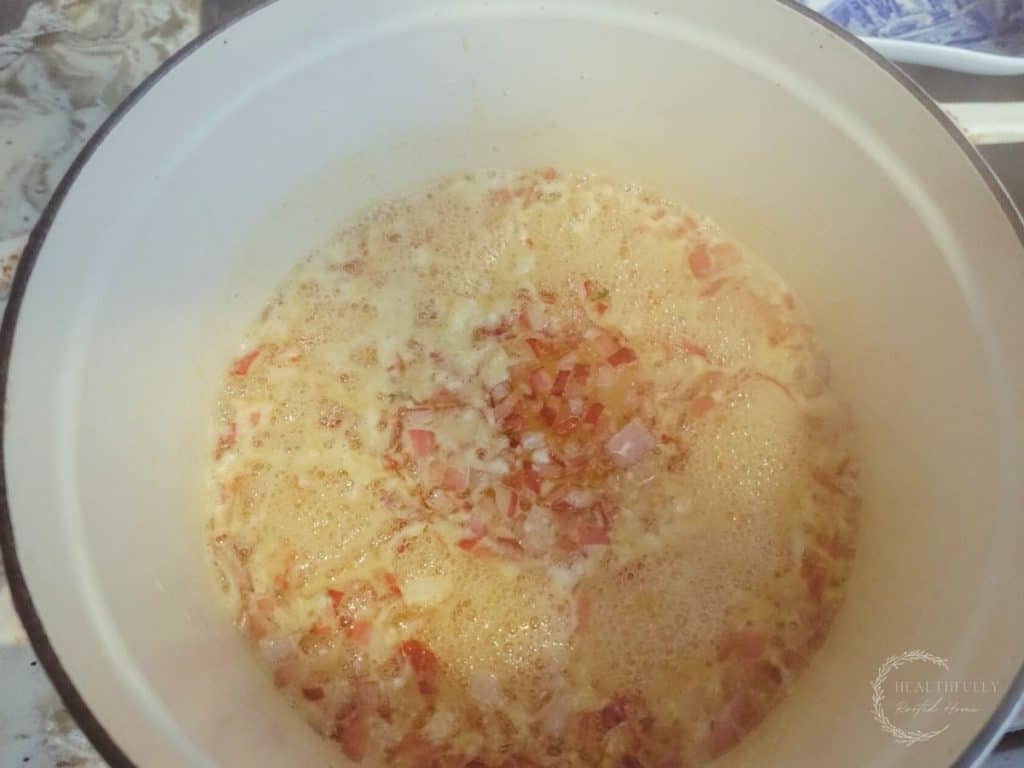
- Turn the heat down to low and add the garlic and ginger and let it saute until it becomes aromatic (about 30 seconds to one minute).
- Add all your spices and stir to combine.
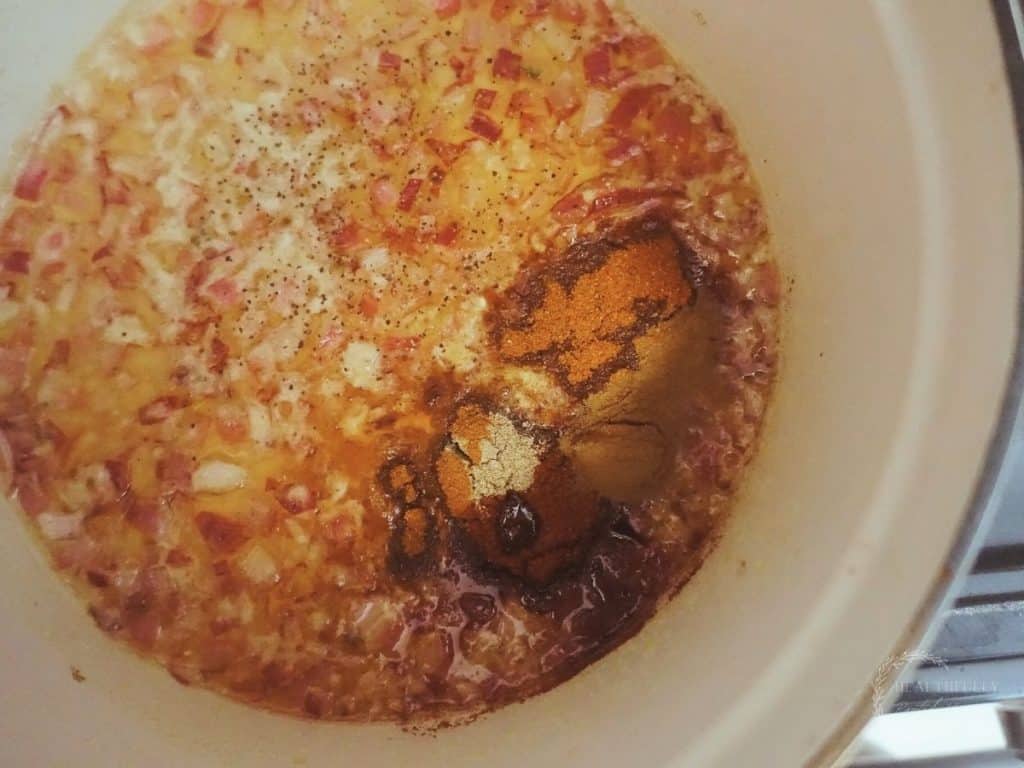
- Let the entire mixture saute until it becomes bubbly then turn the heat off and remove pot from heat.
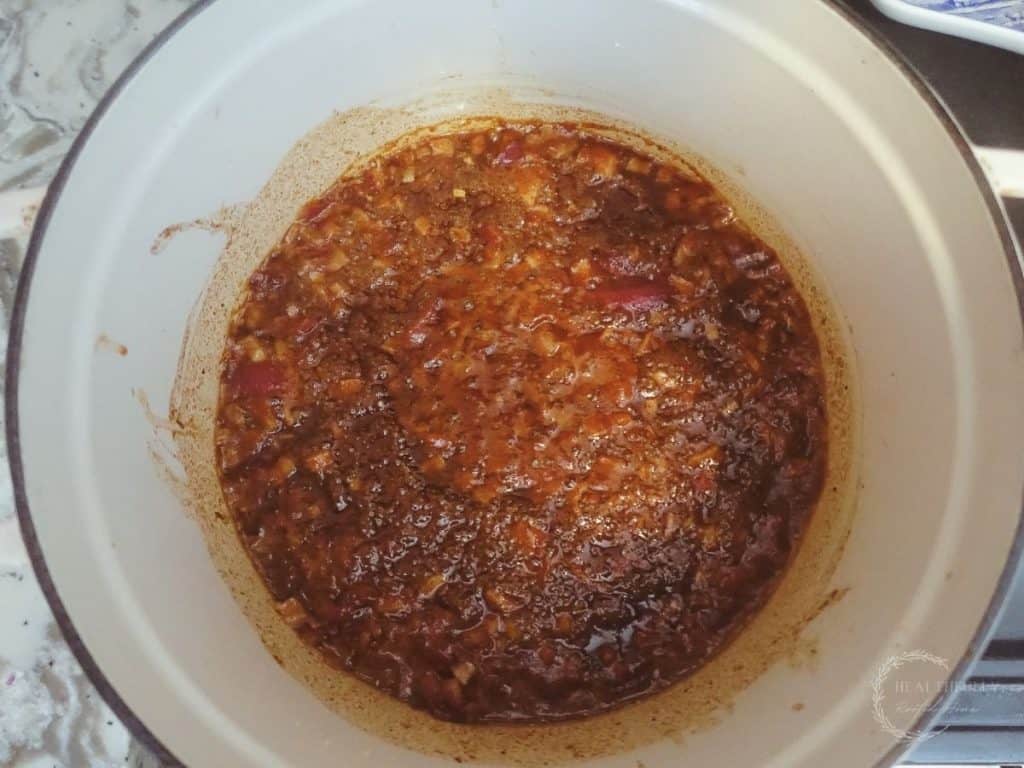
- Let the mixture cool until completely cooled (you don’t want it to be too hot and kill the bacteria in your fermented mangos).
- Add your fermented mangos.
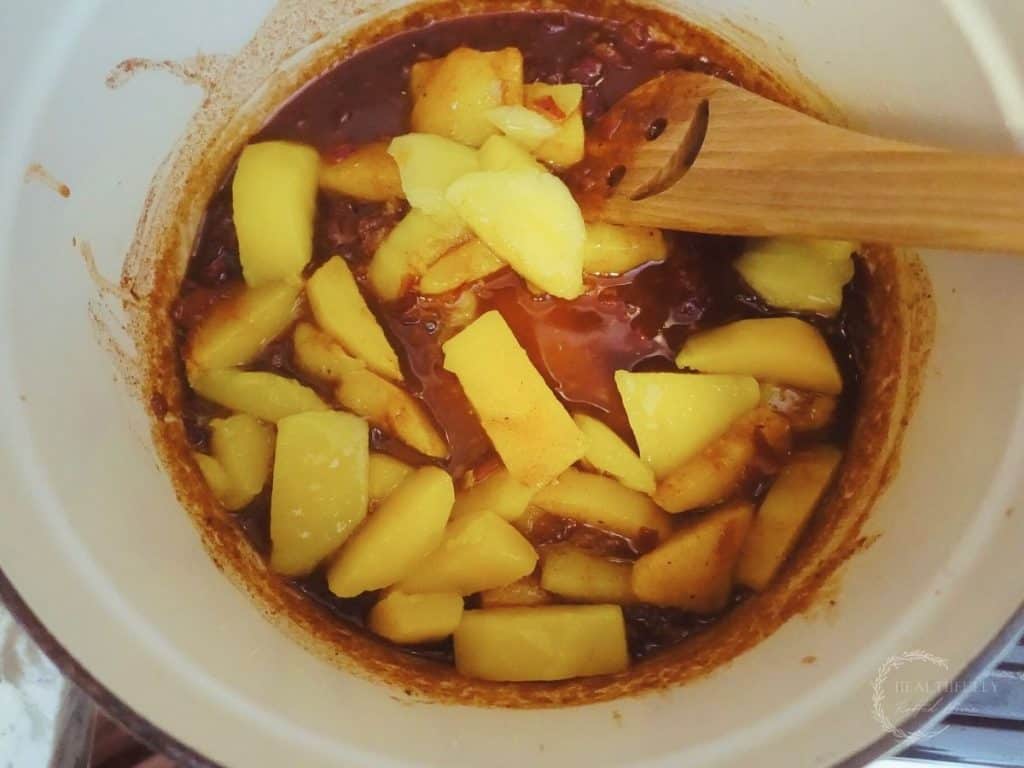
- Using an immersion blender slightly blend the ingredients together (alternatively, you could pour everything into a blender and lightly blend everything).
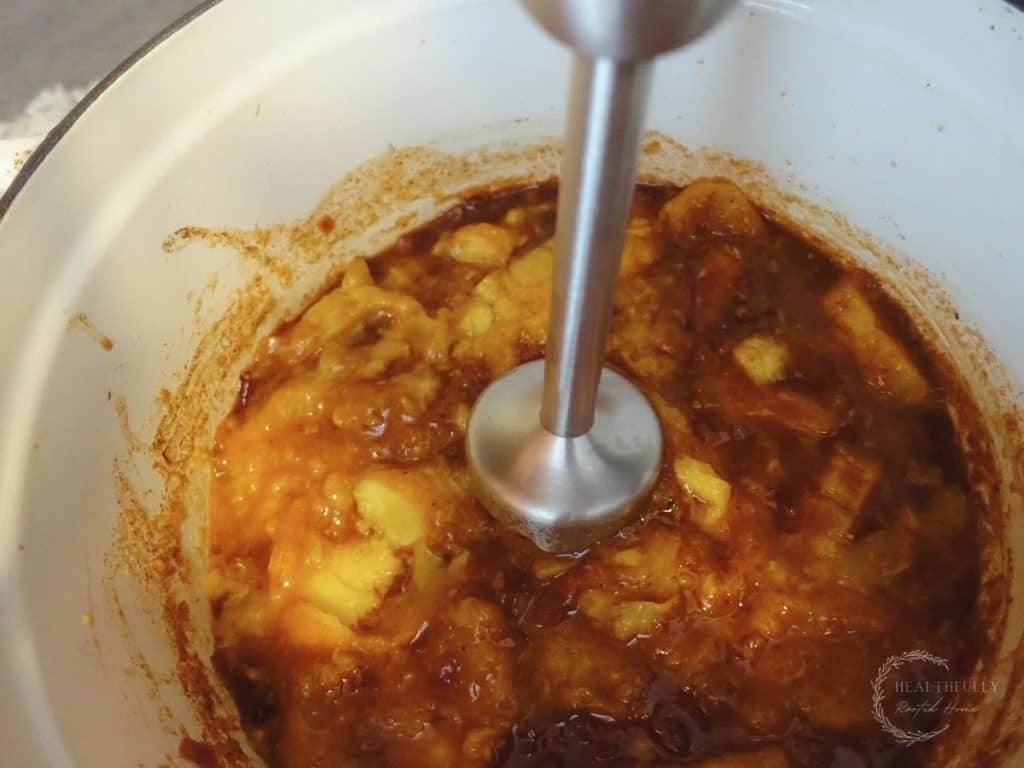
- Add your raisins, stir, transfer to an air tight container and store in the fridge for 1-2 weeks.
Method 2 – fermenting all together
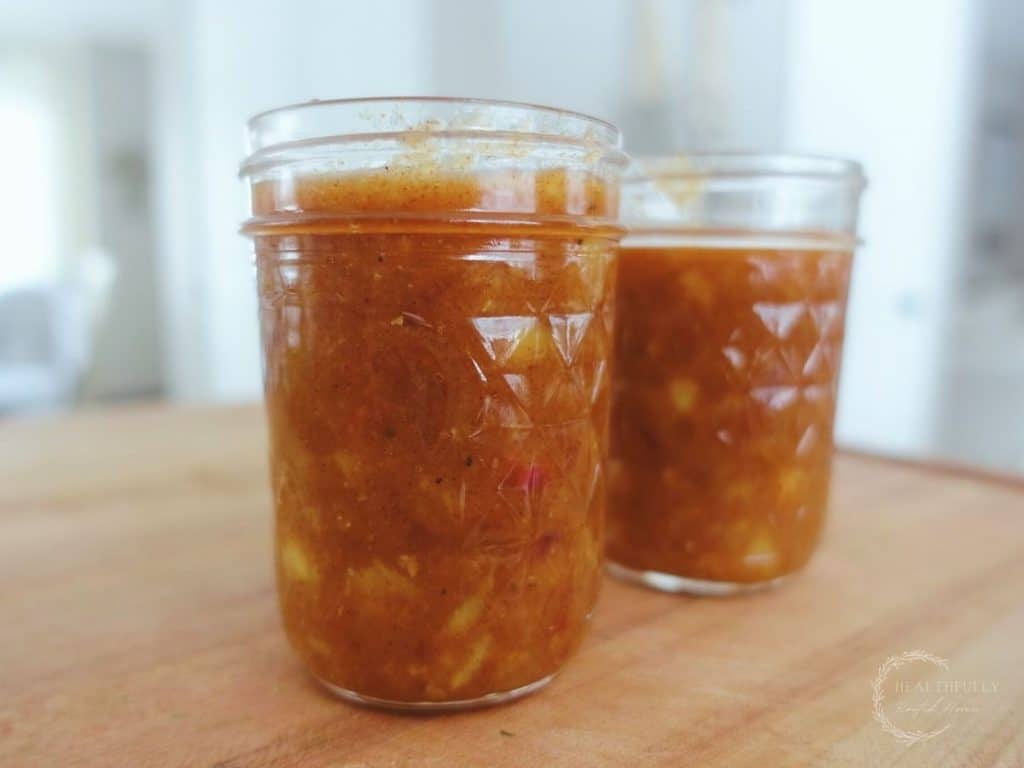
- In a pot or dutch oven, saute the red onion, mangos, honey and vinegar over medium-high heat for about 2-5 minutes until onions and mangos begin to soften.
- Add the garlic and ginger and let it saute until it becomes aromatic (about 30 seconds – one minute).
- Add all your spices and stir to combine.
- Let the entire mixture saute until it becomes bubbly then turn the heat off and remove pot from heat.
- Using an immersion blender slightly blend the ingredients together to desired consistency (alternatively, you could pour everything into a blender and lightly blend everything).
- Add your raisins, stir, transfer to an air tight container with the lid loosely fitted.
- Let sit on counter for about 72 hours checking every 48 hours for taste.
- Store in the fridge for 1-2 weeks.
shop fermented fruits
(These affiliate links help to support this blog at no extra cost to you. Your support means the world to me!)
- Fermenting kit
- a large non-reactive bowl to combine all ingredients
- garlic press
- cheese grater
- Canning funnel (optional but so nice)
- Berkey water filter (we use the Royal because we drink an insane amount of water!)
- Thrive Market – 25% off & free gift! (where I get a ton of my ingredients)
- Azure Standard: $25 off your order. Code kyrieluke1
- Boos Block Butcher Block
- Kitchen scale
- My exact knife set
- Peeler
more fermented recipes
Roasted Garlic Sourdough Bread
Sourdough Starter from Scratch
Shop my Six Month Meal Plans

Shop for my six month meal plans here. These will help give you a restful dinner-time routine by giving you all your recipes laid out in a weekly meal plan format for 6 months.
fermenting fruits faq
Fermented fruit is perfectly safe to eat as long as you don’t see any signs of mold on your fruit. Be sure to use clean jars and work surfaces when making any fermented foods.
When fermenting fruits you can have a couple of different outcomes – alcohol or bacteria. The sugars are so plentiful in fruit that the ferment quickly turns into alcohol. To avoid this and just get the probiotics (good bacteria) be sure to ferment fruit for only a couple of days.
Grapes and peaches are known to ferment the fastest.
If using lacto fermentation using only salt and brine, your fermented fruit will not taste sweet anymore, rather, it will have a salty and sometimes fizzy taste.
Pin it for later – how to ferment fruit

print the fermented mango recipe
Fermented Mangos
Ingredients
Equipment
Method
- Clean your work surface thoroughly and gather your materials. You'll need a mason jar with lid, kitchen scale, knife and peeler for this ferment.
- Wash, peel and dice your mangos.
- Weigh your jar without anything in it, then zero out your scale with the jar still on it.
- Add your mangos to the jar and jot down weight.
- Zero out the scale with the jar of mangos on it.
- Add 2% sea salt*
- Pour filtered water (just to top of fruit).
- Add your weight and make sure all the mangos are submerged. I just used a bag of mango cores as my weight.
- lightly fit your lid on the jar.
- Allow to sit at room temperature for about 48-72 hours checking every 24 hours.
- You'll know your fermented mangos are done when they have a pleasently salty taste and may start to taste fizzy as a result of the lactic acid fermentation.
- Remove the weight, tightly fit your lid and store in the refrigerator.
Notes
* Example of 2% salt formula
If I had 600 grams of mangos I would use 12 grams of salt figured using the below formula: Mangos in grams X .02 = Salt in gramsRefrigerator storage
You can store your fermented fruit in the refrigerator in an air-tight container for up to 3 weeks. Always check for signs of mold, though, and toss if they’ve gone bad.Freezer storage
You can freeze your fermented fruit, however, this is not ideal as some of the probiotics will die off in the freezer.print the fermented mango chutney recipe
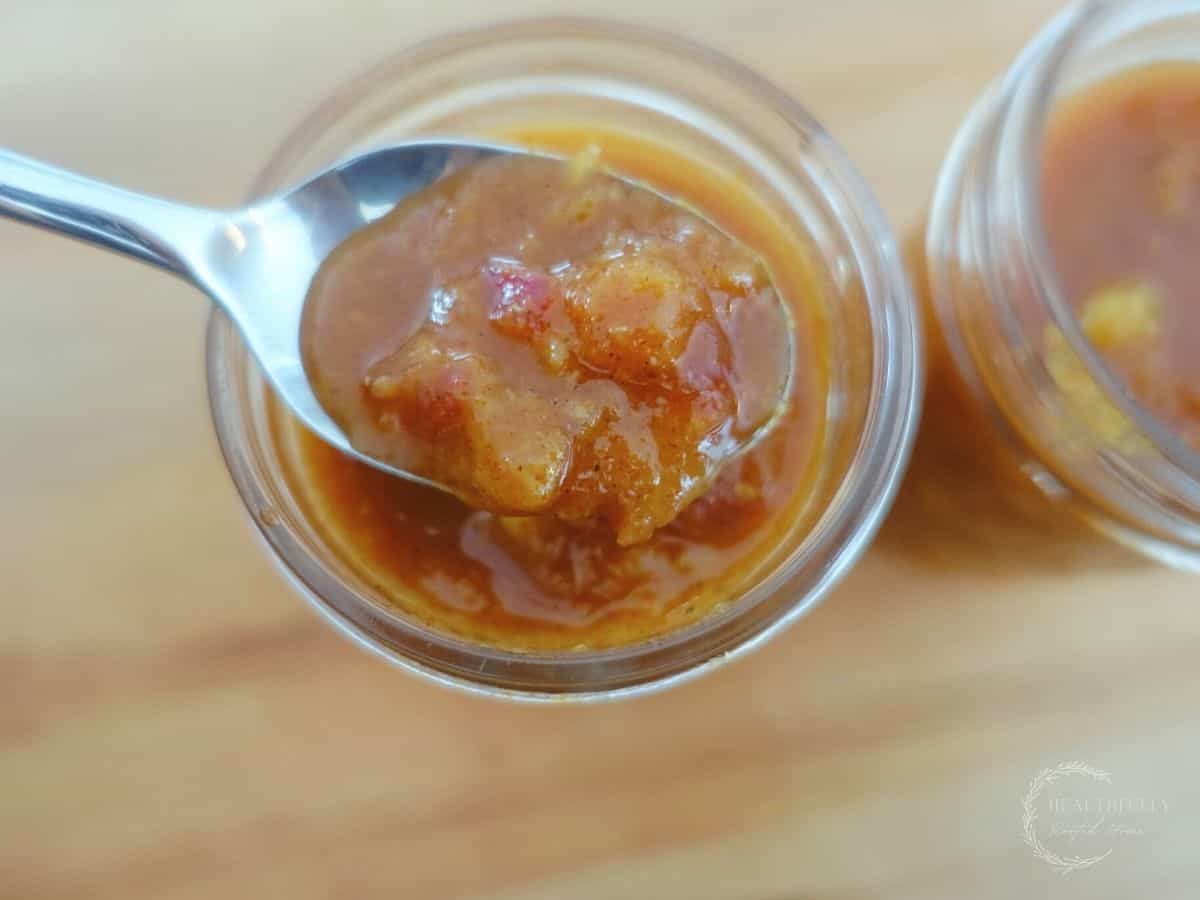
Fermented Mango Chutney
Ingredients
Equipment
Method
- Begin with fermented mangos using the method above.
- In a pot or dutch oven, saute the red onion, honey and vinegar over medium-high heat for about 3-5 minutes until onions begin to soften.
- Turn the heat down to low and add the garlic and ginger and let it saute until it becomes aromatic (about 30 seconds to one minute).
- Add all your spices and stir to combine.
- Let the entire mixture saute until it becomes bubbly then turn the heat off and remove pot from heat.
- Let the mixture cool until completely cooled (you don't want it to be too hot and kill the bacteria in your fermented mangos).
- Add your fermented mangos.
- Using an immersion blender slightly blend the ingredients together (alternatively, you could pour everything into a blender and lightly blend everything).
- Add your raisins, stir, transfer to an air tight container and store in the fridge for 1-2 weeks.
- In a pot or dutch oven, saute the red onion, mangos, honey and vinegar over medium-high heat for about 2-5 minutes until onions and mangos begin to soften.
- Add the garlic and ginger and let it saute until it becomes aromatic (about 30 seconds – one minute).
- Add all your spices and stir to combine.
- Let the entire mixture saute until it becomes bubbly then turn the heat off and remove pot from heat.
- Using an immersion blender slightly blend the ingredients together to desired consistency (alternatively, you could pour everything into a blender and lightly blend everything).
- Add your raisins, stir, transfer to an air tight container with the lid loosely fitted.
- Let sit on counter for about 72 hours checking every 48 hours for taste.
- Store in the fridge for 1-2 weeks.
About Me

kyrieluke










Leave a Reply