What Old Fashioned Moms Understood That We Forgot
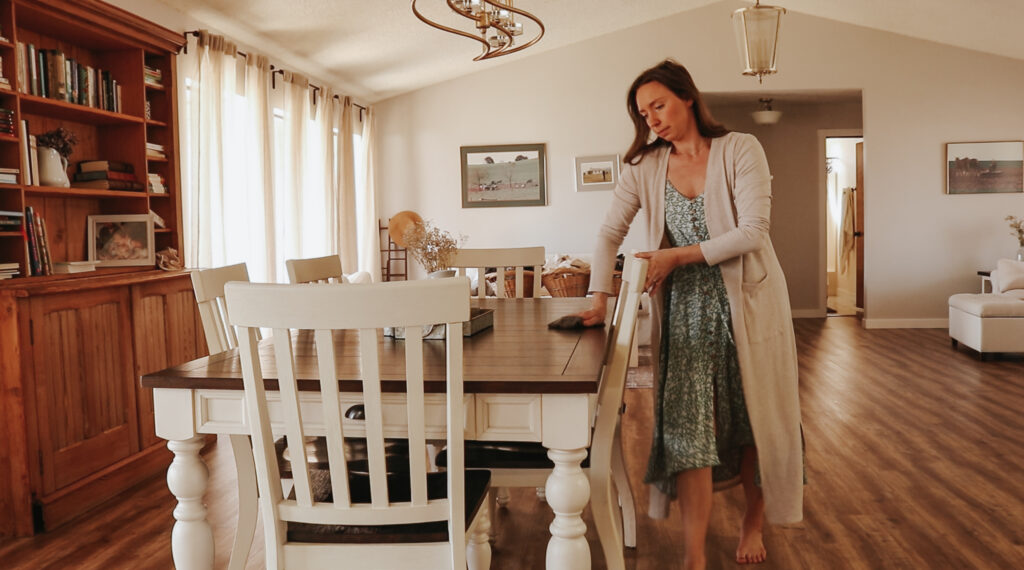
Believe it or not, there was a generation of mothers who were raising large families, running entire households, preserving food, educating their children, tending to their homes from the ground up and, somehow, they were not drowning in overstimulation, resentment, and the constant pressure to keep their children entertained every waking moment.
Today, so many of us feel like full-time cruise directors in our own homes. We’re constantly rotating activities, planning outings, managing emotions, diffusing sibling conflict, and trying to keep everyone happy. By the end of the day, we collapse into bed wondering why we’re already dreading tomorrow. Somewhere along the way, we didn’t just change how we raised children, we changed how we thought about children in the first place.
That’s the root of the problem.
If you see your child as someone whose needs must constantly be met through a consistent flow of stimulation, entertainment, and emotional management, then of course your days will feel exhausting and never-ending. But if you begin to see your child as someone who is meant to be trained, formed, and brought into the life of your home, everything begins to settle into place. A child should not be the center of the home, but a participating member of it.
In this blog, I want to walk through what old-fashioned mothers understood about parenting that we have largely forgotten, and how reclaiming this way of thinking is one of the most freeing transformations you can make in motherhood.

The Child Is Not the Center—They Are Part of the Life You Are Building
The more your life revolves around your children, the more chaotic your home will feel, and the more difficult your children will actually become. It’s one of those delightful paradoxes of parenting that no one warns you about. There’s a fascinating book called, Hunt, Gather, Parent. Though the author isn’t a Christian, the concepts in the book are a rediscovery of what Scripture has been instructing all along. What the author observed in other cultures was children contributing, participating, being trained into the rhythms of daily life. This isn’t actually new or profound advice, it’s biblical.
Yet, in today’s world, we’ve created a completely different paradigm. The child becomes the center of the home, and everything about our days—the schedule, the activities, the energy—bend around them.
Old-fashioned mothers didn’t live that way. They lived their lives. They contributed to the home economy by managing their homes, creating order, maybe even earning an income in some way. Their children were brought into that work. Not as a revolutionary parenting philosophy, but as a simple expectation. “You live here? You contribute here.” Shockingly simple.
They didn’t separate their lives from their children the way we tend to now. They didn’t feel the need to carve out an entirely separate category of “kid activities” and “mom life” and “self-care” as if those things had to exist independently of one another. They did their work with their children, they lived their lives with their children, and even the things that filled their own cup were often done alongside their children. Not in opposition to them.
Historically, mothers were not outsourcing the formation of their children to activities and programs, they were integrating them into real life, into meaningful work, and into daily rhythms. That integration is what allowed both the mother and the child to thrive without this constant tension of “I need a break from you in order to function.”
When your life and your children’s lives are constantly at odds with each other, motherhood feels draining. However, when your children are brought into the life you’re already living, there is a sense of alignment that makes the entire day feel more peaceful and far less fragmented.You stop feeling like you’re managing two separate, competing realities—”what I need to do” versus “what my children need from me.” You can start living one integrated life where everyone has a role.
Making The Shift
Stop asking, “How do I keep my child busy today?” and instead think, “How do I bring my child into what I am already doing?” This will completely change how you think about your child.
That single shift will remove an enormous amount of pressure from your day. I’m not saying you need to think about your child as a commodity. That would be a completely wrong way to think about them. Rather, think about them as a capable, contributing member of your home who is being trained and discipled within the life you are building.
Once you make that shift, something that feels almost too simple to be true begins to happen. You stop feeling like your child’s cruise director, and start actually enjoying their presence in your home.
It Is Not Your Job to Entertain Your Children
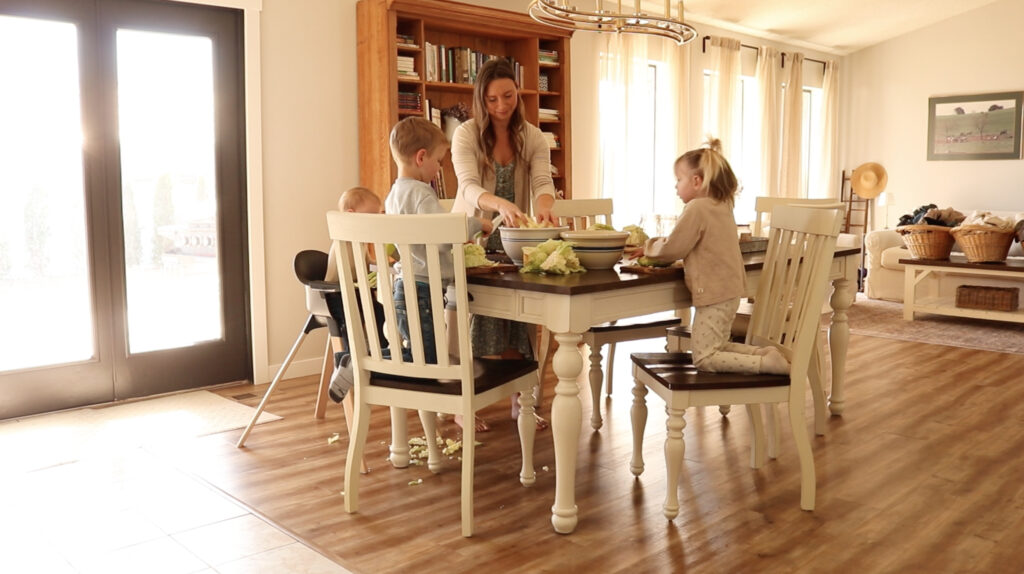
It is not your job to entertain the children. It is, however, your job to train them, disciple them, and bring them into the meaningful work and rhythms of your home. But the trap is that if you are trying to simply appease and entertain them, it becomes really difficult to disciple and truly train them on important life skills and lessons.
If your entire day is structured around keeping your children happy, you will end up exhausted, and they will be trained to be incredibly difficult to be around when you aren’t able to entertain them.
This concept is so freeing, actually. It means that you don’t have to center your days around activities that solely benefit the child. It means if you despise going to indoor play places or constantly planning elaborate kid-centered outings, you don’t have to do another one in your whole life and your children will be perfectly fine. Better than fine, actually. They might even develop the lost art of entertaining themselves, which previous generations somehow managed without a single sensory bin.
That does not mean we never do fun things with our children, because I genuinely delight in their delight. And sometimes what we enjoy overlaps with what our children enjoy. I, for one, LOVE play dates. I host them often and it brings me immense joy to watch the children play with friends while I host other moms.
But our days no longer revolve around the child-centric activities. The structure of the day is the work of the home, the rhythms that sustain the family, and things that are just life-giving for everyone… and children are brought into all of that.
Because if you haven’t noticed, when the day revolves around entertainment, children often become more restless afterward, not less. It’s like sugar—the more you give, the more they crash. It almost stunts their own imagination. But I’ve learned that if I just do my thing more often and let them either join in, or find their own things to keep them busy, they end up being perfectly satisfied playing with a stick for 3 hours. A stick. Not a $47 Montessori-inspired wooden toy. But like, a stick from the yard.
Here’s the key on deciding if the activity makes sense for your family… if that activity makes them less of a joy to be around afterwards / the activity is probably the issue… and you’ll find that those are probably the exact activities you dread the most. Funny how that works. Almost like your instincts were trying to tell you something.
Listen, its perfectly acceptable to bring your children into your life and the building of your own home economy… thats what old fashioned moms knew and understood and surely felt absolutely zero guilt about. They didn’t need permission from a parenting expert to let their children help with real work. They just did it. Because it was Tuesday and there were dishes.
When you fire yourself from that role, you start to notice just how little your children actually need to feel content. So many of the things we thought they “needed” suddenly start to look unnecessary.
Toys Are Not as Essential as We Think
We’ve built an entire culture around toys, and yet they are not nearly as essential as we’ve been led to believe. In fact, they’re a remarkably recent invention that we’ve somehow convinced ourselves are fundamental to childhood.
The entire concept of toys is a result of the Industrial Revolution and the rise of consumer culture that needed to convince mothers their children required specially manufactured objects to develop properly. Toys in general, dare I say, are irrelevant. I write this as my son is playing with toy cars.
But when you really think about it, children historically did not have rooms filled with toys. They had real environments, real tools, and real work. They played in the great outdoors where they had sticks, mud, and the family’s actual work to participate in. Somehow, shockingly, they turned out fine. Built entire civilizations, actually.
This doesn’t mean you need to throw out every toy in your home or swing to the other extreme. Clearly, I’m not doing that either. It does mean you can release the pressure to constantly keep up with what everyone else is buying, doing, and providing for their children; and instead remember what Scripture prioritizes, which is not endless entertainment, but training, stewardship, and bringing our children up in the discipline and instruction of the Lord.
Then you realize something surprising about them.
Children Don’t Need Entertainment—They Need Purpose
What we often label as “boredom” in children is very often just a lack of meaningful responsibility. We’ve mistaken their restlessness for a need for more stimulation, when really it’s a need for more significance. They’re not bored. They’re purposeless. There’s a difference.
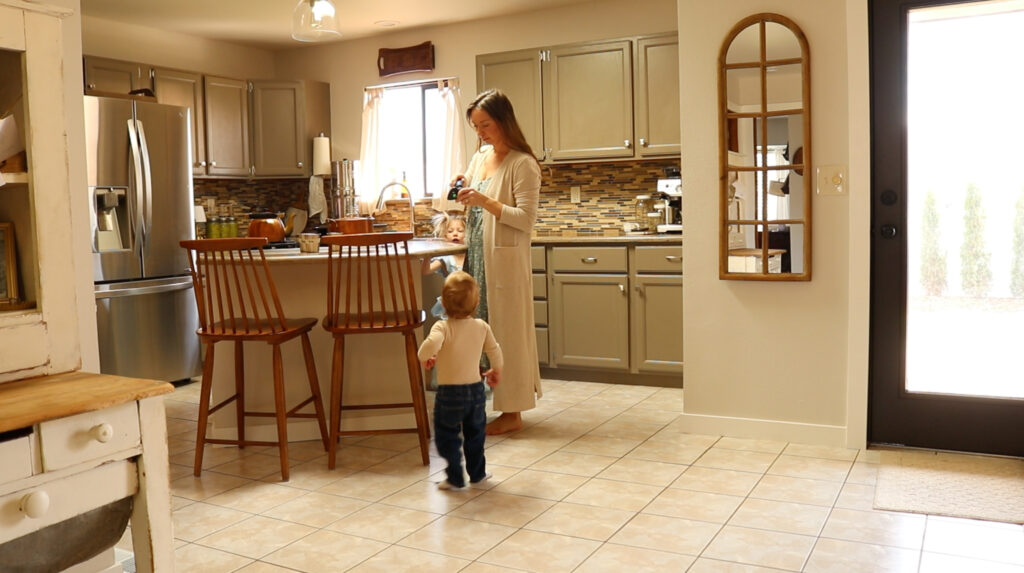
In our home, one of the foundational principles is that everyone has a role to play. No one is simply floating through the day. Even my one-year-old has a role to play. I go out of my way to make my children feel like they have a job to do, because I want them to grow up with the deep understanding that they belong to something, that they contribute something meaningful to the family, and that they are needed.
Now, this does come at an upfront cost, and I want to be very honest about that, because I think this is where most mothers opt out. Training children to be helpful is not efficient in the beginning, but it pays dividends later. It’s an investment with a terrible short-term return and an excellent long-term one. This is why most of us, living in our instant-gratification culture, don’t do it. In the beginning it is slower, it is messier, and it requires a lot of patience.
For example, my three and five-year-old now do the dishes from start to finish, but that didn’t happen overnight, and it certainly did not happen without effort on my end. At first I taught them how to load the dishwasher, and even that was divided between them. My three-year-old sprays the dishes, and my five-year-old loads them.
Of course they did a careless job – things were flipped the wrong way, items were in the wrong place, and it would have been far easier for me to just step in and do it myself. But instead of correcting everything for them, I turned it into a training opportunity. I saw the messes as an investment into the future. We would stand together at the dishwasher, and I would say, “Okay… can anyone tell me what looks off here?”
And they would eagerly scan, and then one of them would shout, “That cup is flipped over!”
“Yes! Let’s fix it.”
Then we would move to the next drawer. “Anything wrong with this picture?”
“The spatula should go on the top shelf!”
“Yes!”
And slowly, through these small, almost playful corrections, they learned how to do it better. Not perfectly, but I’ve learned to let that go.Then once they mastered loading, I began teaching them how to unload the dishwasher. My three-year-old owns the silverware while my five-year-old owns the bowls. Once they learned how to do those we added more, cups and straws for one, utensils for the other.
What used to be something that took ten minutes of my time now takes them thirty minutes. However, those thirty minutes are an investment. They are learning a skill and they are contributing to the home. Now, I’m not standing there supervising them like a foreman. I’m doing something else. Which means I’ve actually bought myself time, not lost it. A bonus is that they are occupied in meaningful work instead of floundering looking for something to do—or someone to fight with. Turns out, purposeful children fight less. Who knew? (Everyone before 1970, apparently.)
Children are like little emotional barometers, constantly reading and reflecting the atmosphere of the home. It’s very difficult to raise peaceful, capable children in a home that is constantly being led by a mother stuck in fight-or-flight. This is where so many mothers get stuck. They hear something like this and think, “That sounds lovely, but I do not have the capacity for that. I am already overwhelmed, overstimulated, and barely holding it together.” And that is exactly why this matters, because if your nervous system is constantly on edge, even the mess that naturally comes with training your children will feel intolerable. It will feel like one more thing you can’t handle rather than an investment you’re making.
I had a student in my course tell me that as they began changing the atmosphere of their home and bringing more calm and purpose into it by regulating their own nervous system and finding joy in their own role, their children started sassing less, fighting less, and responding differently almost immediately, which makes sense, because children tend to mirror the environment they are living in.
Which is exactly why most mothers don’t struggle with the concept of training their children—they struggle with their tolerance for the mess that comes with it.
The Mess Is the Price of Raising Capable Children
If you’re constantly avoiding mess, you may also be eliminating your child’s opportunity to become capable.The reality is, children will not do things well at first. They will spill, they will forget, they will do it imperfectly, and if your standard is perfection, you will end up doing everything yourself, and resenting it. You’ll be the martyr mother who does everything because “it’s just easier.” This is often code for “I can’t tolerate the discomfort of watching them learn.”
For example, my one-year-old has the job of filling our rice mason jar when it’s empty, and yes, that is exactly as chaotic as it sounds. I can hear some of you gasping. “A one-year-old? With rice? Loose rice?” Yes. Stay with me. I’ll take the large tub of rice that I get from Azure Standard, place a funnel into the mason jar, hand him a measuring cup, and let him go to work filling it up. It took 4 seconds to teach him how to do this.
In the beginning, there was dry rice everywhere. Scattered in ways that made me question my own decisions of letting him do this job. But I made a conscious choice to see that mess as an investment rather than a problem. Because every time he’s done this job, he’s improved, and honestly the rice is cheap and took me 10 seconds to vacuum up. Plus, he had the best time and felt so empowered. Now, not only does he do it more carefully, but he lights up when he gets to do it.
Every time I open the pantry, he reaches for the rice bucket as if to say, “Is it time? Do I get to do my job?” He wishes we ate more rice just so he could participate more often.That is the heart of a child. They are not craving constant stimulation. They are craving purpose.
When that purpose is missing, it doesn’t disappear. It just redirects itself into misbehavior.
Misbehavior Often Means They Need More Responsibility, Not Less
In our home, when a child misbehaves, we don’t default to isolating them or removing them from the flow of the home making them feel more like a problem. Instead, we bring them further into it.
We call it “hard labor,” which, I’ll admit, sounds a bit dramatic, but really it’s just us redirecting them into meaningful work. This might look like scrubbing baseboards, mopping floors by hand, or doing something physically engaging and productive. What’s hilarious is that my children often ask for hard labor. I don’t think it’s too traumatizing for them if they’re asking for it. In fact, I think they instinctively understand what we’ve forgotten: that physical work is regulating. That meaningful contribution feels good. That being needed is better than being coddled.
Here’s the caveat. We don’t want our children to feel like little slaves. There is a way to do this without them feeling like your own personal slaves. You make them feel like they are part of the team, make it fun, and you have to let them know that you genuinely need their help. You let them know that they are a valuable part of the team. They need to see the impact that what they’re doing has on the household.
Because this is the paradox of children, they have an innate desire to be part of something that matters. To be apart of their family. That’s how God designed them. Genesis 2:15 says “The Lord God took the man and put him in the garden of Eden to work it and keep it.” We were created to work, to contribute, and to be part of something meaningful, and our children crave that same design.
When they are disconnected from that, they will seek stimulation elsewhere, often in ways that come out as defiance, chaos, or conflict with other family members.
But when you give them meaningful responsibility, you are not just correcting behavior. You are restoring their place within the home and empowering them to contribute. This means the issue was never just behavior in the first place. It was what was shaping their motivation all along.