

Sourdough Discard Bread
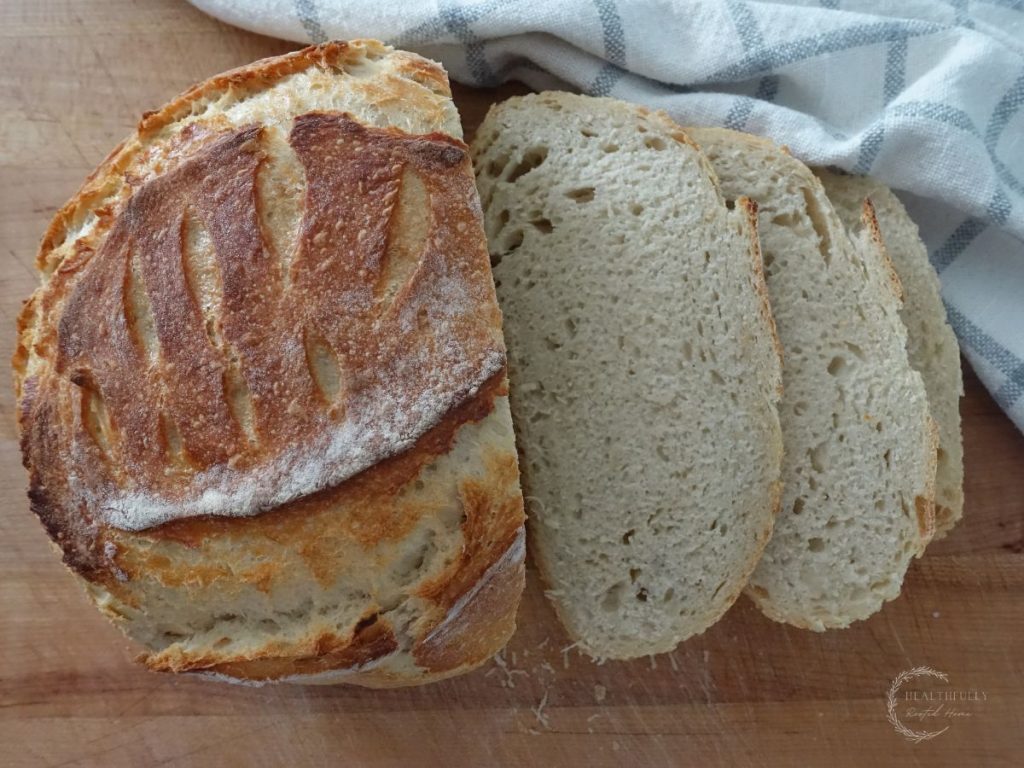
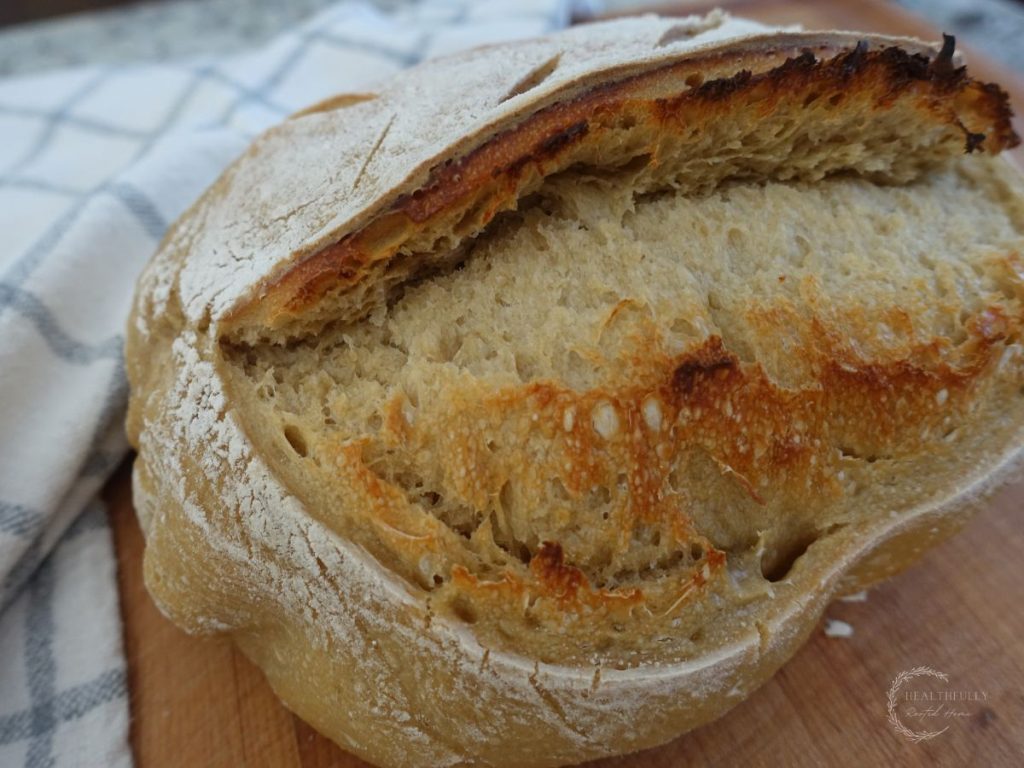
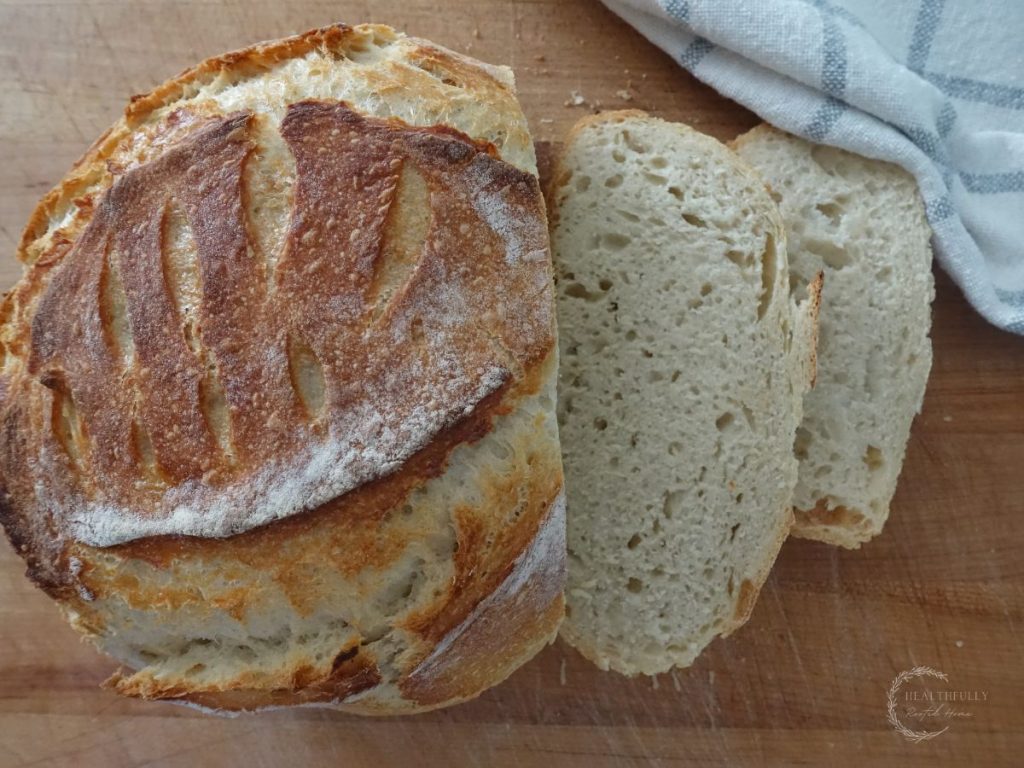
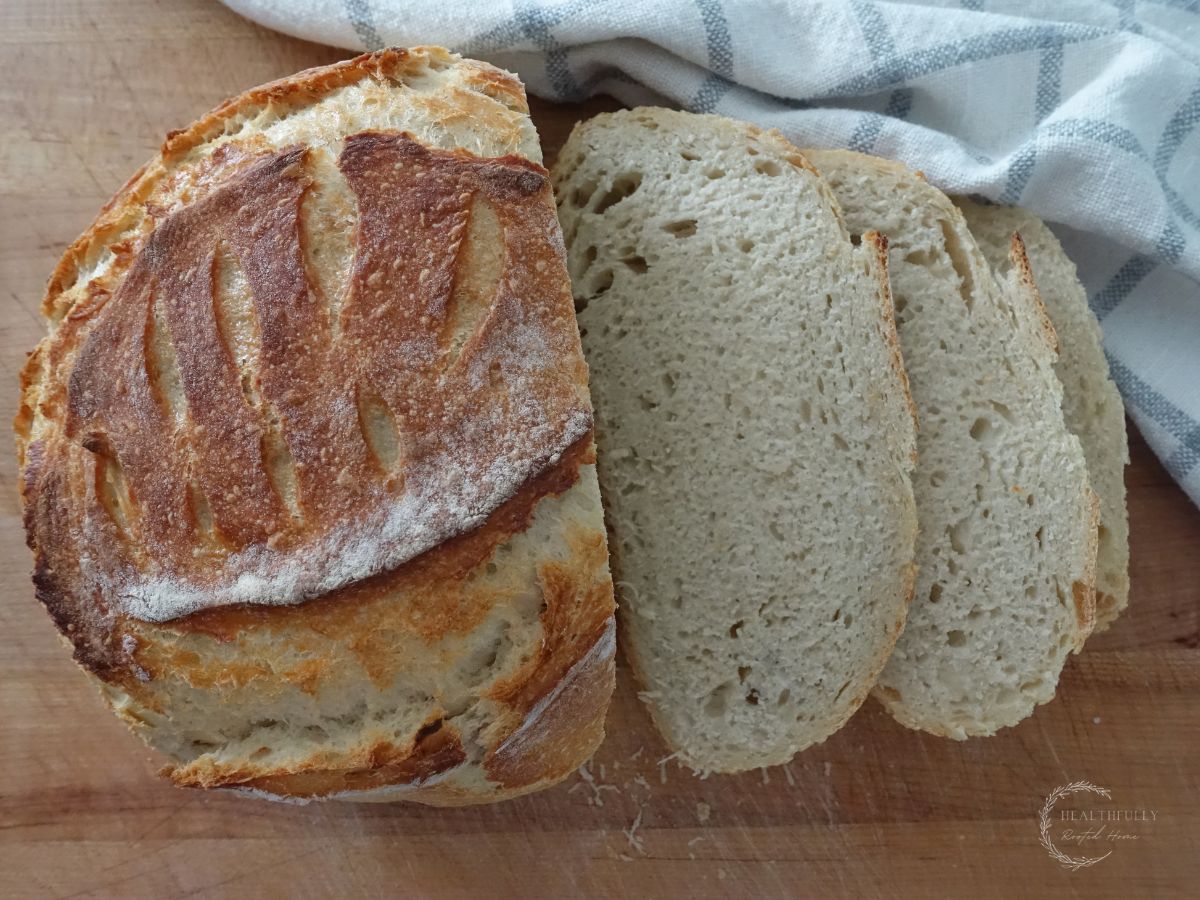
The easiest and most delicious sourdough discard bread recipe you’ll find. This rustic loaf is made using sourdough discard but the flavor of the sourdough still shines.
If you’re looking for a reason to use up some sourdough discard, or just don’t have time for a true sourdough loaf, then this is the recipe for you.
Related: Roasted Garlic Sourdough Bread
Related: Sourdough Discard Focaccia Bread
This post contains affiliate links, which means I make a small commission at no extra cost to you. See my full disclosure here.
What is Sourdough Discard Bread
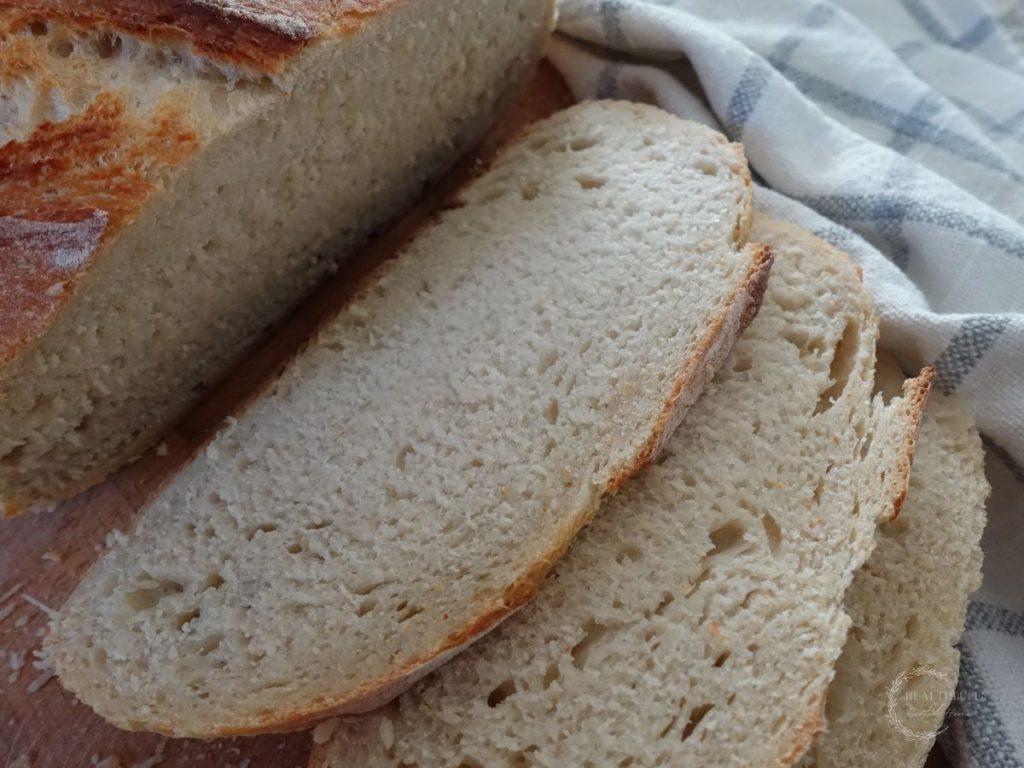
Sourdough discard bread is a loaf of bread using an inactive sourdough starter paired with commercial yeast to make it rise.
Sourdough discard bread can be made into different types of bread such as this rustic, artisan-style loaf, or even sandwich bread.
Equipment You’ll Need
- Stand-mixer with dough whisk – if you don’t have one just double the kneading time.
- Water filter (we use our Berkey)
- Kitchen scale
- Proofing baskets or banneton baskets
- Dutch oven
- Razor or lame (you could also use a sharp kitchen knife but you won’t get as good a result for scoring)
- Parchment paper
- Dough scraper
- Grain mill (optional – only if you want to mill your own flour)
Recipe Highlights
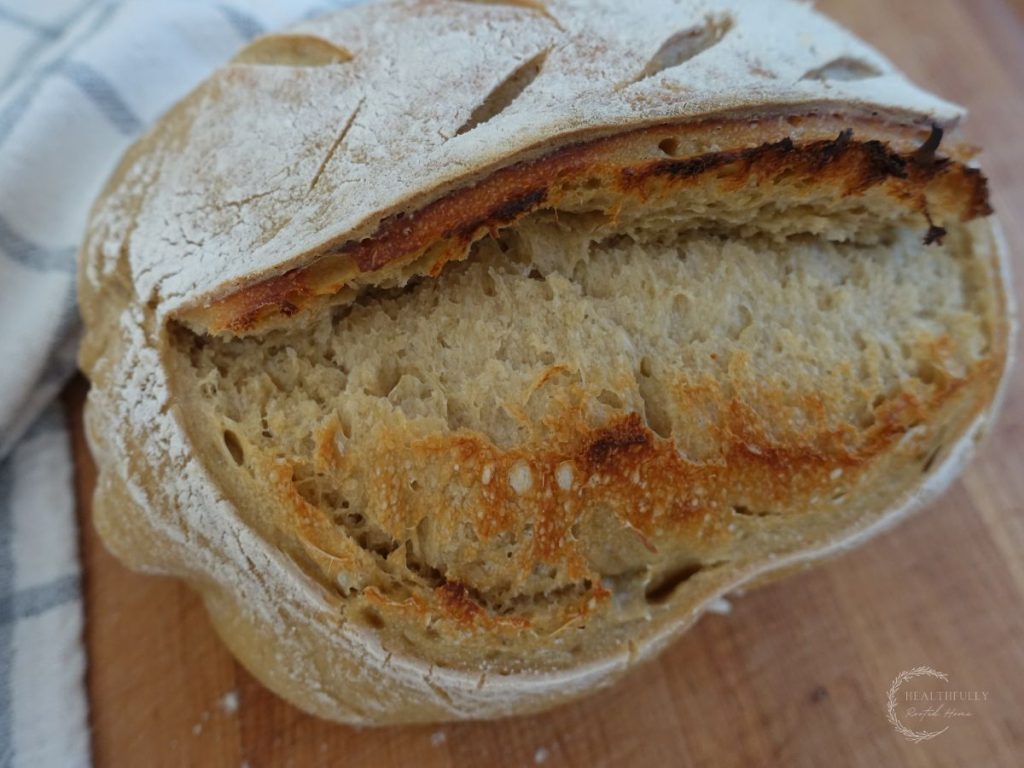
- Thick, crusty, sourdough bread
- Short rise time
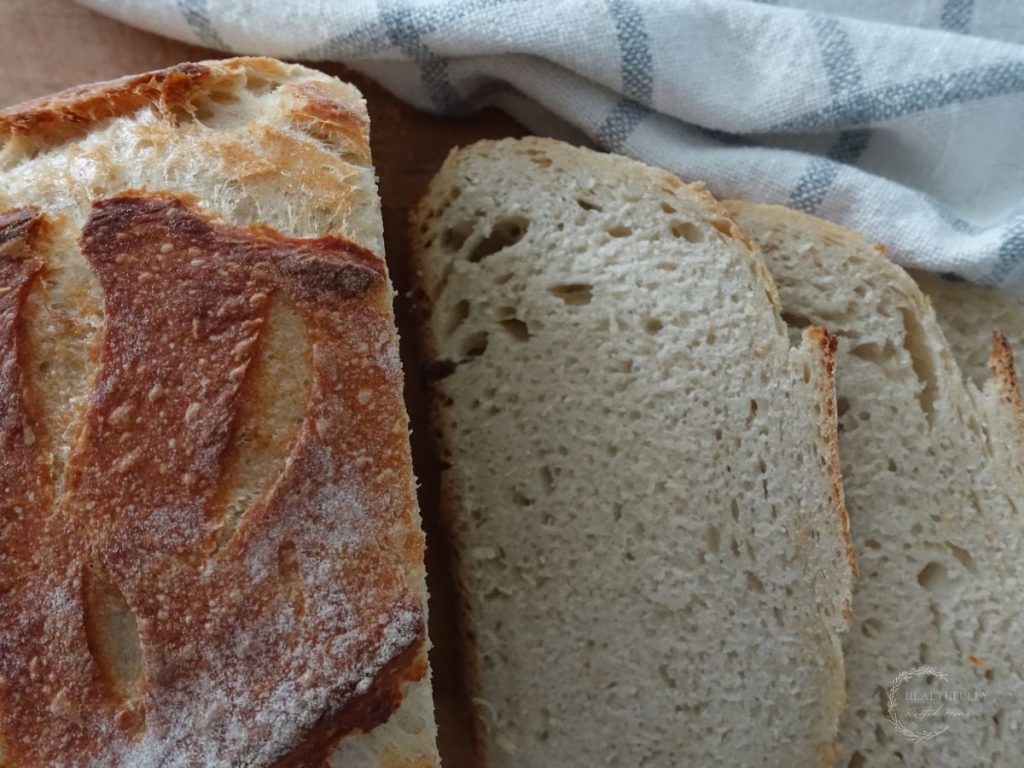
- Fluffy inside
- Uses up sourdough discard
- No need for an active starter
- Quick mixing time
- Has the sourdough tang
How to Make Sourdough Discard Bread
This is the perfect everyday bread recipe that you can mix up in the afternoon and have ready by dinner time. Use it for soups, sandwiches, or anything else you would eat an artisan sourdough loaf with.
Loaf Ingredients
- All Purpose flour – APF makes this a super pillowy loaf.
- Bread flour – you can omit this but make up for the grams with your other flour
- Warm water – make sure it’s not hot, just warm. Too hot and it’ll kill your yeast.
- Sourdough starter discard – unfed and not active
- Sea Salt – I use Celtic sea salt.
- Instant yeast – this will be what makes your bread rise.
Step by Step Instructions (with photos)
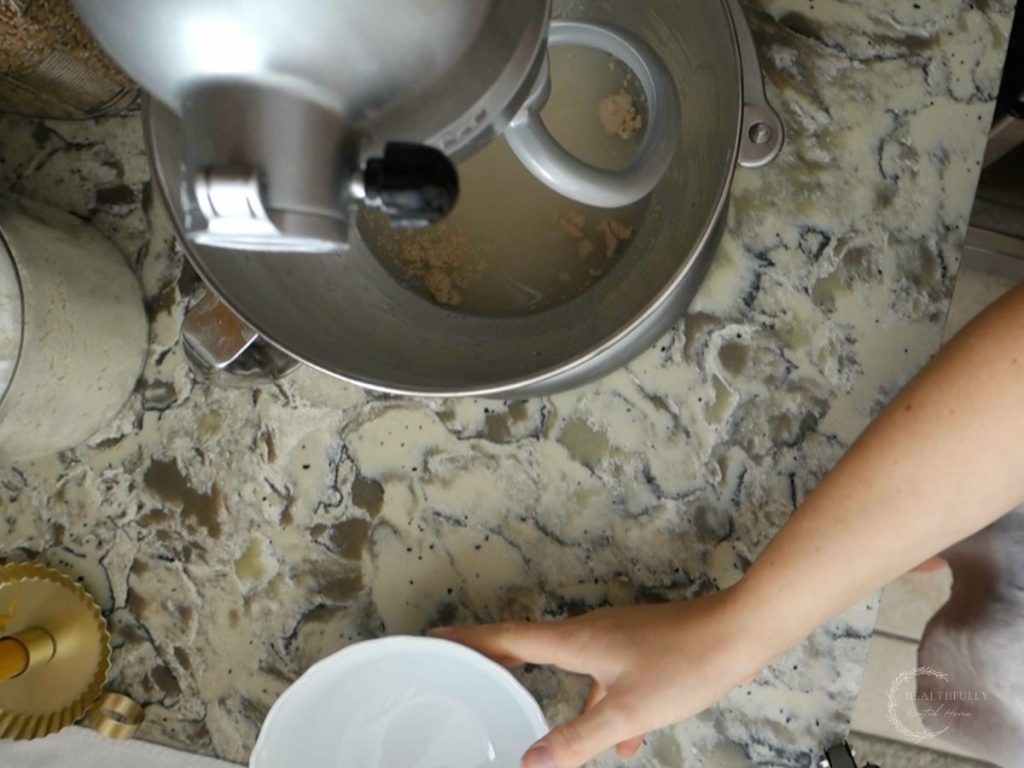
In a stand mixer fitted with the dough hook attachment, mix the warm water and yeast together.
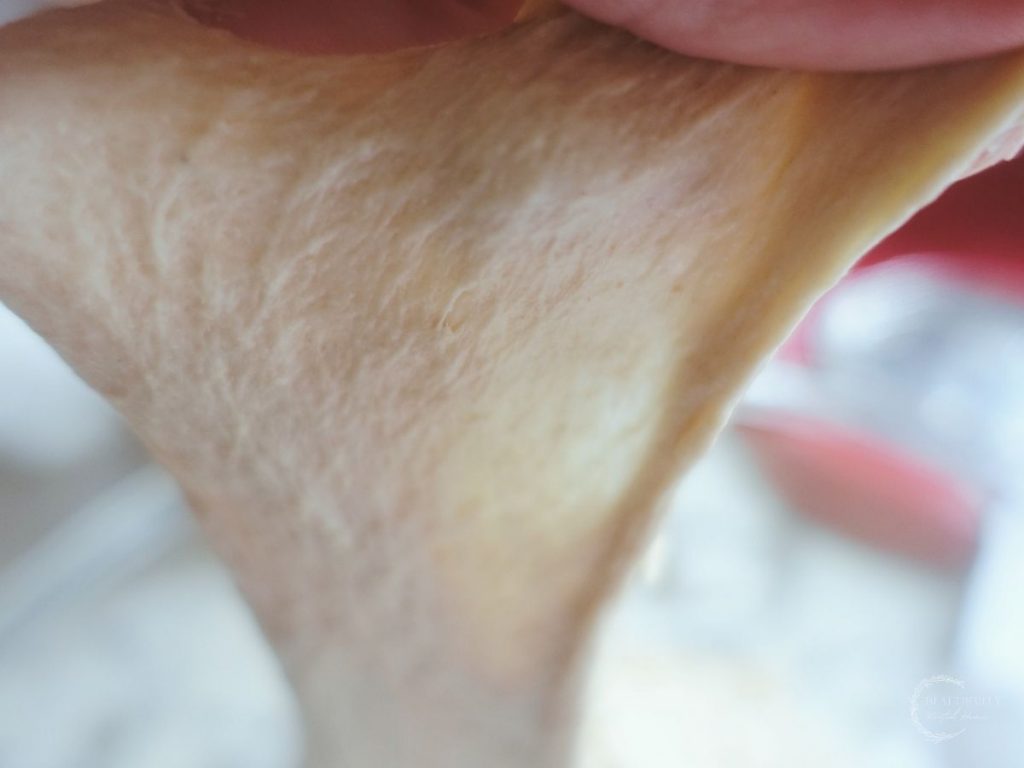
Then, add all the other ingredients and knead until combined and the dough is smooth and elastic (about 10 minutes).
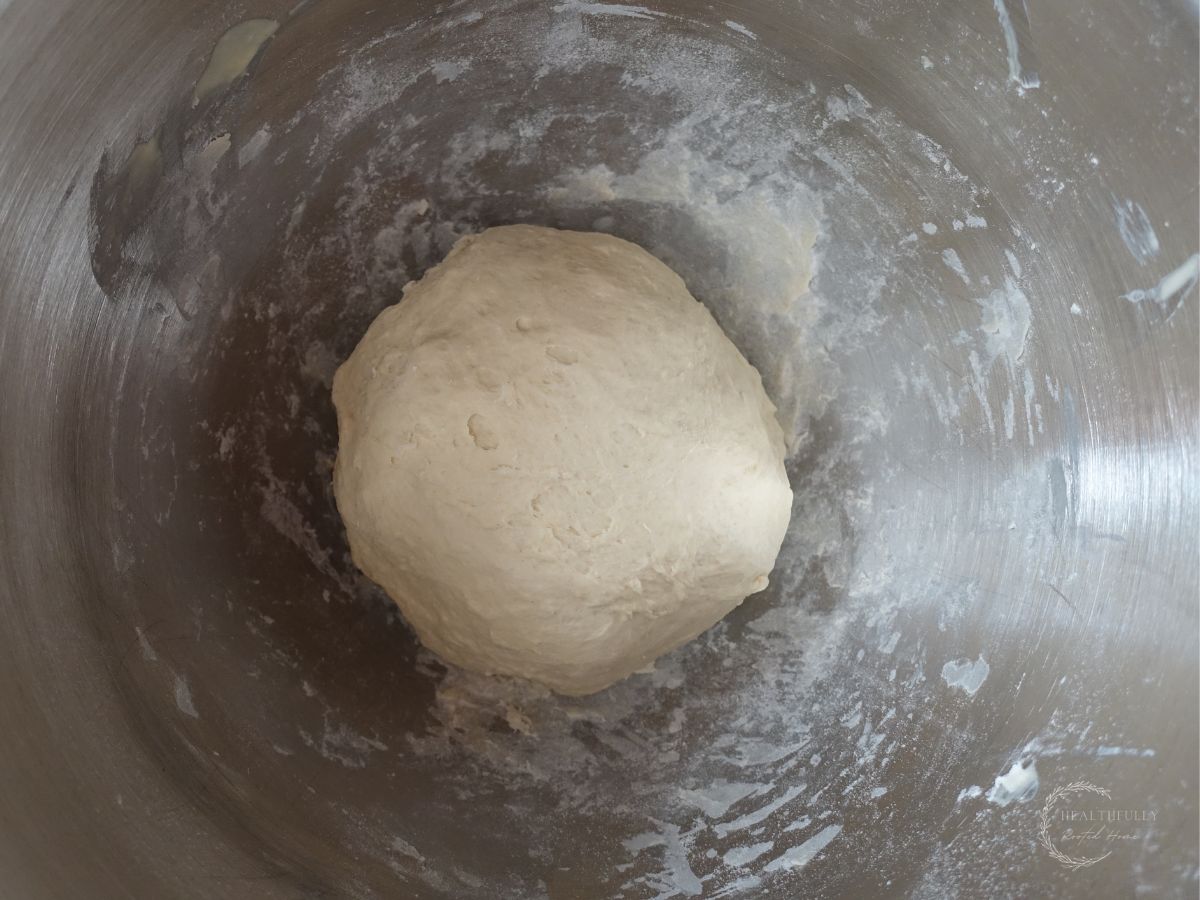
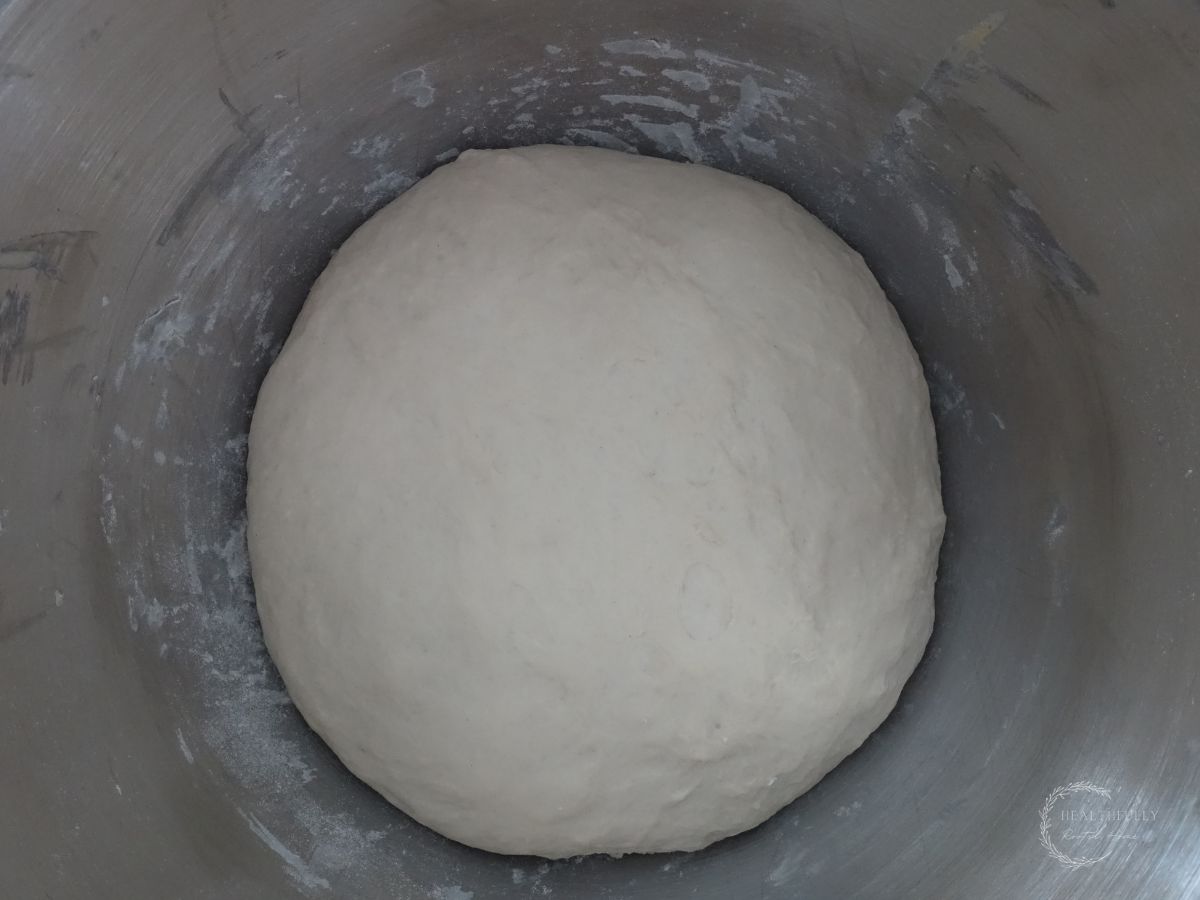
Let the dough sit at room temperature for about 1-2 hours until doubled in size.
Preheat a dutch oven in a 500F oven for about 30 minutes.
Dust the countertop with flour and shape your dough by bringing all the sides of the dough into the center. Flip over and move the dough ball in circles and then up and down against the countertop to create surface tension.
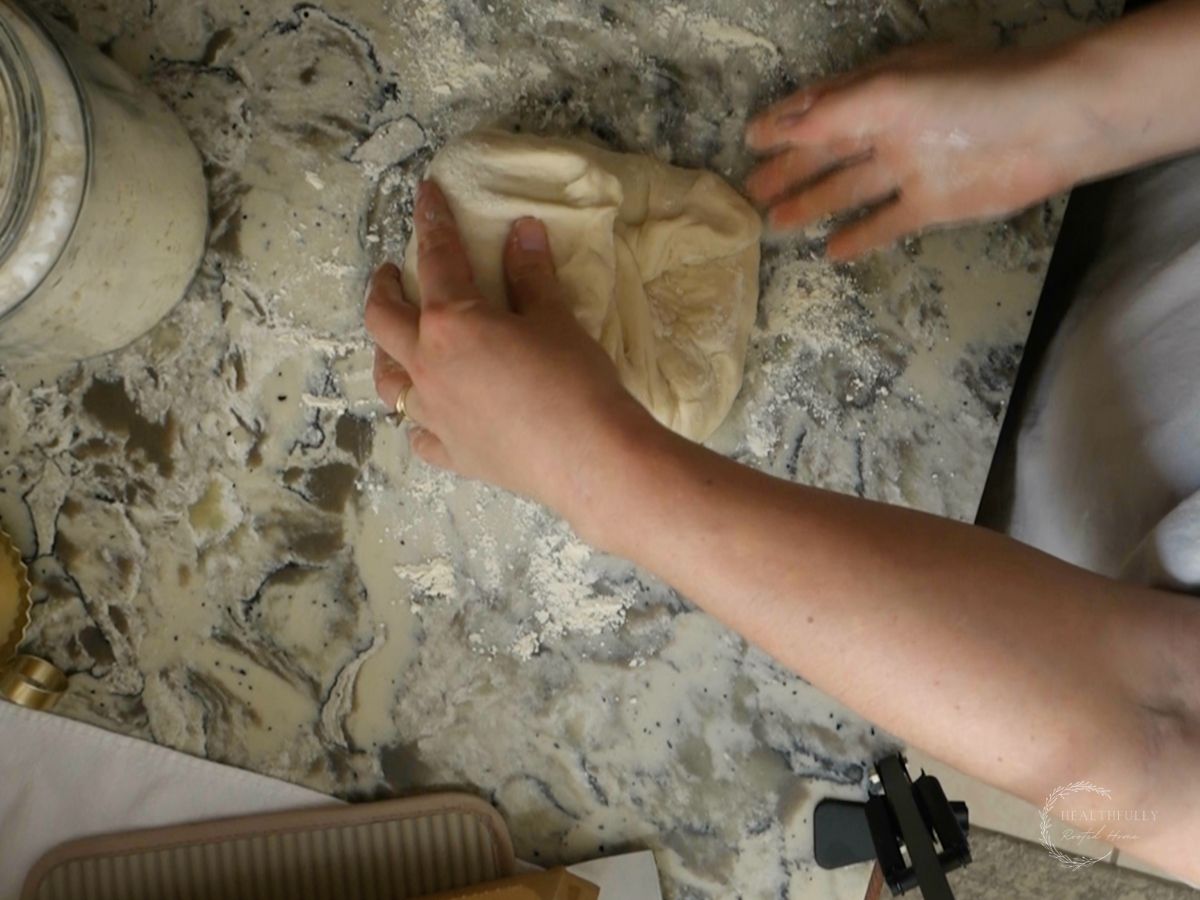
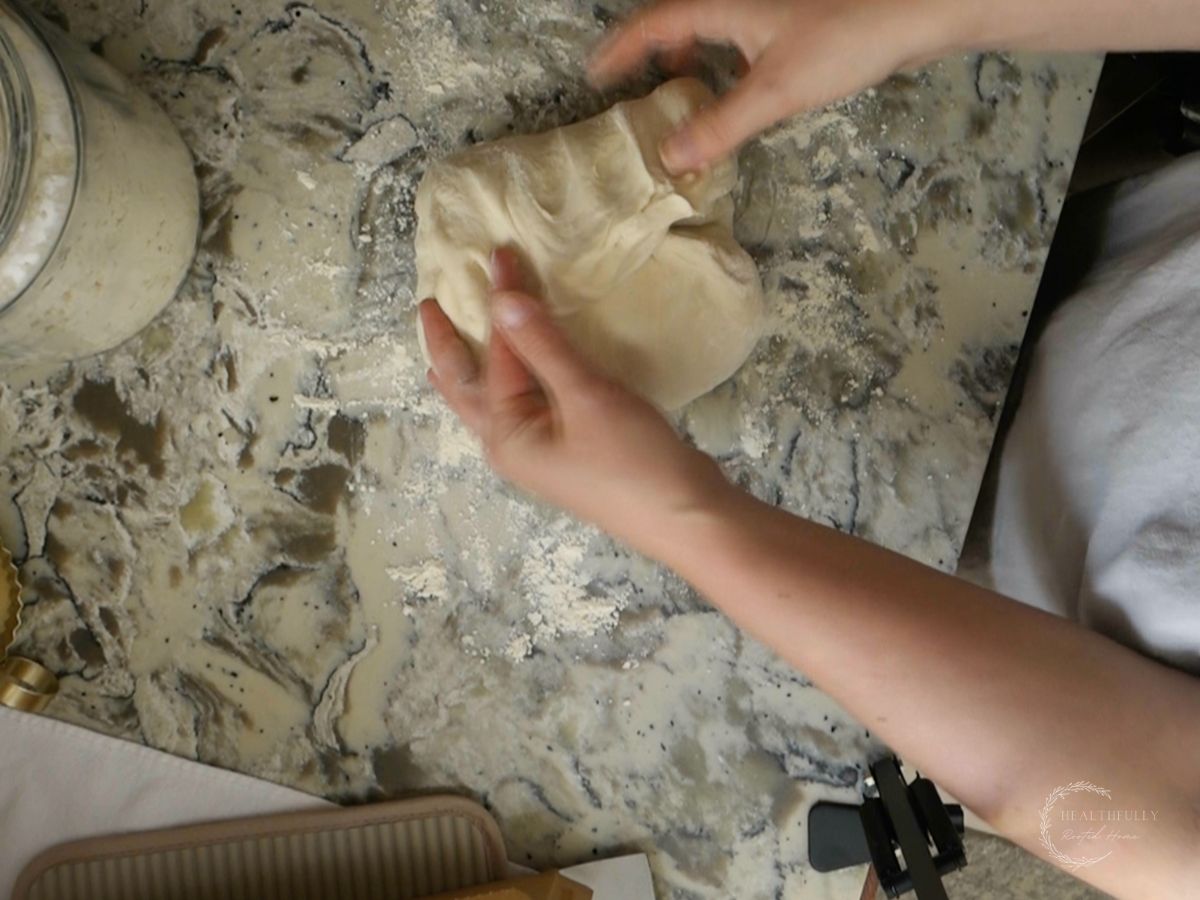
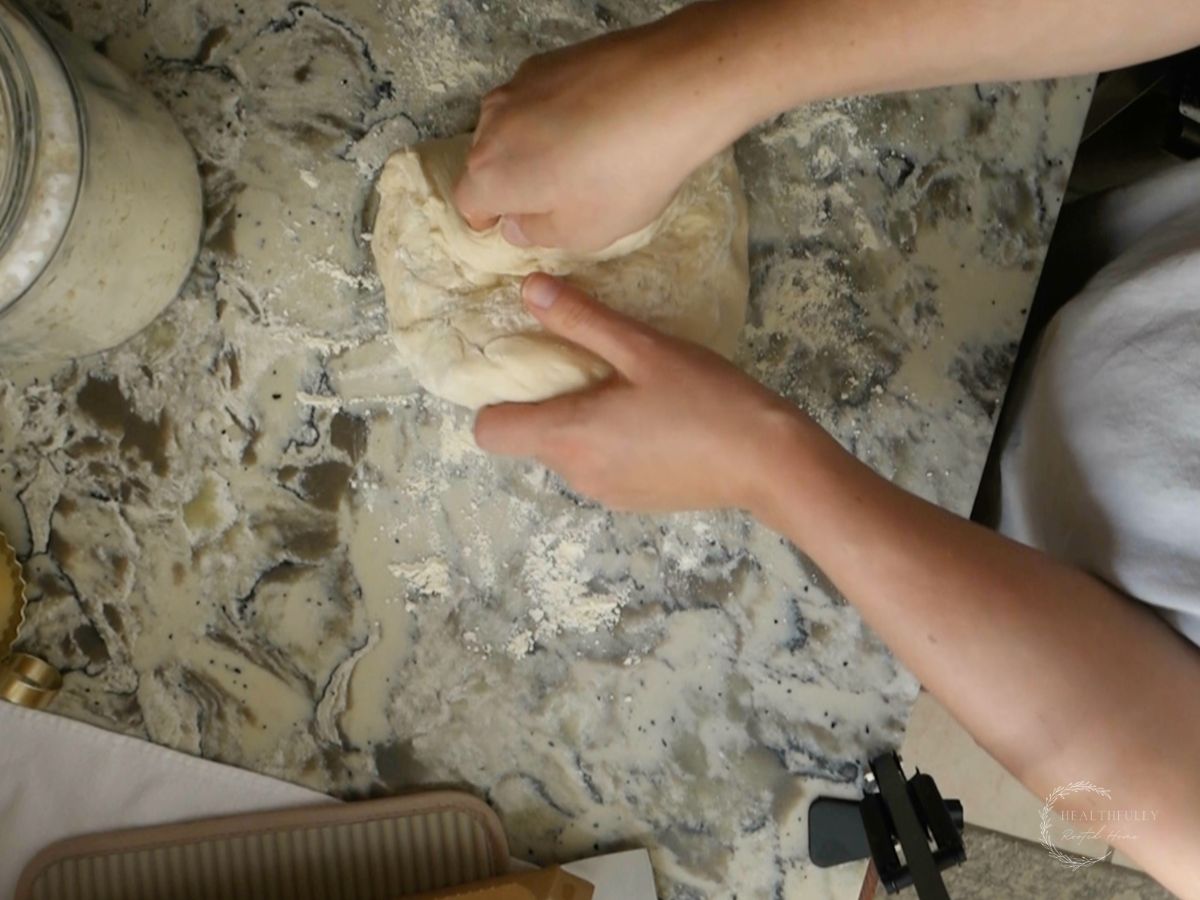
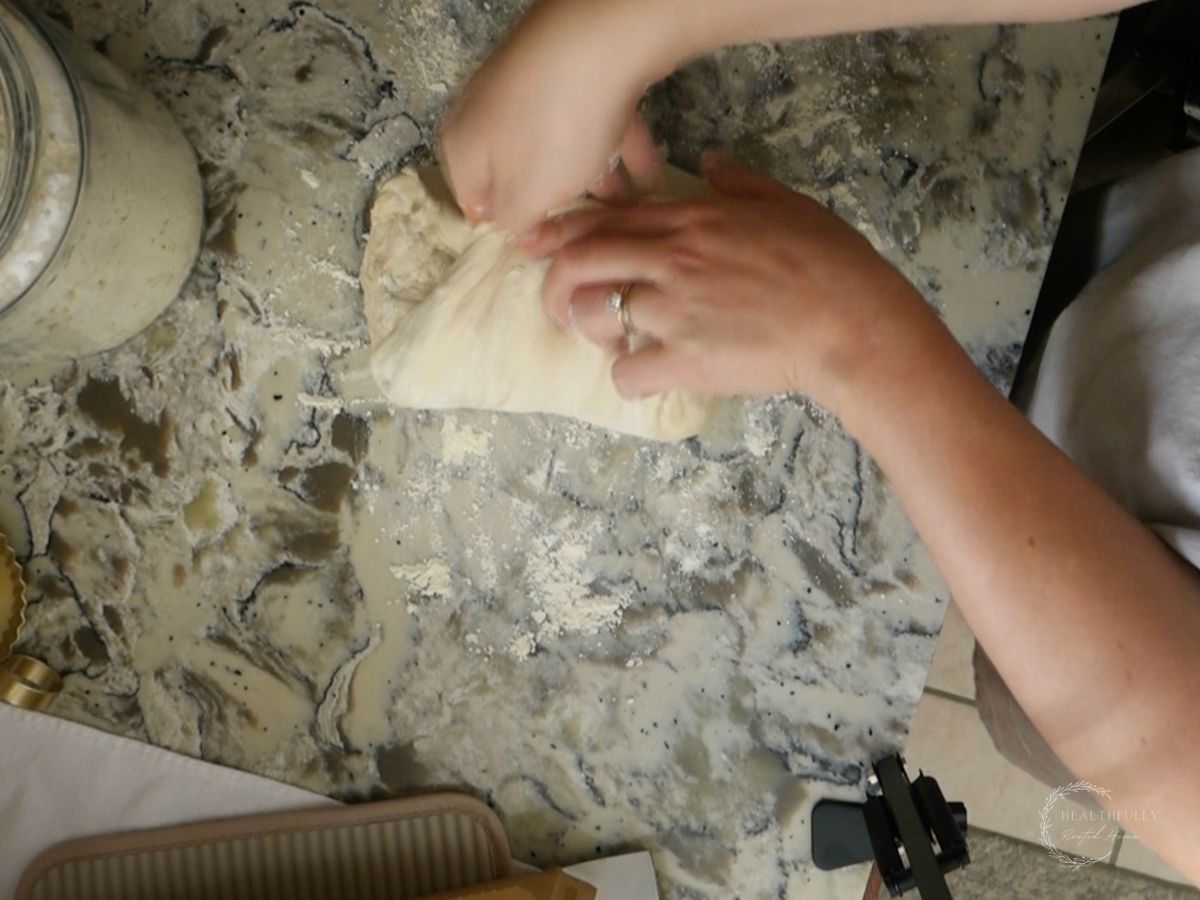
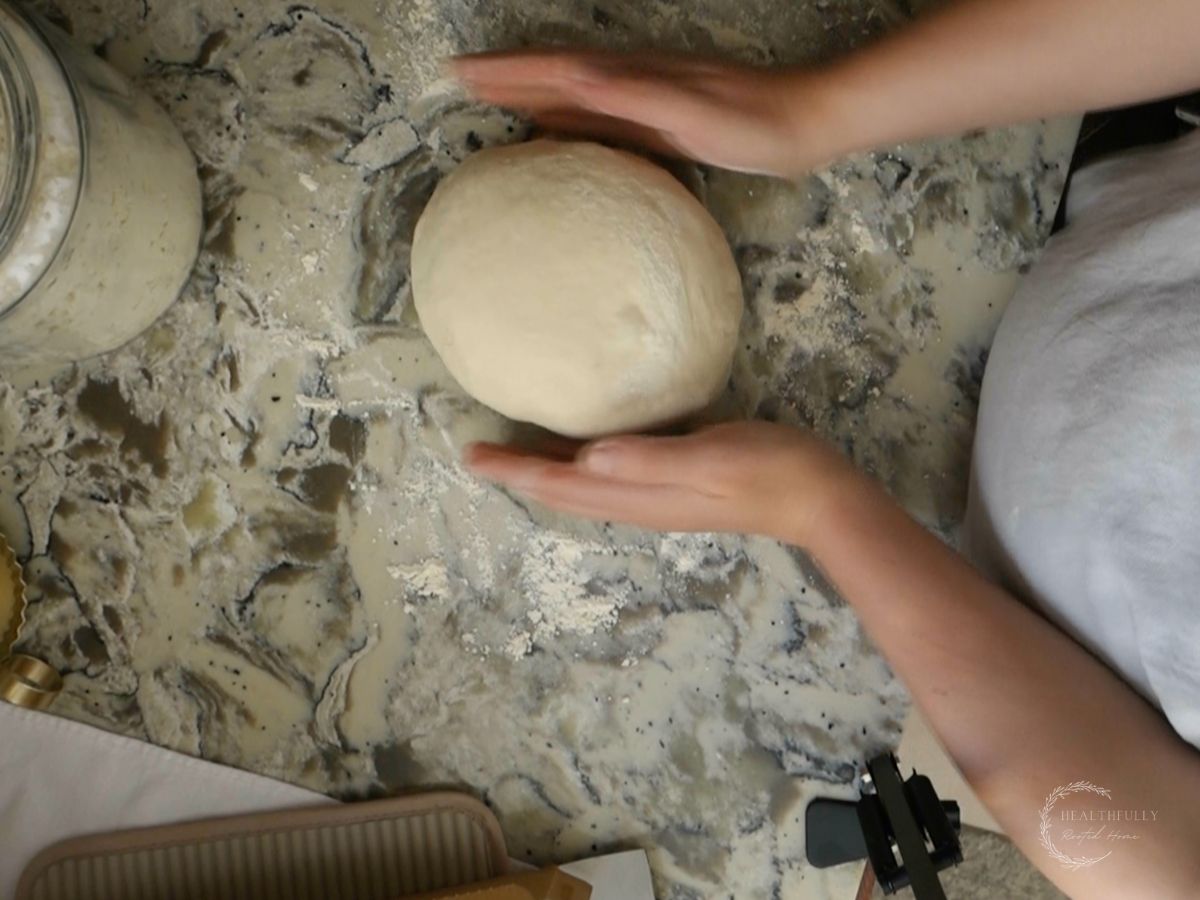
Transfer your dough to a piece of parchment paper and score.
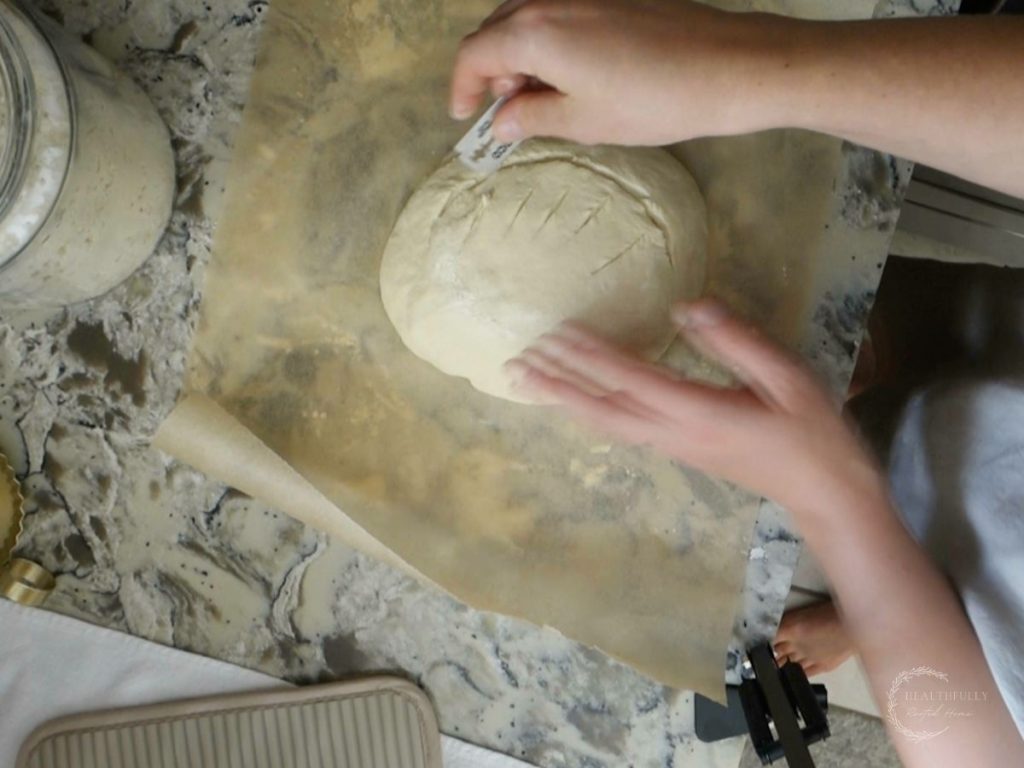
Place it in the preheated dutch oven with the lid on.
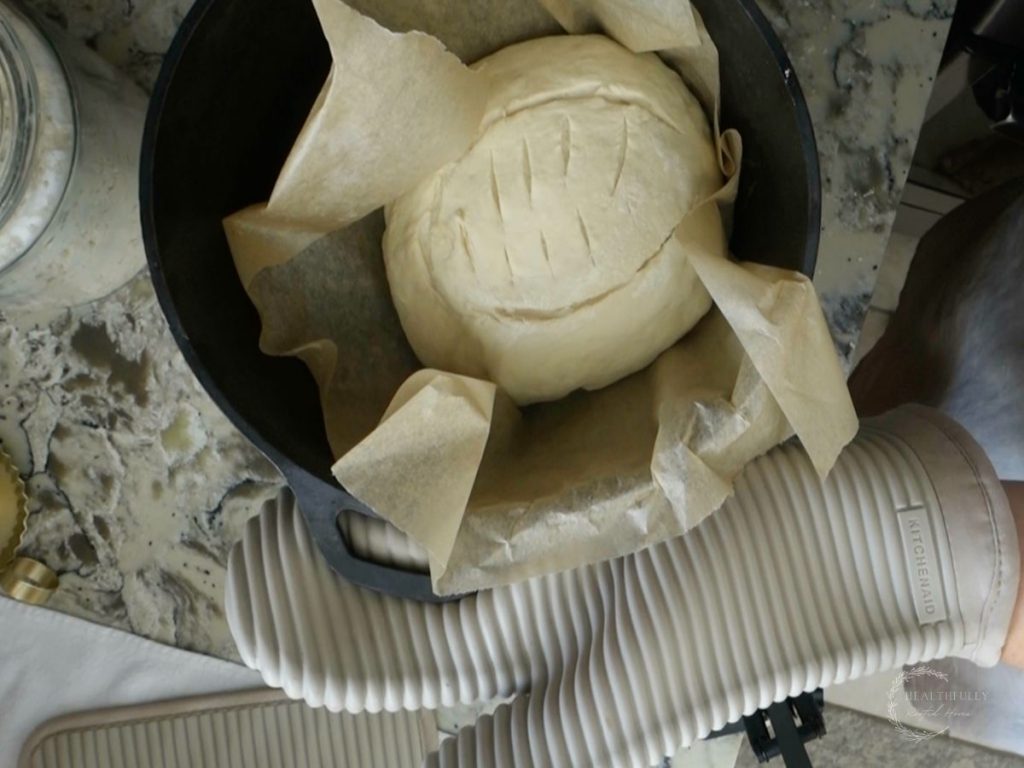
Bake for 15 minutes at 500F with the lid on. Then drop the temp to 475F and bake for 15 minutes with the lid off.
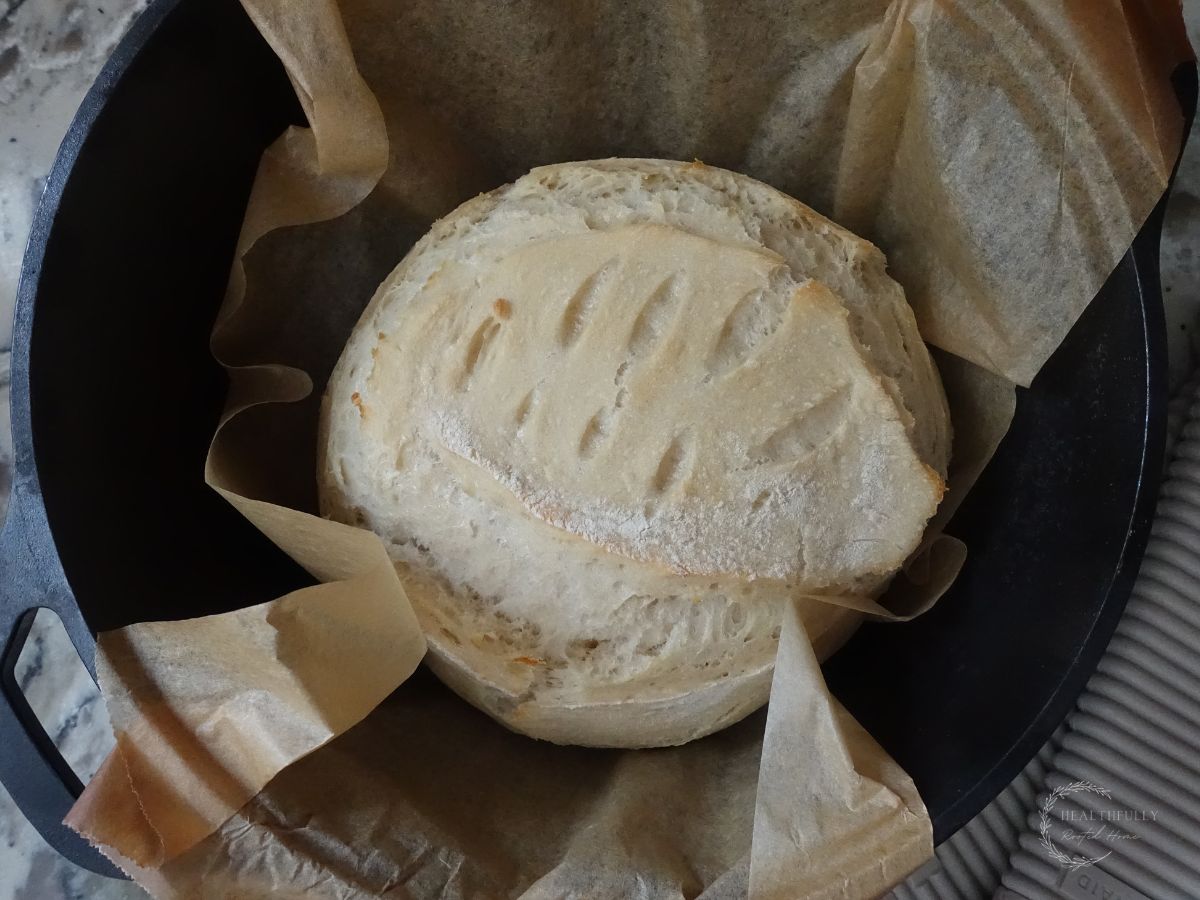
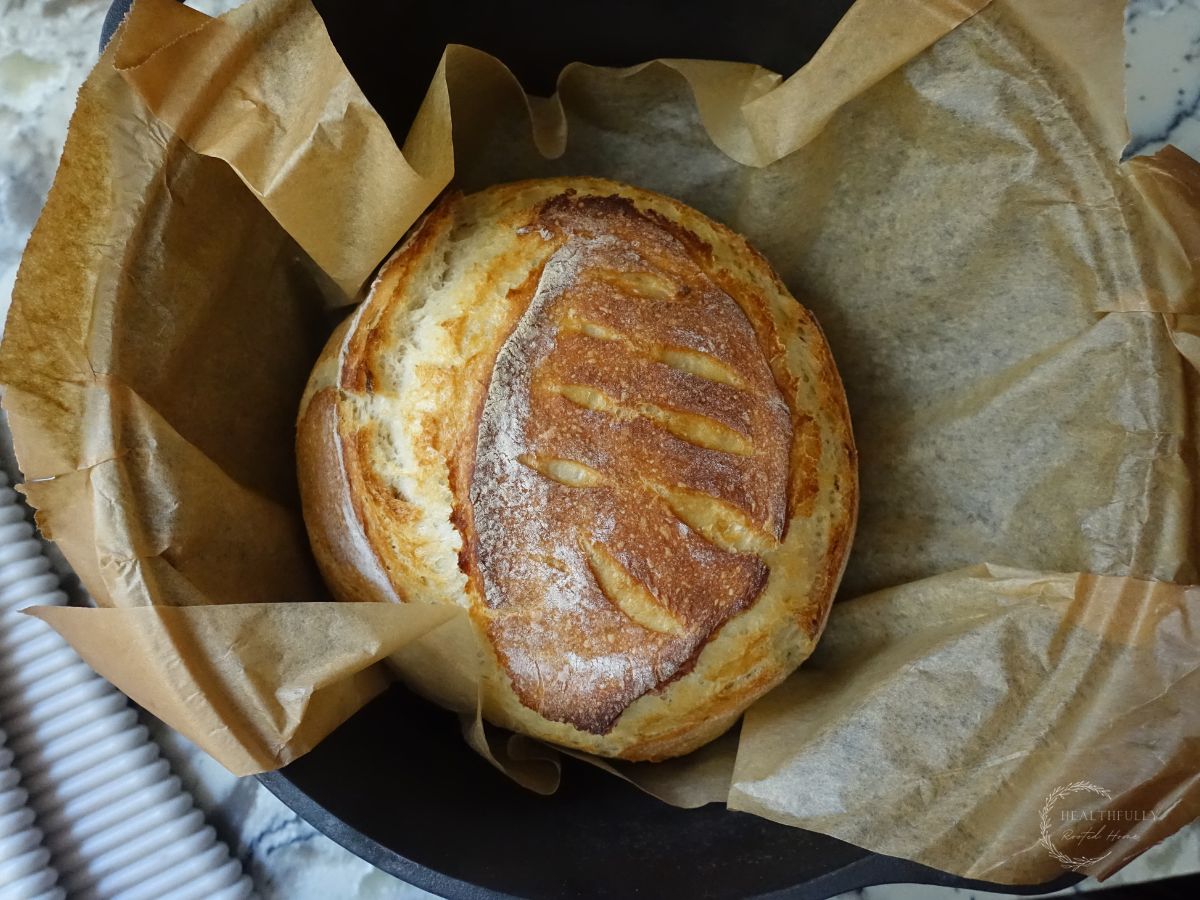
Let cool for 1 full hour before cutting (more if possible).
How to Store Sourdough Discard Bread
All homemade bread is best when served freshly baked and the day-of, however, this loaf stores incredibly well for several days.
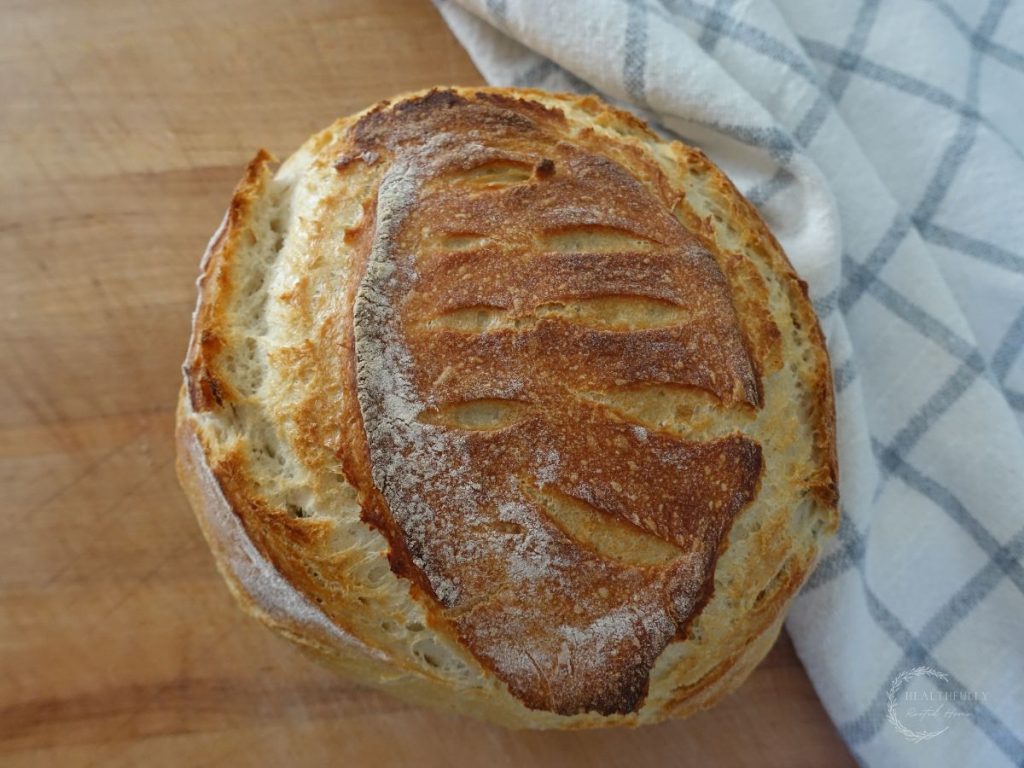
Room temperature
Store your sourdough discard bread in a breathable bag (such as paper or linen) for up to 3 days.
Freezer
To freeze your sourdough discard bread, let it cool completely and store the entire loaf in a plastic bag for up to 3 months. You can also slice the bread and freeze the slices in plastic bags.
Related: How to store sourdough bread so it stays fresh longer
Sourdough Discard Bread Tips
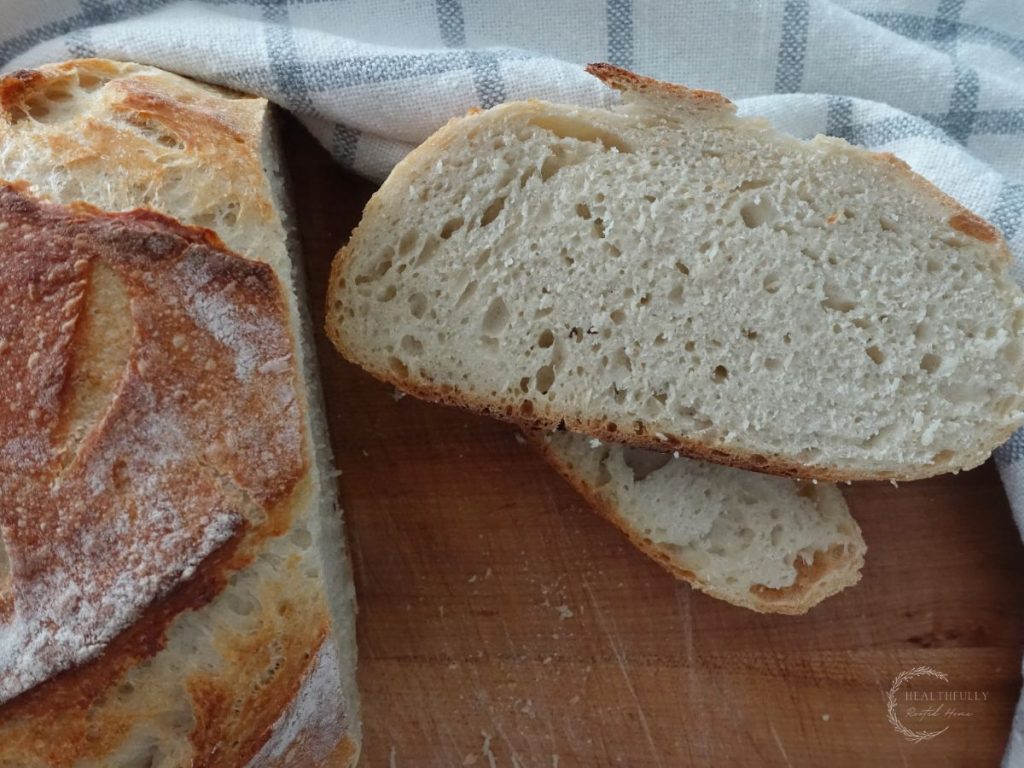
- Grams vs. Cups – it’s best to weigh the ingredients for bread recipes.
- Let your baked bread rest – you really do need to let your bread rest for an hour after taking it out of the oven. It continues cooking below that delicious-looking crust.
- Scoring – scoring directs the flow of what’s called “rapid expansion” and without scoring, your bread could rapidly expand in areas where you don’t want it to. Basically scoring is a control mechanism for where the bread will expand.
- Dutch oven – To get that artisan-style bread with that amazing crust, you will need to bake it in a hot dutch oven.
- Adjust your flour content as needed – see the tutorial below for getting the right flour content for your dough.
How Much Flour to Use for Sourdough Discard Bread?
Unfortunately, there is no way to have a fail-proof bread recipe that you can follow 100% to the T every single time. You have to adjust the amount of flour you use from time to time depending on various factors. See below how to read your dough.
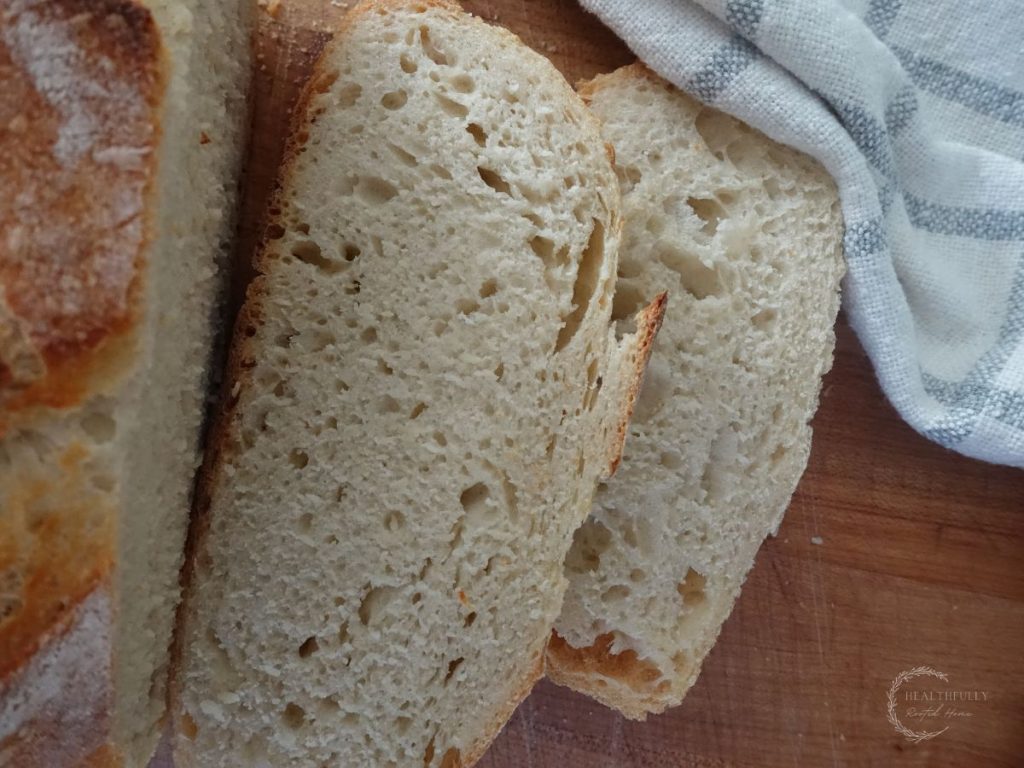
How much flour to use for making bread
You should always read the dough rather than a recipe in order to get your best loaf of bread. Always start with about 1/4 of the amount of flour the recipe calls for.
Once you start mixing the flour you’ll need to start “reading the dough” to see how much more flour to add. Add about 1/4 cup of flour at a time after that until your dough is ready.
How to read the dough
You are looking for your dough to start coming together into a smooth ball and for the sides of the bowl to become clean. The dough will start to pull from the sides of the bowl and incorporate into a ball.
The dough should not be sticky when you’re done mixing your flour in, it should always be soft and your bowl should be clean.
Baker’s Timeline
Your baking timeline could vary depending on when you’d like to break bread. Below are examples of what it might look like for you.
Same Day (Break bread by 6pm)
1:45pm: begin making dough
2pm: Proof dough
4pm: Preheat oven/dutch oven and shape and score dough.
4:30pm: Bake bread
5pm: cool your bread
6pm: enjoy your sourdough discard bread
2-day (break bread by 6pm)
Day 1 – 1:45pm: begin making dough
Day 1 – 2pm: Proof dough
Day 1 – 4pm: place the dough in a banneton basket in the refrigerator until you’re ready to bake.
Day 2 – 4pm: Preheat oven/dutch oven and remove the dough from the fridge.
Day 2 – 4:30pm: Shape and score the dough then bake.
Day 2 – 5pm: cool your bread
Day 2 – 6pm: enjoy your sourdough discard bread
Sourdough Discard Bread Add-Ins
- Bacon & Cheese
- Olives
- Chocolate chips and orange zest
- Cranberries and walnuts
- Herbs
- Seeds/nuts
- Spices
- Roasted garlic
- Cheddar Jalapeno
- Cinnamon raisin
- Garlic and olive oil
- Garlic parmesan
- Sage and caramelized onion
- Sundried tomato and pesto
Shop This Post
(These affiliate links help to support this blog at no extra cost to you. Your support means the world to me!)
- Berkey water filter (we use the Royal because we drink an insane amount of water!)
- Thrive Market – 25% off & free gift! (where I get a ton of my ingredients)
- Azure Standard: $25 off your order. Code kyrieluke1
- Dutch oven
- Stand mixer
- Boos Block Butcher Block
- 12 inch Cast Iron Skillet
- Kitchen scale
- Banneton baskets
- Dutch oven
- Lame
- Dough scraper
- Stainless baking sheet
- Silicone baking sheet mat
- Grain mill
More Sourdough Recipes
Roasted Garlic Sourdough Bread
Pumpkin Sourdough Cinnamon Rolls
Sourdough Starter from Scratch
Shop my Six Month Meal Plans
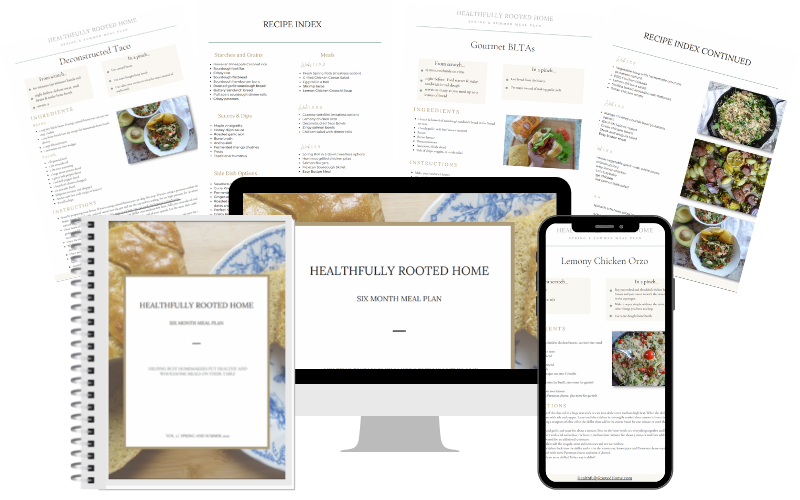
Shop for my six month meal plans here. These will help give you a restful dinner-time routine by giving you all your recipes laid out in a weekly meal plan format for 6 months.
Pin it For Later – Sourdough Discard Bread
Print the Sourdough Discard Bread Recipe
Sourdough Discard Bread
Ingredients
Method
- In a stand mixer fitted with the dough hook attachment, mix the warm water and yeast together.
- Then, add all the other ingredients and knead until combined and the dough is smooth and elastic (about 10 minutes).
- Let the dough sit at room temperature for about 1-2 hours until doubled in size.
- Preheat a dutch oven in a 500F oven for about 30 minutes.
- Dust the countertop with flour and shape your dough by bringing all the sides of the dough into the center. Flip over and move the dough ball in circles and then up and down against the countertop to create surface tension.
- Transfer your dough to a piece of parchment paper.
- Score the dough then place it in the preheated dutch oven with the lid on.
- Bake for 15 minutes at 500F with the lid on. Then drop the temp to 475F and bake for 15 minutes with the lid off.
- Let cool for 1 full hour before cutting (more if possible).
Video

Notes
How to Store Sourdough Discard Bread
All homemade bread is best when served freshly baked and the day-of, however, this loaf stores incredibly well for several days.Room temperature
Store your sourdough discard bread in a breathable bag (such as paper or linen) for up to 3 days.Freezer
To freeze your sourdough discard bread, let it cool completely and store the entire loaf in a plastic bag for up to 3 months. You can also slice the bread and freeze the slices in plastic bags. Related: How to store sourdough bread so it stays fresh longerSourdough Discard Bread Tips
- Grams vs. Cups – it’s best to weigh the ingredients for bread recipes.
- Let your baked bread rest – you really do need to let your bread rest for an hour after taking it out of the oven. It continues cooking below that delicious-looking crust.
- Scoring – scoring directs the flow of what’s called “rapid expansion” and without scoring, your bread could rapidly expand in areas where you don’t want it to. Basically scoring is a control mechanism for where the bread will expand.
- Dutch oven – To get that artisan-style bread with that amazing crust, you will need to bake it in a hot dutch oven.
- Adjust your flour content as needed – see the tutorial below for getting the right flour content for your dough.
How Much Flour to Use for Sourdough Discard Bread?
Unfortunately, there is no way to have a fail-proof bread recipe that you can follow 100% to the T every single time. You have to adjust the amount of flour you use from time to time depending on various factors. See below how to read your dough.How much flour to use for making bread
You should always read the dough rather than a recipe in order to get your best loaf of bread. Always start with about 1/4 of the amount of flour the recipe calls for. Once you start mixing the flour you’ll need to start “reading the dough” to see how much more flour to add. Add about 1/4 cup of flour at a time after that until your dough is ready.How to read the dough
You are looking for your dough to start coming together into a smooth ball and for the sides of the bowl to become clean. The dough will start to pull from the sides of the bowl and incorporate into a ball. The dough should not be sticky when you’re done mixing your flour in, it should always be soft and your bowl should be clean.About Me





Thanks for trying out this sourdough discard bread recipe! Please let me know how you liked it below.
This is the easiest discard bread recipe I have made so far. Usually the dough is so sticky it is almost unmanageable but this dough ball was similar texture to a long fermented loaf recipe.
Thank you! Glad it was easy!
Can’t wait to try this recipe out. I have so much discards.
It’s a wonderful recipe! Perfect everyday bread recipe. 🙂
I just put this recipe together and your grams and cup amount of the discard is off. It says 100 grams of discard but then it said 2/3 cup. That would be over 200 grams
It depends on your starter. My starter was 100 grams at 2/3 cup. Yours is going to weigh something completely different – that’s why it’s always more accurate to use grams when baking.
I’m wondering should my discard be cold from the fridge or do I let it get room temperature?
It doesn’t matter. Since you’re also using yeast you’ll get a rise either way. The starter just adds wonderful texture to the bread.
Love this bread. It’s so easy and quick. Thank you.
Thank you so much! We love it too!
We have made this recipe twice in a week! It is so delicious.
Thank you so much! I’m so glad you’re loving it!
I keep coming back to this recipe. Easy and delicious!
Love this! Thank you! I love this one too 🙂
Not nearly enough liquid! My dough is really dry.. nothing like a bread dough.
Then simply add more liquid. If you look at the comments on this recipe many people have had success… when working with sourdough (and bread dough in general) you need to adjust measurements based on your specific dough.
Jo,
A recipe is merely a guideline, when baking anything you will have to adjust liquids. The person writing this recipe might live at a different altitude than you or perhaps poster lives in a climate with high humidity levels. We all live in different places, it’s up to you to decide if your dough needs more or less liquid or more or less flour. Are you weighting your ingredients? You should never attempt to bake anything unless you are using a scale and measuring in grams; baking is precise and you can’t get precision using the scooping flour method.
Love this recipe! So easy my husband made it! Thank you!
Amazing! Thank you! SO happy it’s a hit.
What internal temperature should the bread reach when it’s done? With sourdough , and living at 5000 feet, I usually aim for 202 degrees give or take. But when I pulled this out at the time suggested, the bread was only about 175. Yet it looked done and sounded hollow. I put it back for a few more minutes and am waiting for it to cool before cutting into it. Fingers crossed!
How did it turn out? I always shoot for at least 190.
This is my go to recipe for discard bread! Super easy and turns out great every time!!
Thank you so much!
I make this recipe with some inclusions at least 2-3x a week!
We love it!
Question though- Can I make my dough and put it in the fridge to bake the next morning?
Yes! You can totally do that!
I’m used to bread recipes that call for a second, shorter proof after the first. Just curious why this one doesn’t need two? I’m very excited to try the recipe!
Because it’s a “discard” recipe.
I made it last night but included rosemary and cheddar cheese, then topped it with everything bagel seasoning. It turned out so delicious! I’ll definitely make it again.
Yum!!